Key takeaways
- Texas Property Code §92.020 requires every landlord to give tenants a phone number for reporting emergencies that affect health or safety; with an on-site office, it must be answered 24 hours a day.
- The person who answers at night needs authority to dispatch, the property file and a short triage script, not just a message pad.
- True emergencies are handled that night: gas or smoke, active water, a home that cannot be secured, no heat in a freeze, no cooling in extreme heat, sewage. Everything else becomes a morning work order.
- At night the goal is to make the home safe and stop the damage; the full repair is scheduled in daylight at the regular rate.
- The management agreement should allow make-safe work without approval and require prompt notice to the owner, with the invoice and photos in the owner portal.
Property managers handle after-hours maintenance requests with a line that is answered around the clock, a short triage that decides what must happen tonight, vendors who have agreed in advance to answer at night, and an emergency clause that lets the manager authorize make-safe work and tell the owner afterward. Every plan we offer for homes in Fort Worth, Keller and North Richland Hills includes 24/7 emergency response.
At 2 a.m. the question is not whether the tenant can reach someone; it is whether the person who answers is allowed to make a decision, has a plumber who will pick up, and can tell a burst supply line from a dripping faucet. That is the difference between a management company with an after-hours process and one with an after-hours phone number. If you want the definition of an emergency and who pays for one, that is covered in the guide to rental maintenance emergencies. This one is about the machinery.
The line has to reach someone who can act
An after-hours number that goes to a voicemail box, or to an answering service that only takes a message, is not emergency coverage. It is a delay with a friendly voice. The person who picks up at night needs three things: authority to dispatch a vendor, access to the property file, and a script that keeps the call under five minutes.
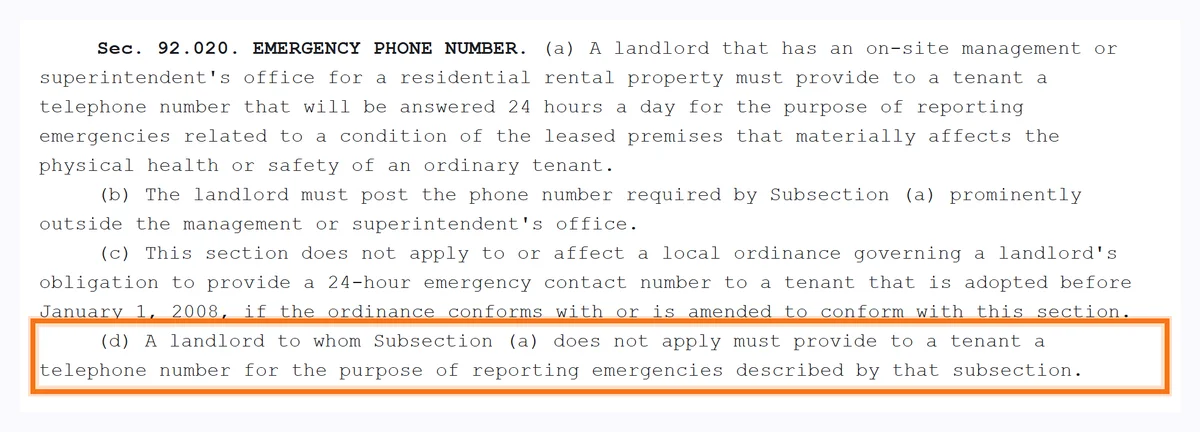
Texas sets the floor: Property Code §92.020 requires a landlord with an on-site management office to provide a number answered 24 hours a day for reporting emergencies that materially affect health or safety, and every other landlord to give tenants a number for reporting those emergencies. A good process goes further: the call reaches someone who can open the work order system from a phone. The manager can see the lease, the owner's approval limit, the gate code, the water shutoff location noted at the last inspection, and the vendor list for that home. The tenant is never asked to call back in the morning for a true emergency.
When you interview a company, ask who is physically on the other end of the emergency line at midnight on a holiday, and whether that person can dispatch without calling anyone else. If the answer is a pause, that is your answer.
The five questions asked in the first two minutes
Triage is a script, not a judgment call, because judgment at 2 a.m. is unreliable. The questions are the same every time:
- Is anyone hurt, or is there a smell of gas or smoke? If yes, the tenant is told to leave the home and call 911 before anything else happens.
- Is water actively flowing where it should not be? If yes, the tenant is walked to the shutoff valve by phone.
- Is the home secure? A broken door, a window that will not close or a lock that has failed is handled tonight.
- Is the home habitable? No heat in a freeze, no cooling in extreme heat, no running water, or sewage backing up is handled tonight.
- Can the problem wait until the first business hour without getting worse or harming anyone? If yes, it is logged as a priority repair for the morning.
That last question is where most calls land. A garbage disposal, a single clogged toilet in a home with two bathrooms, a dead outlet or a noisy air handler all get a work order with a morning timestamp, and the tenant gets a clear explanation of why. Tenants accept a scheduled repair far more readily when the reason is stated plainly than when they are simply told no.
After-hours requests: tonight or the next morning?
This is how common after-hours calls from a North Texas rental are usually sorted:
| Call | Tonight or morning | What happens |
|---|---|---|
| Gas smell, smoke or sparking outlet | Tonight, after 911 if needed | Tenant leaves the home and calls 911 or the gas company first; the right trade is sent to make it safe |
| Burst pipe or water running into the home | Tonight | Tenant is walked to the main shutoff by phone; a plumber caps the line; drying starts if floors or walls got wet |
| Sewage backing up inside | Tonight | Plumber clears the line; the cause decides whether the owner or tenant pays |
| Exterior door will not lock, broken window | Tonight | Locksmith or board-up to secure the home; glass ordered in the morning |
| No heat in a freeze, no cooling in extreme heat | Tonight if the home is unsafe for the occupants | HVAC technician, or a temporary fix until one can come |
| One clogged toilet in a two-bath home, a dead outlet, a noisy fan, a slow drain | Morning | Logged as a priority work order with a time stamp; tenant told why it can wait |
How to read this table: the middle column is the decision the person on the phone has to make in the first two minutes, and it follows one question, whether waiting until morning would let the problem harm someone or the home. The service maintenance page lists the same emergency categories we use: active leaks, no AC in extreme heat, no heat in winter and electrical hazards follow the 24/7 process, and routine items follow the standard workflow.
Make safe tonight, repair properly in daylight
The after-hours goal is to stop the damage and restore safety, not to complete the repair. A plumber at midnight caps the broken line and gets water back to the rest of the house; the shower valve gets replaced the next day at the regular rate. An electrician isolates the tripping circuit; the panel work is scheduled. A board goes over the broken window; the glass is ordered in the morning.
This distinction matters to the owner's wallet. After-hours labor is billed at a premium, and most full repairs need parts that are not in the truck at night anyway. A manager who sends a vendor to replace a water heater at 1 a.m. instead of shutting the supply and scheduling the replacement is spending your money to look responsive.
The exception is anything that leaves the home uninhabitable. If the only HVAC system is down in a July heat wave and the tenant has an infant in the house, the manager either gets a technician out that night or arranges portable cooling until one arrives. Habitability is not deferred to save a trip charge.
Dispatch only works if the vendor was arranged in advance
Nobody finds a reliable plumber at 2 a.m. by searching. The vendors who answer at night are the ones who already have a relationship with the management company, have agreed to an after-hours rate in writing, carry current insurance on file, and know how the company's lockbox and work order system operate. That bench is built during business hours, over years, and it is one of the things you are paying a manager for.
A solid bench has at least two options in each emergency trade: plumbing, electrical, HVAC, locksmith, water extraction and board-up. Two, because the first one is sometimes on another job. The manager also keeps a restoration company on call for any water event that touched flooring or drywall, since the cost of a mold problem later dwarfs the cost of drying fans tonight.
Vendor relationships are also why the invoice looks the way it does. Negotiated after-hours rates with a steady customer are lower than a stranger's emergency rate, and the manager knows what a reasonable bill looks like because they see them every week. Our maintenance coordination is built around that bench. For a fuller picture of how vendors are chosen and checked, read how property managers handle vendors.
Where the owner's approval limit fits, and where it does not
Your management agreement sets a dollar amount the manager can spend on a routine repair without asking you first. Above it, the manager calls or emails for approval. Below it, the work simply gets done and shows up on the statement. That limit exists so you are not woken up for a running toilet and so the manager is not approving a roof on your behalf.
Emergencies are the written exception. The agreement should say that when a condition threatens health, safety or the property, the manager may authorize the work needed to make the home safe and stop the damage, regardless of the limit, and must notify the owner promptly. The key word is notify. At midnight, the manager is informing you, not asking you, because waiting an hour for a reply while water runs under the slab is not a reasonable choice.
Read that clause before you sign. It should be narrow (make safe, stop damage) rather than open-ended, and it should require notification by a stated time. If the agreement has no emergency clause at all, ask how the company handles a 2 a.m. leak when the owner is on a flight. Guidance on the rest of the document is in what to look for in a management agreement.
How and when you hear about it
Owners generally want two things that pull in opposite directions: to know right away, and not to be woken up over something handled. The workable standard is this. If a vendor was dispatched after hours, you get a short message that night or first thing in the morning, whichever you have asked for, stating what happened, what was done and the rough cost. If the call was triaged to a morning work order, you hear about it on the normal maintenance update.
The morning summary should be specific: time of the tenant's call, what the tenant reported, the triage decision, the vendor sent, arrival time, what was done to make safe, photos, and what the follow-up repair will be. A manager who writes "plumber went out, will update" has not told you anything you can plan around.
Everything lands in the owner portal as a work order with the invoice attached once it is received, so you can see the full thread without asking. If you are an out-of-state owner, that record is often the only way you will ever see the home at 2 a.m., which is the point.
The next-morning follow-up is where the money is saved
The emergency is the visible part. The follow-up is where a manager earns the fee. By mid-morning after a water event, someone should have confirmed that drying equipment is running if it was needed, checked whether the damage reaches an insurance deductible, scheduled the permanent repair, and decided whether the cause points to the tenant.
That last question is handled with evidence, not opinion. A supply line that failed from age is the owner's cost. A toilet overflowing because a child flushed a toy, or a frozen hose bib with the hose still attached after the tenant was told in writing to disconnect it, can be billed back under the lease. The vendor's notes and photos from the night call are what support the chargeback, which is why the manager asks the vendor to document cause, not just the fix.
The follow-up also feeds the file. If a home has now had two plumbing emergencies in a year, the manager should be telling you the sewer line probably needs a camera inspection before the third one. Patterns like that are only visible to someone who keeps records across every call, and they are a big part of why water leaks and mold stay small problems on a well-managed home.
Half of after-hours calls are prevented in daylight
The cheapest emergency is the one that becomes a scheduled repair because somebody saw it coming. Documented periodic inspections catch the corroded supply line under the sink, the water heater with a rusting base, the HVAC capacitor that is starting to fail, and the hose still attached to the spigot in November.
Two other habits reduce night calls more than anything else:
- At move-in, the tenant is shown the main water shutoff, the breaker panel and the gas shutoff, and the locations are written into the move-in record. A tenant who can shut the water off in 60 seconds turns a flooded kitchen into a wet floor.
- Before the first freeze, every tenant gets the same written reminder: disconnect hoses, open cabinet doors under exterior-wall sinks, keep heat on if traveling. The freeze prep guide covers the full list.
Managers who do this work have quieter phones in January, and their owners have smaller invoices.
Six questions that reveal whether the process is real
You will not get to watch a company handle an emergency before you hire them. You can get close by asking these in the first conversation:
- Who answers the emergency line at night, and can that person dispatch a vendor without waking anyone else?
- What is your triage standard, and what do you tell a tenant whose problem can wait until morning?
- How many plumbers, electricians and HVAC companies will take your call after hours, and are their rates agreed in writing?
- What does the emergency clause in your agreement allow, and by when will I be notified?
- What will I receive the next morning, and where will I find the invoice?
- Tell me about the last after-hours call you handled and what it cost the owner.
The last one is the useful one. A company with a real process will tell you a specific story with a specific outcome. A company without one will describe a policy. If you want to hear ours, ask us about the last one, and we will walk you through it, invoice and all.
The takeaway: After-hours coverage is a process you can inspect before you sign: a person who can act, a script that triages, vendors arranged in advance, a narrow emergency clause, and a written summary waiting for you in the morning.
Questions owners ask
Who handles rental emergencies at night and on weekends?
With a managed home, the tenant calls the manager's emergency line, which should reach someone who can open the property file and dispatch a vendor without waking anyone else. That person works through a short triage, walks the tenant to the water shutoff if needed, and sends a pre-arranged plumber, electrician, HVAC technician or locksmith. A number that only takes messages is a delay, not coverage. Every Perpetual plan includes 24/7 emergency response, and the work order, photos and invoice go to the owner portal.
Can a property manager spend my money after hours without asking me?
Only within what your management agreement allows. Most agreements set a routine approval limit and a separate emergency exception that permits make-safe work to protect health, safety and the property, with prompt notification to the owner. Read that clause before signing and confirm it is limited to stopping the damage.
What does a tenant get told when the problem is not an emergency?
A clear reason and a timestamped morning work order. The manager explains why the issue is safe to wait, logs it as a priority repair, and confirms the scheduling window the next business morning. Tenants accept a scheduled repair when the reason is stated plainly.
Who pays the after-hours rate for an emergency plumber?
The owner pays for repairs to the home and its systems unless the cause traces to the tenant, in which case the cost can be billed back under the lease. The night call is kept to a make-safe visit and the full repair is scheduled at the regular rate, which keeps the premium portion small.
How will I know an emergency happened at my rental?
You should receive a short notice that night or first thing in the morning, based on your stated preference, followed by a written summary with photos, vendor notes, the cause, and the invoice once received. On a managed home, all of it sits in the owner portal attached to the work order.
What happens if there's a water leak in my rental in the middle of the night?
The tenant calls the emergency line and is walked to the main water shutoff by phone, which is why the shutoff location is shown at move-in and noted in the inspection record. The manager dispatches a plumber from the pre-arranged after-hours bench to cap the line and make the home safe, with the permanent repair scheduled in daylight at the regular rate. If water reached flooring or drywall, drying equipment is set so a wet floor does not become a mold problem. The emergency clause in the management agreement allows that make-safe work without waiting for approval, and you see the full record in the owner portal the next morning.
How do property managers handle after-hours maintenance requests?
Through a line answered around the clock, a short triage that sorts true emergencies from repairs that can wait, vendors arranged in advance who answer at night, and an emergency clause in the management agreement that allows make-safe work without waiting for the owner. True emergencies such as active water, gas, a home that cannot be secured or no heat in a freeze are handled that night; the rest become morning work orders.
Does a Texas landlord have to provide an emergency phone number?
Yes. Texas Property Code 92.020 requires a landlord with an on-site management office to provide a number answered 24 hours a day for reporting emergencies that materially affect a tenant's health or safety. A landlord without an on-site office, such as the owner of a single rental house, must still give the tenant a phone number for reporting those emergencies.
How do Dallas-Fort Worth property managers handle plumbing or HVAC emergencies across several rentals?
The same way for every home: one emergency line, one triage standard, and vendors in each trade who have agreed to answer at night for that manager. Water is shut off or the system made safe that night, and the full repair is scheduled in daylight at the regular rate. Owners with several homes should ask whether each home's shutoff locations, approval limit and vendor list are in the file the night caller can see.
Related services
Property management in Keller, North Richland Hills and Fort Worth. How full-service management works in Tarrant County →