Key takeaways
- Owner: termites and other wood-destroying insects, rodent entry points, wasps in eaves and vents, pests drawn by a leak or the structure.
- Tenant: routine treatment after move-in, and pests from housekeeping, pets (fleas) or belongings (often bed bugs).
- A licensed pest company's written finding should decide the cause; write that into the addendum.
- Treat and seal at make-ready; the invoice and photos prove the home was delivered clean.
- Answer every report the same day; rodents, wasps by a door and bed bugs are urgent.
In most Texas rentals the owner is responsible for delivering a pest-free home and for structural pests such as termites and rodent entry points, and the tenant is responsible for routine pest control after move-in and for pests caused by housekeeping or pets. The lease sets the exact split, and the make-ready decides whether the question comes up at all. Pest control still turns into an argument more often than any other maintenance item, because a tenant sees bugs and assumes the house is the problem, and an owner hears bugs and assumes the tenant is.
This guide lays out how Texas leases typically split the responsibility, which pests are the owner's no matter what the lease says, how to pest-proof a house at turnover, what to put in the addendum so the split is clear, and the step-by-step response when a tenant reports a problem.
The short version: owner delivers pest-free, tenant keeps it that way
The standard that holds up in Keller, North Richland Hills and Fort Worth is a two-part promise. The owner hands over a home that has been treated and sealed, and stays responsible for anything that comes from the structure: termites, rodents entering through gaps, wasps nesting in the eaves, a plumbing leak that draws roaches. The tenant keeps the home clean, stores food properly, takes the trash out, reports problems early and handles routine treatment during the tenancy.
That split matches how the pests actually behave. Structural pests come with the house; housekeeping pests come with the household. A lease that tries to put everything on the tenant invites a fight the first time a termite swarm appears, and a lease that puts everything on the owner turns every ant trail into a service call.
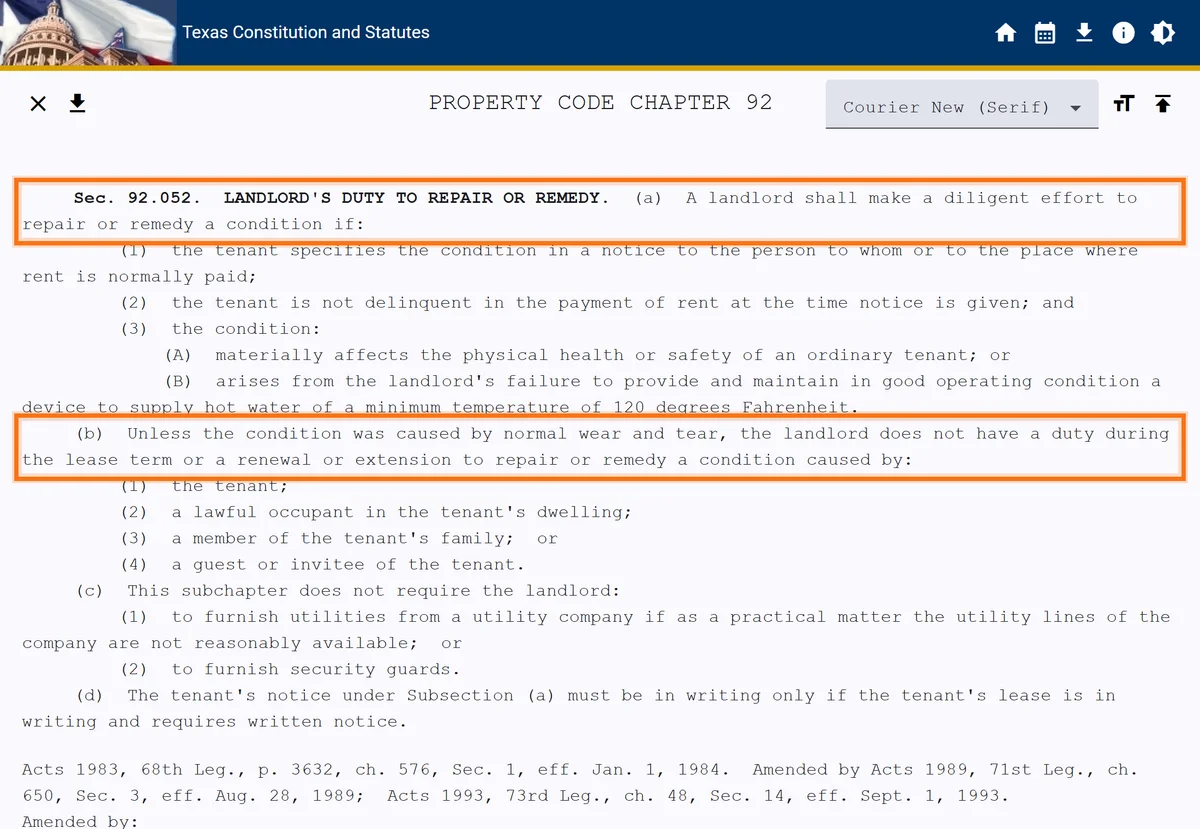
Texas law in general terms requires a landlord to make a diligent effort to repair conditions that materially affect health or safety after written notice, and a serious infestation can qualify. The repair obligations guide explains that duty; confirm specifics with your lease or an attorney.
What Texas leases typically say
Commonly used Texas residential lease forms address pest control in the maintenance section, and many owners add a pest addendum because the base clause is short. The usual arrangement reads roughly like this: the owner treats before move-in; the tenant is responsible for routine pest control after a short initial period; the owner remains responsible for termites, wood-destroying insects and infestations caused by the condition of the property; and the tenant pays for infestations caused by the tenant's housekeeping, pets or guests.
Two details matter in the wording. The first is a reporting duty, so the tenant is obligated to tell you in writing when they first notice a problem rather than living with it until it is serious. The second is a definition of who decides cause. Our addendum says a licensed pest control company's written finding determines whether the source is structural or housekeeping, which removes the argument from the tenant and the owner and gives it to the person who looked under the sink.
Read your own lease before assuming any of this; a pest addendum sits with the rest of the lease packet rather than replacing any of it. This is general information, not legal advice.
The North Texas pest roster and who owns each one
Different pests have different causes, so responsibility is easier to assign pest by pest than in the abstract.
- Ants. Nearly universal in summer. Routine; tenant's after move-in unless they are entering through a structural gap the owner should seal.
- Roaches. Usually housekeeping or a moisture source. Tenant's if the kitchen is the cause; owner's if a leak or a neighbor's infestation in an attached unit is the cause.
- Spiders and wasps. Spiders are routine. Wasp nests in eaves and attic vents are the owner's to remove, since they are exterior and structural.
- Rodents. Entry points are structural, so sealing is the owner's. Bait and traps inside can be either, depending on the addendum. Attic rodents are owner's.
- Termites. Always the owner's. No exceptions.
- Fleas. Tenant's when they have pets. The pet addendum should say so.
- Bed bugs. Usually brought in by occupants or furniture, so often tenant's, but the owner must act fast regardless because they spread.
- Mosquitoes. Standing water. Tenant's if it is a bucket in the yard; owner's if it is a clogged gutter or a broken irrigation valve.
Write the roster into the addendum if your lease form leaves it vague. Tenants respond well to a list; they respond poorly to a clause that reads as all pests are your problem.
Who pays, pest by pest
The same roster as a quick reference for owners and tenants:
| Pest | Usual cause | Who usually pays | First step |
|---|---|---|---|
| Ants | Season and food | Tenant, after move-in | Bait; the owner seals any structural gap they use |
| Roaches | Kitchen sanitation or a moisture source | Tenant if housekeeping; owner if a leak or an attached unit | Fix any leak, then treat |
| Wasps | Nests in eaves and attic vents | Owner | Remove the nest and screen the vent |
| Rodents | Entry gaps and attic access | Owner for sealing; traps inside per the addendum | Exclusion work before trapping |
| Termites | Soil moisture against the slab | Owner, always | Licensed treatment with a written warranty |
| Fleas | Pets | Tenant with pets | Treat the home and the animal |
| Bed bugs | Brought in with people or furniture | Often the tenant; the owner acts fast either way | Licensed inspection the same week |
| Mosquitoes | Standing water | Tenant for yard items; owner for gutters or irrigation | Remove the water source |
How to read this table: the usual cause decides the bill, not the bug. When the cause is the house, such as a gap, a leak or a clogged gutter, the owner pays; when it is the household, such as food, pets or furniture, the tenant does. When nobody can tell, the technician's written finding settles it.
Termites: always the owner's problem, so inspect before they find you
Subterranean termites are common across North Texas, and a rental is more exposed than an owner-occupied home because nobody who lives there is looking for them. The owner pays for the damage either way; the only question is whether you find them at an annual inspection or after a tenant reports a soft baseboard.
Put a wood-destroying insect inspection on the calendar once a year, and insist that the inspector actually enters the attic and walks the full perimeter. Signs to know and to put in the tenant handbook: mud tubes on the foundation or in the garage, swarmers or discarded wings near windows in spring, blistered paint, and wood that sounds hollow when tapped. Keep mulch and soil below the top of the slab, fix any dripping hose bib or AC condensate line that keeps the soil wet against the foundation, and store nothing wooden against the exterior wall.
If termites are found, treatment is a licensed job with a written warranty, and the treatment paperwork goes in the property file because the next buyer and the next inspector will ask for it. Treat the area, repair the damage, and renew the warranty. This is one of the few items where an annual expense is clearly cheaper than the alternative.
Rodents: the entry point is the problem, not the mouse
A mouse in the pantry is a symptom. The cause is a gap: a garage door seal worn at the corner, a weep hole in the brick without a cover, a gap around a pipe where it enters the wall, a vent screen torn by a squirrel, or a soffit opening into the attic. Trapping without sealing produces a tenant who sees mice every month and an owner who pays for a service every month.
At the first report, send a pest company that does exclusion work, not just baiting. The technician should walk the exterior and the attic, seal every entry point with steel wool, hardware cloth or sealant, replace the garage door seal if it is worn, and only then set traps inside. Ask for a written list of what was sealed. Sealing is the owner's expense and the owner's protection, because an open house will be reoccupied by the next mouse.
The tenant's side is sanitation: no pet food left out overnight, food in sealed containers, trash taken out. If the pest company finds a spotless kitchen and an open weep hole, the owner pays. If it finds dog food on the floor and a sealed house, the tenant does. The written finding settles it.
Pest-proofing at make-ready
The cheapest pest control happens while the house is empty. The make-ready list should include a professional interior and exterior treatment, and a sealing walk that covers:
- Weep hole covers in the brick, which keep mice and wasps out while letting the wall breathe.
- New door sweeps on exterior doors and a fresh seal along the garage door bottom and sides.
- Gaps sealed around hose bibs, AC line sets, dryer vents and the cable and electrical penetrations.
- Attic and soffit vent screens intact, and the attic checked for droppings and nesting.
- Tree limbs trimmed back from the roof, since they are the squirrel and rat highway to the attic.
- Gutters cleaned and the yard cleared of debris and standing water.
- Under-sink areas checked for moisture and gaps around drain lines.
Document the treatment and the sealing with the invoice and photos in the move-in file. When a tenant reports pests three weeks after move-in, that record is what shows the house was delivered clean. The full turnover list is in the make-ready guide.
Lease language that prevents the argument
A good pest addendum is a page. It states that the home was professionally treated and inspected before move-in; that the tenant accepts it as pest-free unless they report otherwise in writing within a few days of occupancy; that routine pest control after that period is the tenant's; that termites, wood-destroying insects, rodent exclusion and infestations caused by the property's condition are the owner's; that infestations caused by housekeeping, pets or the tenant's belongings are the tenant's, including bed bugs and fleas; that the tenant must report any pest problem in writing promptly; and that a licensed pest control company's written finding decides the cause.
Add a line about what the tenant may and may not do themselves. Over-the-counter sprays and bait are fine; fogging the house, drilling into walls or using rodenticide where pets or children could reach it are not. Pair the addendum with the pet addendum so flea responsibility follows the pet.
Give the tenant the roster from this guide as part of the move-in packet. A tenant who knows that ants in July are theirs and a mud tube on the slab is yours makes better decisions on both.
When a tenant reports pests: the response process
Every report gets the same sequence regardless of who is likely to pay. The short answer to who handles pest control, the tenant or the landlord covers the three questions a manager asks about a single report; this is the full process behind it. First, acknowledge in writing the same day and ask for photos and the location. Second, triage: rodents, wasps near a door, bed bugs and anything involving a child's room are urgent; ants and a few spiders are routine. Third, dispatch a licensed pest company with instructions to treat and to state the cause and the source in writing.
Fourth, read the finding and apply the lease. If structural, the owner pays and the sealing work is approved. If housekeeping, the tenant is billed per the lease, with the technician's note attached, and told in writing what to change. If genuinely unclear, the owner pays the first visit and the lease is applied to repeat visits. Arguing about a small bill with a tenant costs more than the bill, so default toward fixing it and billing only where the cause is plain.
Fifth, follow up two weeks later. A treatment that did not work is a second report waiting to happen, and asking first keeps the tenant on your side. Our maintenance team runs this sequence on every report, and the owner sees the finding and the invoice in the portal.
When a quarterly service included in the rent pays off
Some homes should simply have a standing pest service. Older houses with pier-and-beam foundations or many penetrations, homes under heavy tree cover, properties near creeks or greenbelts, and duplexes or fourplexes where one unit's problem becomes everyone's are the usual cases. A quarterly exterior treatment keeps the perimeter barrier up, and the technician's regular visit is a free set of eyes on the foundation and eaves.
Price it into the rent and list it as included. Tenants value it, it removes the routine-versus-structural question for most reports, and the recurring invoice is a predictable line on the statement instead of a surprise. For a newer home in a tidy subdivision with a clean make-ready, it is usually unnecessary; the tenant's over-the-counter ant bait handles the summer.
Our periodic inspections check for the early signs on every home either way: droppings in the garage, wasp activity at the eaves, mud tubes on the slab, moisture under sinks. Catching those at an inspection is what keeps a pest problem a small invoice. If you are unsure which category your house falls into, talk to us and we will tell you what we would do with it.
The takeaway: Deliver a sealed, treated house with a written record, put a pest-by-pest split in the lease, let a licensed technician's finding decide who pays, and the question of owner or tenant stops being an argument and becomes a line on an invoice.
Questions owners ask
Who handles pest control, the tenant or the landlord?
The lease decides, and the split that holds up is owner for the structure, tenant for the household. The owner delivers a home that has been treated and sealed, and stays responsible for termites and wood-destroying insects, rodent entry points, wasp nests in the eaves and any infestation tied to the property's condition. The tenant keeps the home clean, reports problems in writing promptly, handles routine treatment after move-in and pays for pests caused by housekeeping, pets or belongings. A licensed pest company's written finding should decide the cause. Perpetual uses a pest addendum that spells out that roster and dispatches on every report.
Does a landlord have to pay for termite treatment?
Yes, in practice. Termites and other wood-destroying insects come from the structure and the soil, not from the tenant's behavior, and leases consistently place them on the owner. Annual inspections and keeping soil and mulch below the slab line are far cheaper than the damage.
Can a landlord charge a tenant for roaches?
If the lease allows it and the pest company's written finding points to housekeeping as the cause, yes. If the cause is a leak, a gap in the structure or an adjoining unit, the owner pays. Get the cause in writing from the technician before billing anyone.
Who pays for bed bug treatment in a rental?
Often the tenant, because bed bugs typically arrive with occupants, furniture or luggage, and most pest addenda say so. The owner should still act immediately, because a delay lets them spread, and sort out the bill afterward based on the technician's finding and the lease.
How fast does a landlord have to respond to a pest complaint?
Texas law in general terms requires a diligent effort within a reasonable time after written notice for conditions affecting health or safety, and a serious infestation can qualify. Acknowledge every report the same day, dispatch urgent cases right away and routine ones within days, and document everything.
Does a Texas landlord have to fix a pest problem the tenant caused?
Not under the repair statute. Property Code §92.052(b) says that, apart from normal wear and tear, a landlord has no duty during the lease to repair a condition caused by the tenant, an occupant, a family member or a guest. Most leases let the owner treat it anyway and bill the tenant, which is usually the faster fix.
Related services
Property management in Keller, North Richland Hills and Fort Worth. How full-service management works in Tarrant County →