Key takeaways
- Owners are usually paid once a month, a week to two weeks after rent is due, after the payment clears.
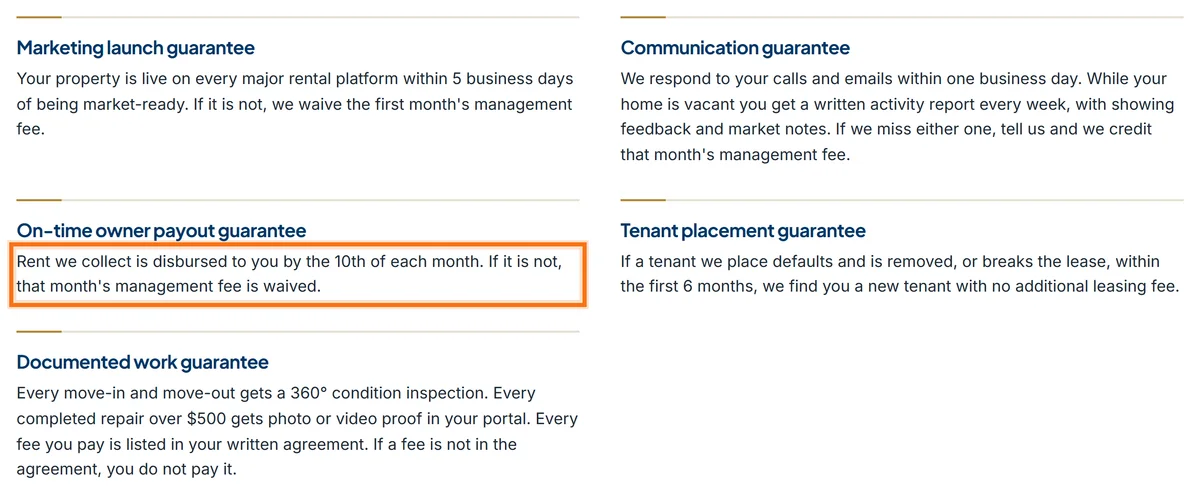
- Our written guarantee for homes in Fort Worth, Keller and North Richland Hills: rent collected is disbursed by the 10th, or that month's management fee is waived.
- The statement and the transfer are produced together, so the deposit matches the bottom line to the dollar.
- Late rent, a returned payment, a large approved repair or the first month can delay or shrink a transfer.
- Keep one mortgage payment of your own in reserve so a late tenant never becomes a late lender.
Your property manager sends the rent once a month on a schedule written into the management agreement, usually a week to two weeks after the due date. For the homes we manage in Fort Worth, Keller and North Richland Hills, that date is in writing: rent we collect is disbursed to you by the 10th of each month, and if it is not, that month's management fee is waived. The gap after the first is not the manager sitting on your money; it is the time it takes for the tenant's payment to clear, for invoices and fees to post, and for a statement that matches the transfer to the dollar.
What follows is the normal calendar, the things that move it, and what to confirm before you sign so the timing never surprises you.
What a normal month looks like
Rent is due on the first. Most tenants pay online on or just before that day, and a bank transfer typically takes a few business days to clear into the trust account. A card payment clears faster but costs the tenant a processing fee, so most choose the bank option.
Once rent has cleared, the manager posts the month's activity to your ledger: the management fee, any repair invoices approved and paid, and any adjustment to the reserve. Then the disbursement runs. Many companies pick a fixed day, say the tenth or the fifteenth, and send every owner's balance that day by direct deposit. Others disburse within a set number of business days after each tenant's rent clears, which means your date can shift slightly from month to month.
Either way, the statement and the transfer are generated together, so the amount in your bank matches the amount at the bottom of the statement. You can usually see the pending figure in the owner portal before it arrives.
A normal month, day by day
A typical month for a tenant who pays on time looks like this:
| When | What happens | What you can see |
|---|---|---|
| 1st | Rent is due; most tenants pay online on or just before this day | The payment shows as received in the owner portal |
| Next few business days | A bank payment clears into the trust account, separate from the company's own money | The payment moves from pending to cleared |
| Before the payout | The management fee is calculated on rent collected; approved invoices and any reserve top-up post | Each charge appears as its own line with the original vendor invoice |
| By the 10th (Perpetual) | The balance is sent to your bank account by direct deposit | The statement and the transfer match to the dollar |
| Any day after | Late rent, a returned payment or a repair approved after the payout carries to next month | The statement shows rent as unpaid rather than skipping the month |
How to read this table: the first two rows are the tenant's money arriving and clearing, the third is everything that legitimately comes out of it, and the fourth is when it reaches you. The "next few business days" row is why rent cannot be forwarded on the 2nd: a bank payment can still be returned after it looks received. The only date in the table that is a promise is the 10th, because that is the one we put in writing; any company you compare should be able to name its own.
Why rent is not forwarded the day it arrives
Owners new to management sometimes ask why the money cannot simply be passed through on the second. Two reasons. First, a bank payment that looks received on the first can still be returned for insufficient funds several days later. Forwarding rent before it clears means the manager would have to claw it back from you, which nobody wants.
Second, the month's expenses need to land before the balance is calculated. If the manager paid you on the second and an approved plumbing invoice arrived on the sixth, the next statement would start in the negative. Batching everything into one dated disbursement keeps each month self-contained and keeps the reserve doing its job. The guide on owner reserves and disbursements explains how the reserve sits between the rent and your transfer.
What delays or reduces a transfer
- Late rent. If the tenant has not paid by the disbursement date, there is nothing to send. The manager's rent collection process should already be running, and your statement will show rent as unpaid rather than quietly skipping the month.
- A returned payment. A tenant payment reversed by the bank is backed out of the ledger, a returned-payment fee is charged to the tenant under the lease, and the disbursement waits for good funds.
- A large repair. An approved invoice bigger than the month's rent produces a small or zero transfer, and sometimes a request for funds. You should have approved the repair before the work, so it is never news.
- The first month. Onboarding, a prorated first rent, a reserve being established and a deposit transferred from a prior manager can all make the first statement look unusual. By the second month it settles into the pattern above.
- A vacant month. No rent means no disbursement, and on a fee charged on rent collected, no management fee either. Fees on rent collected versus rent due covers why that distinction matters.
What to confirm in the agreement before you sign
Timing is a contract term, so read it as one. Look for a stated disbursement day or a stated number of business days after receipt. Look for the method, which should be direct deposit to the account you choose. If you own more than one property with the same company, ask whether each home gets its own statement and transfer or whether they are combined, and whether a negative balance on one can be taken from another.
Ask what happens if a tenant's payment is reversed after you were already paid, and whether the company holds a minimum balance in your account before sending the rest. Neither answer is a red flag by itself. A missing answer is. Everything that can affect your transfer should be in writing before the first month, including each fee that will appear on the statement.
One more detail worth a question: whether the company sends a statement even in a month with no transfer. A vacant month or a month eaten by a repair should still produce a statement, because that is the month you most need to see where the money went.
Lining up the mortgage and the disbursement
Say your mortgage draft is on the first and the manager disburses on the twelfth. Rent collected in March pays the mortgage drafted on the first of April, so you are permanently one payment ahead of the rent, and that is fine as long as you plan for it. The owner who runs the mortgage against the same month's rent is the one who gets a late-payment notice from the lender in the one month the tenant pays late.
The practical fix is a personal reserve of at least one mortgage payment, kept separate from the repair reserve the manager holds. How much reserve to keep per rental gives a way to size it. If you are deciding whether a rental's cash flow can absorb that timing, it is a fair thing to talk through with a manager before you sign, and you can reach Perpetual here for a straight answer.
How Perpetual handles this
Perpetual Property Management disburses rent we collect by the 10th of each month. That date is one of the five written guarantees in the Perpetual Promise, part of every management agreement: if we miss it, that month's management fee is waived. The statement is produced with the transfer so the two always match. Rent for every home we manage in Keller, North Richland Hills and Fort Worth comes into a trust account, clears, carries the month's approved invoices and the management fee, and the balance goes to your bank by direct deposit.
You can watch it happen. The owner portal shows the tenant's payment the day it posts, each invoice as it is approved and the pending balance before the transfer runs. The written quote you receive before signing lists every fee that can ever appear on a statement, so the only thing that changes from month to month is what actually happened at the house. We are broker-owned and local, and if a transfer is ever going to be late or smaller than usual, you hear it from us first, with the reason.
The takeaway: The disbursement date is a contract term tied to when rent clears, so confirm it before you sign and keep one mortgage payment in reserve so a late tenant never becomes a late lender.
Questions owners ask
Why is my first owner statement smaller than the rent?
The first month usually carries one-time items: a prorated first rent if the tenant moved in mid-month, the reserve being funded, and sometimes a leasing fee if a tenant was just placed. Each appears as its own line. From the second month the statement follows the regular pattern of rent, fee, invoices and transfer.
Can the manager send the rent faster if I ask?
Most companies run one disbursement cycle for all owners, so individual timing is rarely changed. What you can ask is where your company's date falls and whether a mid-month draw is possible if a repair wipes out a month. A reserve of your own is the more reliable answer.
What if the tenant pays late every month and my transfer keeps slipping?
A tenant who is consistently late is a collection problem, not a timing problem. The manager should be charging the late fee the lease allows, documenting each month and, if the pattern continues, deciding with you whether to renew. Your statement should show each late payment and fee so the pattern is visible.
Do I get paid during a vacancy?
No rent means no disbursement that month. If repair or make-ready invoices were paid from the reserve, the statement shows them and may ask you to top the reserve up. Whether a management fee is charged during a vacancy depends on your agreement, so check whether fees are based on rent collected or rent due.
When does Perpetual pay owners each month?
Rent we collect is disbursed to you by the 10th of each month by direct deposit, with a statement that matches the transfer. It is a written guarantee in the Perpetual Promise: if the payout is late, that month's management fee is waived. Rent a tenant pays late is sent once it has been collected and cleared.
How long can a property manager hold my rent in Texas?
No Texas statute names a single payout day for every manager; the date is a term of your management agreement. Most managers pay once a month, a week or two after the due date, so the payment can clear and the month's bills can post. Ask for the date in writing before you sign, and ask what happens if they miss it.
Related services
Property management in Keller, North Richland Hills and Fort Worth. How full-service management works in Tarrant County →