Key takeaways
- The answer is in the recorded declaration and its amendments, then the board's current rules, then a written reply from the association.
- Texas HOAs must record a management certificate naming the association and its manager (Property Code 209.004), searchable on TREC's HOA site.
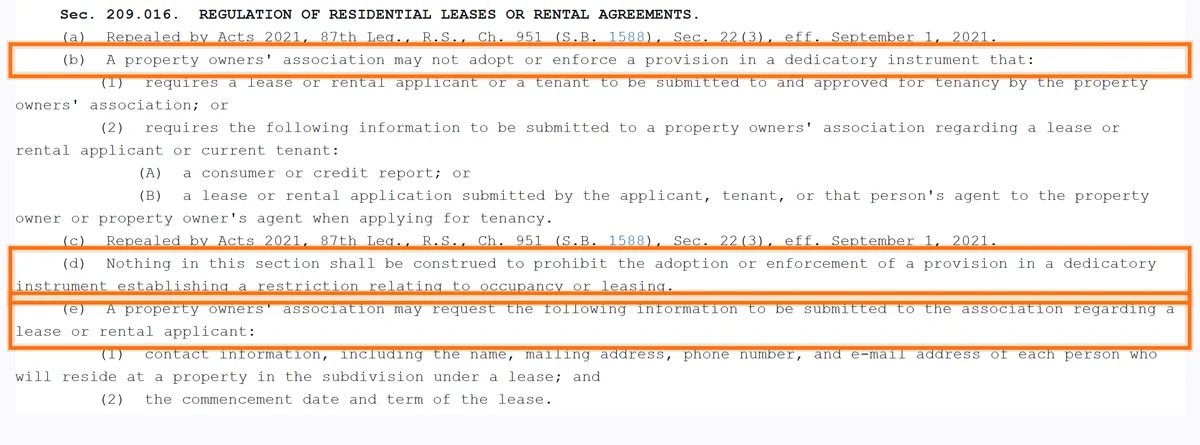
- An HOA may restrict leasing (209.016(d)) and may ask for tenant contact details and the lease start date and term (209.016(e)).
- It may not require your tenant's credit report or rental application, or require that the association approve the tenant (209.016(b)).
- Get the leasing answer in writing before you list, and keep it with the lease file.
To check whether your HOA allows you to rent out your house in Keller, North Richland Hills or Fort Worth, read the leasing section of the recorded declaration, usually called the CC&Rs, and any recorded amendments, then read the board's current rules, then get the answer confirmed in writing by the association's manager. Those three steps settle the question for almost every home in Tarrant County, and they take an evening, not a week.
The order matters. The recorded declaration is what binds you as an owner, the board's rules fill in the details, and a written reply from the association is what you can rely on later. A neighbor who "rents his place with no problem" is not a source.
Confirm you are in an association, and which one
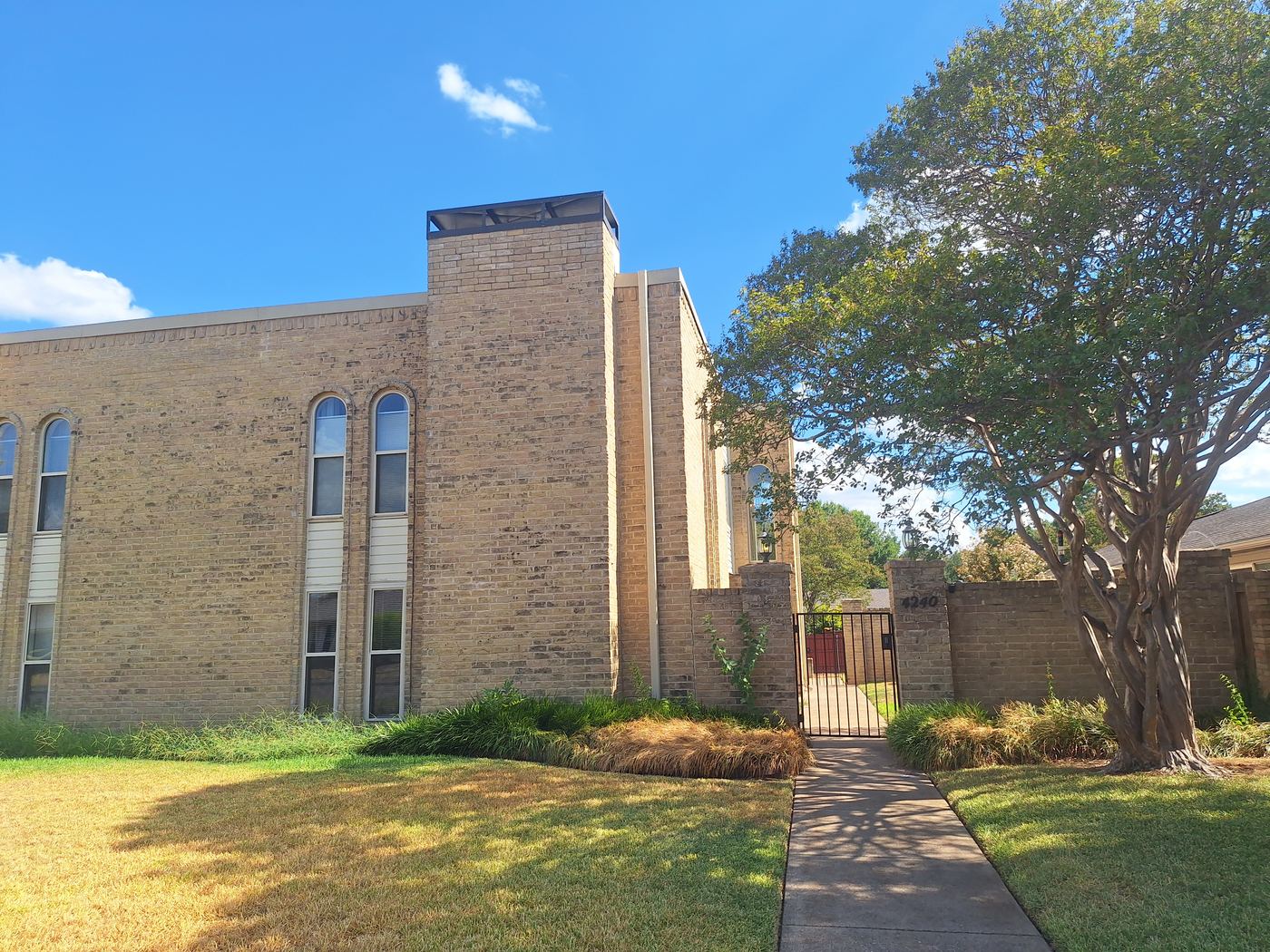
Most homes in the newer parts of Keller, North Richland Hills and north Fort Worth sit in an association, but not all do, and some sit in two: a master association and a sub-association for the section or the townhome cluster. Each can have its own leasing rule.
Your closing documents are the fastest check. Look for a resale certificate, a set of CC&Rs or a line item for association dues. If you do not have them, the declaration is recorded against the lot in the county clerk's real property records, and Texas requires an association to record a management certificate naming the association and its manager (Property Code 209.004), and to file it with the Texas Real Estate Commission, which publishes the certificates online.
If dues have been coming out of your account, the statement names the association and the management company. That is who you will be writing to.
Where to find your HOA documents in Tarrant County
Each source answers a different part of the question. Work through them in this order:
| Where to look | What you find there | Why |
|---|---|---|
| Your closing documents | The resale certificate, the declaration and the association's name | Fastest place to start if you kept them |
| Tarrant County Clerk real property records | The recorded declaration, every recorded amendment and the management certificate | Recorded documents bind you; a later amendment overrides the original wording |
| TREC's HOA management certificate search (hoa.texas.gov) | The association, its manager's contact details and the website for its documents | Property Code 209.004(b-1) requires associations to file the certificate with TREC |
| The association's website or portal | Current rules, leasing policy and the forms used when a tenant moves in | Board rules are often not recorded with the county |
| The association's manager, in writing | A dated answer on leasing, minimum term, caps and what to report | The answer you can rely on later |
How to read this table: the second row is the one that decides the answer, and the last row is the one that protects you. If you cannot find your association on TREC's site, the county record and the association itself remain the backstop.
Where the leasing answer lives in the documents
Open the declaration and search for the words lease, leasing, rental, tenant and occupancy. The clause is usually inside the use restrictions, and it is often short. Then check for recorded amendments, because leasing rules are the single most common thing boards amend after a neighborhood is built out. An amendment recorded later overrides the original wording.
Next read the rules and regulations and any leasing policy the board has adopted. These are not recorded with the county, so you get them from the manager or the association's portal. What you are looking for falls into a few patterns:
- Leasing allowed with conditions: a minimum term, a whole-home requirement, a lease addendum binding the tenant to the rules, and tenant registration.
- A rental cap: a limit on how many homes may be leased at once, with a waiting list once it is reached.
- An owner-occupancy period: you must live in the home for a set time after purchase before leasing it.
- A short-term rental ban, which does not affect a long-term lease but is often written broadly enough to confuse people.
Under Texas law an association's power over your tenant is limited. Property Code 209.016 lets it request the tenant's contact information and the lease start date and term, but not require the tenant's credit report or rental application, or require that it approve your tenant. The table further down sets out both lists.
Get the answer in writing from the association
Email the management company with your address and five specific questions: may this home be leased on a long-term basis, is there a minimum lease term, is there a rental cap and is it currently reached, what must be submitted when a tenant moves in, and is any leasing amendment pending or in the last few months adopted. Ask them to cite the section of the declaration or rules they are relying on.
Keep the reply with your lease file. If you sell the house or change property managers, the next person will want to know what the association said and when. If the manager answers by phone, follow up with an email that repeats what you were told and ask them to confirm it.
If you are renting out a condo or townhome, the registration and amenity rules tend to be stricter and the leasing caps more common, so the condo rental guide is worth reading alongside this one.
If the answer is no, or not yet
A rental cap with a waiting list means you can lease once a slot opens, and the association should tell you where you stand in line. Ask whether the list is first-come and whether a hardship exception exists; some declarations allow one for military orders, job relocation or an estate. An owner-occupancy period simply means waiting it out, and the clock usually runs from your closing date.
An outright prohibition is harder. Changing a recorded declaration takes an owner vote at the threshold the documents set, which is slow and uncertain. The realistic choices are to wait for the period to pass, to apply for an exception, or to sell. The sell-or-rent framework helps with that decision when leasing is off the table.
Do not lease anyway and hope nobody notices. The lease stays valid between you and your tenant, but the association can fine you after the notice and cure steps in Property Code 209.006, and in serious cases sue to enforce the restriction. Curing the violation would mean ending a lease you signed in good faith.
What to do once the answer is yes
Treat the association's rules as part of the lease from day one. Attach the rules as an addendum the tenant signs, give the association the tenant information it may request, give the tenant the gate codes and amenity access, and make sure the association has your current mailing address and your manager's contact so violation notices reach someone who will act on them.
Texas sets limits on what the association may ask about your tenant:
| An HOA may | An HOA may not |
|---|---|
| Restrict occupancy or leasing through its dedicatory instruments (209.016(d)) | Require your tenant or applicant to be submitted to it and approved for tenancy (209.016(b)(1)) |
| Request the name, mailing address, phone number and email of each person who will live in the home (209.016(e)(1)) | Require a consumer or credit report on your tenant or applicant (209.016(b)(2)(A)) |
| Request the lease start date and term (209.016(e)(2)) | Require the rental application your tenant gave you or your agent (209.016(b)(2)(B)) |
How to read this table: the left column is what you should be ready to provide when the tenant moves in; the right column is what you can decline. If an association's form asks for more than the left column, ask it which section of its documents and of Property Code 209.016 it relies on.
For fines, architectural approval and assessments once you are leasing, read the HOA rules guide for Tarrant County owners and how a manager handles HOA notices and violations. This is general information, not legal advice; if a leasing restriction is ambiguous, have a Texas real estate attorney read it.
How Perpetual handles this
Perpetual Property Management is broker-owned and local to Keller, North Richland Hills and Fort Worth, where many neighborhoods have active HOAs. We manage lease-up and tenant communication with the HOA rules in view, and our leases use current Texas forms with the addenda a property actually needs, including the HOA rules. Violation notices are addressed quickly so they do not escalate into owner fines.
Every fee is listed in your management agreement; if a fee is not in it, you do not pay it. If you want to know what your house would rent for once the association question is settled, start with our Keller property management page or ask for a free rental analysis.
The takeaway: Read the declaration, read the current rules, get the association's answer in writing, and only then list the house.
Questions owners ask
Can an HOA stop me from renting my house in Texas?
Yes, if the recorded declaration restricts leasing. Texas law lets associations enforce recorded restrictions, including minimum terms, rental caps and owner-occupancy periods, as long as the rules were adopted the way the documents require. What an association cannot do is invent a restriction the documents do not support or demand more about your tenant than the law allows. If a rule looks new or overreaching, have an attorney read it.
Does my HOA need a copy of my lease?
It may ask for some information. Under Property Code 209.016(e) an association may request the name, mailing address, phone number and email of each person who will live in the home, and the lease start date and term. It may not require the tenant's credit report or the rental application, or require that it approve your tenant. File what it may request on time, because missed reporting is a common source of fines.
What happens if I rent out my house without checking the HOA?
If leasing is allowed, probably nothing until a reporting deadline is missed or a tenant parks a trailer in the driveway. If leasing is restricted, the association can fine you after the notice and cure steps Texas law requires and sue to enforce the restriction, while your lease with the tenant remains binding on you. The cost of checking first is one email; the cost of not checking can be ending a lease.
Can the HOA change the leasing rules after I already have a tenant?
Boards can adopt new rules and owners can vote to amend the declaration at any time. Whether a new restriction applies to an existing lease depends on the amendment's wording and Texas law, and many amendments exempt leases already in place or owners already leasing. Keep the written confirmation you received when you started leasing, and if an amendment lands, ask the association in writing how it treats your current tenancy.
How do I find out who manages my HOA in Texas?
Search the Texas Real Estate Commission's HOA management certificate database at hoa.texas.gov by association name, city, county or ZIP code, or look up the management certificate recorded with the county clerk. Property Code 209.004 requires the certificate to name the association's manager with a mailing address, phone number and email.
Related services
Property management in Keller, North Richland Hills and Fort Worth. How full-service management works in Tarrant County →