Key takeaways
- An HOA can restrict leasing (minimum terms, caps, short-term bans) when the restriction is in a dedicatory instrument (Property Code 209.016(d)).
- It may request each tenant's name, mailing address, phone, email, and the lease start date and term (209.016(e)).
- It may not require a tenant's credit report or rental application, or require that the HOA approve the tenant (209.016(b)).
- Before most fines, the HOA must send the owner a certified-mail notice with a chance to cure (209.006).
- An HOA may not foreclose its lien when the debt is only fines and fine-related attorney's fees (209.009), but unpaid dues are a different matter.
Before renting a Tarrant County home in an HOA, check the recorded documents for leasing restrictions, what the association asks you to report about a tenant, how fines escalate and what exterior work needs approval. In Keller, North Richland Hills and the newer parts of Fort Worth, the HOA is a third party to every lease you sign: it can restrict how you lease, fine you for the tenant's trash cans and, for unpaid assessments, place a lien on the home. The letters come to the owner, not the tenant.
Texas law draws clear lines around what an association may ask of a leased home, and knowing them saves arguments. Here is what to read in the documents, what the Property Code allows, and how to keep violation letters from becoming fines.
The documents to read before you list
Every HOA runs on a set of recorded documents: the declaration of covenants, conditions and restrictions, usually called the CC&Rs; the bylaws; and the rules or regulations the board adopts under them. Together they say what an owner can and cannot do with the property, including leasing. The resale certificate you received when you bought the home summarizes some of it, but the full documents are what govern.
Get current copies from the management company or the association's website, and read the sections on leasing, use restrictions, architectural control, fines and enforcement. Also pull the most recent rules, because boards adopt leasing rules more often than they amend the CC&Rs, and the rules may be newer than anything you were given at closing.
Texas law sets some limits on what an association can do about leasing, and recorded restrictions generally control over later rules that go beyond them. If a leasing restriction seems to have appeared out of nowhere, that is worth an attorney's look before you assume it applies.
What a Texas HOA may and may not do about your rental
Chapter 209 of the Texas Property Code sets these rules for property owners' associations:
| Question | Answer under Texas law | Section |
|---|---|---|
| Can the HOA restrict leasing? | Yes, if the restriction (minimum term, cap, occupancy rule) is in a dedicatory instrument | 209.016(d) |
| Can it require approval of my tenant? | No. It may not require a tenant or applicant to be submitted to and approved by the HOA | 209.016(b)(1) |
| Can it ask for the tenant's credit report or application? | No | 209.016(b)(2) |
| What tenant information can it request? | Name, mailing address, phone and email of each resident, plus the lease start date and term | 209.016(e) |
| Can it fine me without warning? | Generally no. Certified-mail notice first, with a reasonable period to cure a curable violation and a right to request a hearing | 209.006 |
| Can it foreclose over fines alone? | No, not when the debt is only fines and fine-related attorney's fees | 209.009 |
How to read this table: the first row is why you must read the documents, because a leasing restriction recorded in the declaration can be enforced. The next three rows are the limits that protect your tenant's privacy, so never hand an HOA a screening report even if it asks. The last two rows are why opening HOA mail promptly matters: the notice starts a cure period, and missing it is how a fixable violation becomes a fine.
Leasing restrictions that affect whether and how you rent
The restrictions that matter most are the ones that limit the lease itself.
- Minimum lease term: many associations require one, which rules out month-to-month and short-term rentals.
- Rental caps or waiting periods: some communities limit the share of homes that may be leased or require an owner to live in the home for a period first.
- Whole-home only: restrictions on renting rooms or part of a home.
- Short-term rental prohibitions: increasingly common, and sometimes paired with city ordinances.
- Lease content requirements: a requirement that the lease bind the tenant to the HOA rules.
Property Code 209.016(d) allows restrictions relating to occupancy or leasing when they are in a dedicatory instrument, so find out before a listing goes live, not after a tenant has signed. On the homes we manage, the lease uses current Texas forms with the addenda the property needs, including the HOA rules, and we manage long-term leases only, so short-term rental bans do not affect our listings. See our leasing process.
Tenant registration, amenity access and gate codes
Many associations ask the owner to report a leased home. Under Property Code 209.016(e) the association may request each resident's name, mailing address, phone number and email, and the lease start date and term. It may not require the tenant's credit report or rental application, or require that the association approve the tenant (209.016(b)). Associations with pools, gates or clubhouses often tie amenity access and gate codes to that information.
A missed report is a common source of HOA letters on rentals, and it is avoidable: put it on the move-in checklist with the HOA's deadline. Keep your own mailing address current with the association too. Owners who move and forget to update it discover a stack of unopened notices only when a lien shows up on a title search.
Fines, notices and how they escalate
HOA enforcement on rentals almost always starts with the exterior: trash cans visible from the street, a lawn that has not been mowed, a trailer in the driveway, a fence that needs stain. Property Code 209.006 requires the association to send the owner a certified-mail notice describing the violation before most fines, with a reasonable period to cure a curable violation and the right to request a hearing within 30 days. That protects an owner who responds. It does nothing for one whose notices went to an old address.
Unpaid assessments can lead to a lien on the home. For fines, Texas law draws a line:
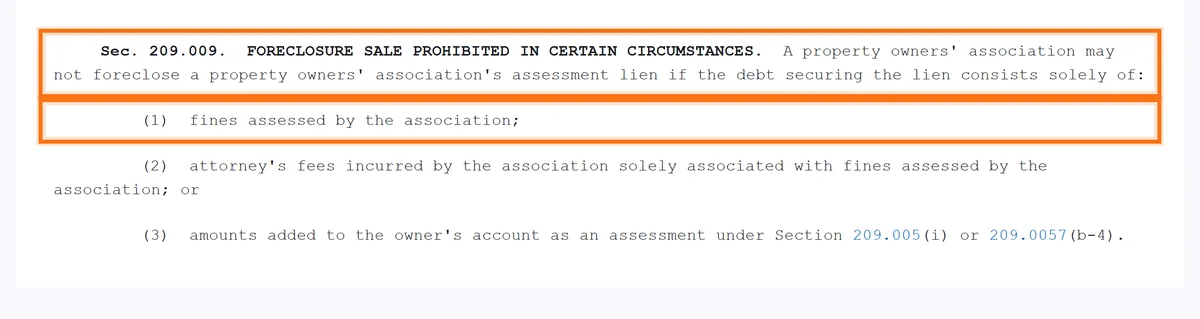
So fines alone cannot cost you the house, but they still sit on your account, and unpaid fines and dues surface at sale. Our scheduled inspections with photo reports catch lease violations and exterior problems early, before the association's inspector does.
Who should talk to the HOA
One point of contact works best. The association should hear from the manager, the tenant should hear from the manager, and the owner should see it in writing without being in the middle. We manage lease-up and tenant communication with the HOA rules in view, and address violation notices quickly so they do not escalate into owner fines. Fines the tenant caused are charged back where the lease allows.
Owners who let tenants deal with the HOA directly tend to regret it. The tenant is not the member, cannot request a hearing on the owner's behalf, and often does not know the rule they are breaking. The management agreement should say who handles HOA correspondence. Our guide to how a property manager handles HOA notices and violations walks through the cure period step by step.
Architectural approval and make-ready work
Exterior changes in an HOA community typically require approval from an architectural committee before the work starts: a new fence, a roof color, a storm door, a shed, exterior paint, even some landscaping. A make-ready that replaces a weathered fence with a different style can trigger a violation on a job that was meant to improve the home.
Before any exterior work, check whether approval is required and submit the request with the association's form and the vendor's specification. It adds a little time and removes the risk of being told to redo the work. Interior work generally needs no approval, with exceptions in townhome and condo associations that control shared walls and plumbing.
The HOA angle is one of the real differences between property types, which we cover in our comparison of single-family and townhome rentals in DFW.
Dues, special assessments and what the owner still pays
HOA dues stay with the owner. They are not passed to the tenant in most leases, they are a deductible rental expense in general terms, and they belong in the cash flow calculation before you decide to rent. Special assessments, levied when the association needs to fund a large repair, are also the owner's, and they can arrive with little warning in an older community with underfunded reserves.
When you buy a rental in an HOA, review the association's financials and reserve study in the resale certificate as carefully as you review the leasing rules. A low monthly due in a community with an aging pool and no reserve is a special assessment waiting to happen. Our guide to evaluating a rental before you buy puts the HOA review in that checklist.
This article is general information about HOA rules and Texas law, not legal advice. Your association's recorded documents control, and if a restriction affects whether you can lease at all, confirm it with a Texas attorney. If you are unsure what your HOA allows, send us the documents and we will tell you what we see before you list; reach out any time.
The takeaway: Read the HOA's leasing rules before you list, register the tenant on time, keep the exterior ahead of the association's inspections, and route every HOA conversation through one manager so fines never become liens.
Questions owners ask
Can an HOA in Texas prohibit me from renting my house?
It can restrict leasing if the restriction is in its recorded declaration or another dedicatory instrument: Property Code 209.016(d) allows provisions relating to occupancy or leasing. Minimum lease terms, rental caps and short-term rental bans are common. What it may not do is require that it approve your tenant or see the tenant's credit report or application (209.016(b)). Read the documents and confirm with an attorney if leasing itself is in question.
Who pays HOA fines caused by a tenant?
The association bills the owner, because the owner is the member. A well-written lease requires the tenant to follow the HOA rules and allows the owner to charge back fines the tenant caused, and a manager enforces that by giving the tenant written notice to cure and collecting the fine if it is assessed.
Do I have to register my tenant with the HOA?
If the association's documents require it, yes. Under Property Code 209.016(e) it may request each resident's name, mailing address, phone number and email, and the lease start date and term. It may not require the tenant's credit report or rental application. Put the report on the move-in checklist with the HOA's deadline.
Does a tenant have to follow HOA rules?
The tenant is bound to the rules through the lease, which should attach the HOA rules as an addendum and require compliance. The association enforces against the owner, so the owner or manager enforces against the tenant under the lease.
Will a property manager handle HOA notices and violations?
Yes, and it works best when the manager is the single point of contact. When a violation notice arrives, the tenant gets written notice of the rule and a deadline, the fix is confirmed, the association hears back before the cure date in the notice passes, and fines the tenant caused are charged back where the lease allows. We manage lease-up and tenant communication with the HOA rules in view and address violation notices quickly so they do not become owner fines.
How do I check whether my HOA allows me to rent out my house?
Get current copies of the declaration, the bylaws and the board's adopted rules from the association's management company or website, and read the sections on leasing, use restrictions and enforcement. Look for a minimum lease term, a rental cap or waiting period, whole-home-only rules, short-term rental bans, the tenant information the HOA asks for and any language it wants in the lease. Pull the most recent rules separately, because boards adopt rules more often than they amend the declaration.
Can an HOA foreclose on my rental house for unpaid fines in Texas?
Not for fines alone. Property Code 209.009 prohibits an association from foreclosing its assessment lien when the debt consists solely of fines, attorney's fees tied only to fines, or certain amounts under 209.005(i) and 209.0057(b-4). Unpaid regular or special assessments are different, so keep dues current even while a fine is in dispute.
Related services
Property management in Keller, North Richland Hills and Fort Worth. How full-service management works in Tarrant County →