Key takeaways
- First step is always the shutoff: the valve at the fixture, or the main shut-off valve for the house.
- Tonight is for stopping the water and drying what is wet. The permanent repair is done the next business day at normal rates.
- The owner pays for the repair unless the tenant, an occupant or a guest caused it (Texas Property Code 92.052(b)).
- The Texas Department of Insurance says most policies cover sudden and accidental water damage and usually not gradual leaks or seepage.
- Mold can start growing within a day after a leak, according to TDI, so drying is decided the same night.
At 2 a.m. a water leak in your rental in Keller, North Richland Hills or Fort Worth becomes a short sequence: the tenant shuts the water off and calls the emergency number, a plumber is sent to stop the leak, someone decides whether drying equipment is needed, and the proper repair is scheduled for daylight. Under a property manager that sequence runs without you. Without one, it begins with your phone ringing.
This guide walks through the night step by step, then covers what Texas law requires of the landlord, who pays, what insurance does and does not cover, and how to detect a leak early in a long-term rental, a short-term rental or an empty house.
A night water leak, step by step
Here is the order of events when a tenant reports a leak after hours, who acts at each step, and what the owner should end up with:
| When | What happens | Who acts | What the owner should have afterward |
|---|---|---|---|
| First minutes | Water shut off at the fixture valve or the main shut-off valve | Tenant, guided by phone if needed | A note of which valve was closed and when |
| Same hour | Leak reported to the emergency number; photos of the source and the wet area | Tenant and manager | Dated photos and the time of the report |
| That night | Make-safe visit: cap the line, isolate the fixture, drain a failed water heater | After-hours plumber | The plumber's invoice and a written note on the cause |
| That night or first thing | Drying decision: fans and dehumidifiers if walls, floors or cabinets are wet | Manager, with a water extraction company | Moisture readings and the equipment invoice |
| Next business day | Permanent repair at normal rates; owner approval if it is over the agreed spending limit | Manager and plumber | An estimate before, an invoice and photos after |
| Following days | Dry-out finished, drywall and paint patched, insurance claim filed if the damage warrants it | Manager; owner and insurance agent for the claim | One file an adjuster can read |
How to read this table: the first two rows decide how much damage there is, and the last column is what decides how the money part goes. If a step in your rental has no name in the "Who acts" column, that step is yours at 2 a.m.
The first five minutes: stop the water
The tenant calls and describes it: water under the kitchen sink, a wet ceiling in the hallway, water coming from the water heater closet. The first job is not dispatch, it is the shutoff. For a fixture, the valve under the sink or behind the toilet. For a water heater, the cold-water valve on top of the tank. For anything the tenant cannot locate, the main shut-off valve for the house.
A tenant who closes a valve in two minutes turns a flood into a puddle. That is why the shutoffs should be shown to the tenant at move-in and photographed for the file. Fort Worth Water gives the same advice to every household: make sure everyone knows where the main water shut-off valve is, and check now that it works. If the water will not stop, or the source is inside a wall or under the slab, the plumber is sent right away. For a main break or a leak in the street, Fort Worth Water answers water emergencies 24/7 at 817-392-4477, option 1.
Make safe tonight, repair properly tomorrow
The after-hours plumber has one job: stop the leak and leave the house usable. Cap a failed supply line, isolate a fixture, shut and drain a failed water heater, clear a backed-up drain. They are not there to replace the water heater at 3 a.m. at an after-hours rate when the same tank can be installed at nine in the morning at the normal one. A manager dispatches under the emergency clause in your agreement, which exists so this call does not wait for your approval.
Alongside the plumber comes the dry-out call. If drywall, baseboards, cabinets or flooring are wet, a water extraction company brings fans and dehumidifiers that night or first thing in the morning. The Texas Department of Insurance says to dry the area as soon as you can, because mold can start growing within a day after a leak. The guide to water leaks and mold in Texas rentals covers the documentation in detail.
How and when you find out
For a leak that was contained at the valve with no wet materials, hearing in the morning is reasonable: what happened, what the plumber did, the make-safe invoice and the plan for the repair. For a leak with water in the walls or floors, you should hear the same night, because the dry-out and the likely scope mean money and a possible insurance claim.
What you are asked to do is narrow: approve the proper repair if it crosses your spending limit, decide between repair and replacement if the cause is an aging water heater or supply line, and talk to your insurance agent if the damage looks like a claim. The wider process is in how property managers handle after-hours emergencies.
What Texas law requires after a tenant reports a leak
Four parts of the Texas Property Code apply to a leak in a rental house.
The emergency number (92.020). A landlord with an on-site management or superintendent's office must give tenants a telephone number that is answered 24 hours a day for emergencies. Every other landlord, which includes the owner of a single rental house, must give the tenant a telephone number for reporting emergencies. The statute does not say who has to answer it or how fast.
The duty to repair (92.052). The landlord must make a diligent effort to repair a condition that materially affects the physical health or safety of an ordinary tenant, once the tenant has given notice and is not behind on rent.
The time allowed (92.056). Seven days is presumed to be a reasonable time to repair, and that presumption can be rebutted by the severity and nature of the condition and the availability of materials and labor. An active leak is not a seven-day problem.
Repair and deduct (92.0561). If the landlord fails to remedy flooding from broken pipes inside the home, a tenant who has met the notice requirements of that section may have it repaired immediately after giving notice of intent and deduct the cost, up to one month's rent or $500, whichever is greater. A landlord who responds the same night never reaches that point. This is general information, not legal advice.
Who pays, and what insurance covers
Here is who usually ends up paying for each part of a leak, and where that rule comes from:
| What was damaged or done | Who usually pays | Where the rule comes from |
|---|---|---|
| Plumber and repair, leak from age or ordinary use | Owner | Property Code 92.052: the landlord's duty to repair |
| Plumber and repair, leak caused by the tenant, an occupant or a guest | Tenant, if the lease says so | Property Code 92.052(b): no landlord duty to repair what they caused, unless it was normal wear and tear |
| Sudden and accidental water damage to the house | Owner's policy, after the deductible | TDI: most policies cover a burst pipe, toilet overflow or broken washer hose |
| Damage from a gradual leak or seepage | Owner, usually without insurance | TDI: most policies do not cover gradual leaks, or the mold from them |
| The tenant's belongings | Tenant, or the tenant's renters policy | OPIC: renters insurance covers the tenant's personal items, not the building |
| Flood water from outside | A separate flood policy, if you have one | TDI: home policies do not cover floods |
How to read this table: the cause decides almost every row, which is why the plumber's written note on the cause matters more than any other document from the night.
Whether to file a claim depends on the damage against your deductible. If you do file, the Texas Department of Insurance's advice is to tell your company as soon as possible, take pictures or video before repairs, make only temporary repairs until the company has seen the damage, keep receipts, and not throw away damaged items until the adjuster has seen them. It also warns that an insurer may deny a claim if you do not protect the property. The manager does not decide whether you file; the manager makes sure you can. This is general information, not insurance advice.
The tenant, the house and the week after
If the house is still livable, the tenant stays and works around fans for a few days. If a bathroom or kitchen is out of service, the lease and Texas law shape what happens next, and a manager handles that conversation before it becomes a demand. If the house is not livable, temporary housing comes up and your insurance agent needs to be in the conversation.
The week after is the proper repair, the drying equipment pulled once readings are dry, drywall and paint patched, and a close-out photo set. If the cause was a type of supply line or a water heater past its service life, you should be told, because the other bathrooms have the same lines and the same age.
Leak detection and prevention: long-term rental, short-term rental or empty house
An expensive night leak is usually expensive because of something missed in daylight. Prevention is three things:
- Shutoff locations known and shared. Photographed at inspection, shown to the tenant or guest, and on the file whoever answers the phone can open.
- Supply lines and water heaters replaced on a schedule. Braided lines on toilets, sinks and the washer, a drain pan under the water heater, and a tank replaced before it fails. Documented inspections are where those get flagged.
- A plumber and a water extraction company lined up in advance, with after-hours rates agreed and insurance on file.
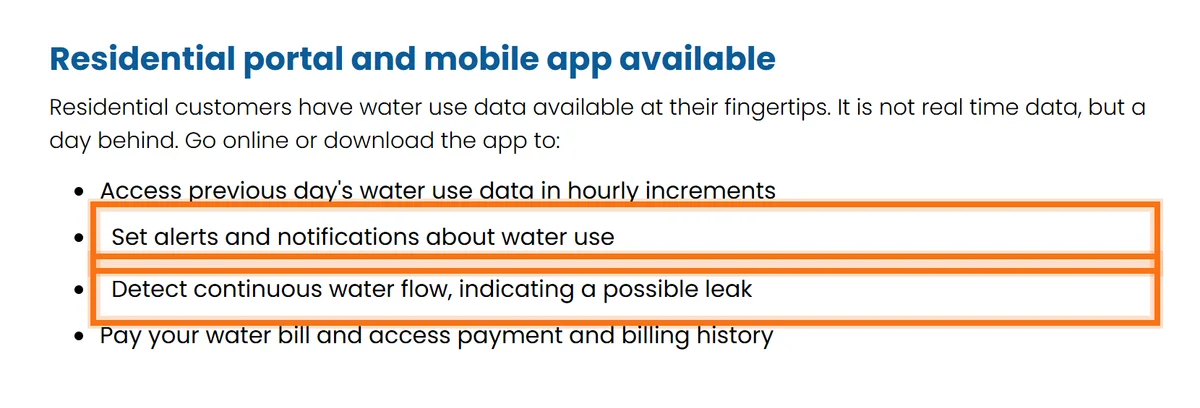
Detection is the other half, and it matters most where nobody is home: an empty house between tenants or a short-term rental between guests. Fort Worth Water customers can use the MyH2O portal and its free mobile app to see the previous day's use in hourly increments, set alerts and spot continuous water flow, which indicates a possible leak. The data runs a day behind, so it catches the slow leak, not the burst pipe. A battery leak sensor under the water heater and each sink can cover the gap between visits.
Two more points. If a leak ran up the water bill, Fort Worth Water offers a leak repair adjustment once in a rolling 12 months, requested within 60 days of the completed repair with the paid invoice. And if the home is a short-term rental, the Texas Department of Insurance says most policies will not pay for damages or injuries that occur during short-term rentals, so ask your agent before the first guest.
How Perpetual handles this
Perpetual Property Management is broker-owned, with our office at 5755 Rufe Snow Dr in North Richland Hills, and we manage homes in Keller, North Richland Hills, Fort Worth and nearby. What our site commits to for a night leak:
- 24/7 emergency response is on every plan on our price sheet. Active leaks are on our list of emergencies, and emergencies follow a 24/7 process.
- Repairs under the spending limit you pre-approve are done without waiting. Anything larger comes to you with a description, photos and a recommendation.
- Every completed repair over $500 gets photo or video proof in your portal, under our written guarantees.
- Every job is documented: what was reported, what was done and what it cost, with the vendor's original invoice in your owner portal.
What the site does not state is who answers the phone at night, how fast a plumber arrives, or which vendors we send. Those are confirmed in writing before you sign, along with the spending limit. Our maintenance page describes the rest of the process.
If you would like the next 2 a.m. call to go to someone else, call 682-593-7033.
The takeaway: A night leak under management is a shutoff call, a make-safe plumber, a drying decision and a next-morning repair; the money is saved by the shutoffs, supply lines and vendors that were sorted out in daylight.
Questions owners ask
Who pays for an emergency plumber at a rental?
The owner pays, because it is a repair to the owner's property, and the after-hours rate is part of that cost in a true emergency. The exception is a leak the tenant, an occupant or a guest caused: under Texas Property Code 92.052(b) the landlord has no duty to repair that during the lease unless it was normal wear and tear, and the lease usually makes it the tenant's expense. The plumber's note on the cause settles the question.
How fast does mold start after a water leak in Texas?
Fast. The Texas Department of Insurance says mold can start growing within a day after a leak, which is why the drying decision is made the same night and not after the plumber's repair. Fans and dehumidifiers from a water extraction company, with moisture readings taken before and after, are what keep a plumbing repair from becoming a remediation job.
Does landlord insurance cover a water leak?
For a sudden leak, usually yes. The Texas Department of Insurance says most policies cover sudden and accidental water damage, such as a burst pipe, a toilet overflow or a broken washer hose, and usually do not cover damage from gradual leaks or seepage, including the mold from them. Flood water from outside needs a separate flood policy. Your agent can confirm what your own policy says.
Can the tenant stay in the house during water damage repairs?
Usually yes, if the kitchen and at least one bathroom work and the fans are only an inconvenience. If part of the home is unusable, the lease controls first. Where the damage is an insured casualty loss not caused by the tenant, Property Code 92.054 allows a proportionate rent reduction only by court judgment unless the written lease provides otherwise, and lets either side end the lease if the home is totally unusable.
How long does a Texas landlord have to fix a water leak?
The Property Code does not give a number of hours. Section 92.052 requires a diligent effort to repair a condition that materially affects health or safety, and section 92.056 presumes seven days is a reasonable time, a presumption that the severity of the condition can rebut. For flooding from broken pipes, section 92.0561 lets a tenant who gave proper notice repair immediately and deduct, so an active leak should be stopped the same day.
What is the best water leak detection and prevention for a short-term rental?
Prevention: label the main shut-off valve and show it in the house guide, replace old supply lines and an aging water heater before they fail, and keep a plumber's after-hours number on file. Detection: battery leak sensors at the water heater and under sinks, plus usage alerts from your water utility, such as Fort Worth Water's MyH2O continuous-flow notice. Also confirm with your agent that the policy covers short-term rental use.
Related services
Property management in Keller, North Richland Hills and Fort Worth. How full-service management works in Tarrant County →