Key takeaways
- Texas Property Code 91.001: either side can end a month-to-month tenancy by notice, and it ends on the later of the date in the notice or one month after the notice is given.
- A signed agreement can set a different notice period, or none at all, so read what your lease says happens after the end date.
- Choose month-to-month when you may sell, renovate or move back. Keep the lease on a fixed term when you want steady rent.
- Texas cities cannot impose rent control outside a declared disaster (Local Government Code 214.902), so the rent on a month-to-month tenancy is set by your agreement and the market.
- We start renewal work 120 days before lease expiration, so month-to-month is a decision you make, not something that happens because nobody sent a renewal.
Should you let a good tenant stay month-to-month? Yes, if you need the flexibility more than the tenant does. No, if you simply forgot to send a renewal. On a rental in Fort Worth, Keller or North Richland Hills, month-to-month means either side can end the tenancy with one month's notice under Texas Property Code 91.001, unless a signed agreement says otherwise. That is useful when you may sell, remodel or move back in within the year, and it is a risk when you want steady rent.
This guide covers what Texas law says, when to keep the lease on a fixed term, the preferred lease duration for most owners, the options in between and how to set up month-to-month properly if you choose it.
Month-to-month or keep the lease on a fixed term: what changes in Texas
Here is what changes for the owner of a Texas rental house when a tenant moves from a fixed-term lease to month-to-month:
| Question | Month-to-month | Fixed term (6 or 12 months) |
|---|---|---|
| How does it end? | Either side gives notice. It ends on the later of the date in the notice or one month after the notice is given, unless a signed agreement sets a different period (Property Code 91.001) | On the end date in the lease, with whatever written notice the lease requires |
| Who picks the move-out month? | Whoever gives notice first, which may be the tenant | You do, when you choose the term |
| Can the rent change? | Yes, with the written notice your agreement requires. No city rent cap applies (Local Government Code 214.902) | Only when the term ends, unless the lease itself allows a change |
| What if the tenant stays after a proper notice? | At least three days' written notice to vacate before an eviction suit, unless the lease sets another period, and the 91.001 notice must have been given (Property Code 24.005) | The same three-day notice applies to a tenant who holds over past the end of the term |
| What happens to the deposit? | It stays in place and is refunded or accounted for within 30 days after the tenant surrenders the home (Property Code 92.103) | The same |
How to read this table: the only rows that differ are the first three, and all three are about control of timing. If you do not need to end the tenancy on short notice yourself, the fixed-term column gives you the same protections plus an end date you chose.
What month-to-month actually changes in Texas
The rule is in Texas Property Code 91.001. A monthly tenancy or a tenancy from month to month may be terminated by the tenant or the landlord giving notice to the other. Where rent is paid monthly, the tenancy ends on the later of two dates: the day named in the notice, or one month after the day the notice is given. That cuts both ways. You can recover the house in about a month, and the tenant can hand you a vacancy on the same timeline.
Three details in the same section matter:
- If the tenancy ends on a day that is not the start or end of a rent period, the tenant owes rent only up to the termination date (91.001(d)).
- The one-month rule does not apply if landlord and tenant agreed, in an instrument signed by both, on a different notice period or that no notice is required.
- It also does not apply where there is a breach of contract recognized by law (91.001(e)).
Many leases say what happens when the fixed term ends without a signed renewal: some continue month-to-month on the same terms, others treat the end date as final. Read your own lease, because the clause decides. Month-to-month vs. fixed-term leases goes through the clauses that matter.
Everything else stays the same. The deposit, the pet terms, the maintenance responsibilities and the late fee schedule carry over unless the written agreement changes them, and the same Texas rules on repairs, deposits and eviction apply to a month-to-month tenant as to one on a twelve-month lease. This is general information, not legal advice.
Raising the rent on a month-to-month tenant
A fixed-term lease locks the rent until the term ends unless the lease itself allows a change. A month-to-month tenancy does not. We read chapters 91 and 92 of the Property Code and found no section that sets a separate notice period for a rent increase on a house, so the written agreement controls. Where it is silent, the safe practice is written notice at least as long as the notice needed to end the tenancy: one month.
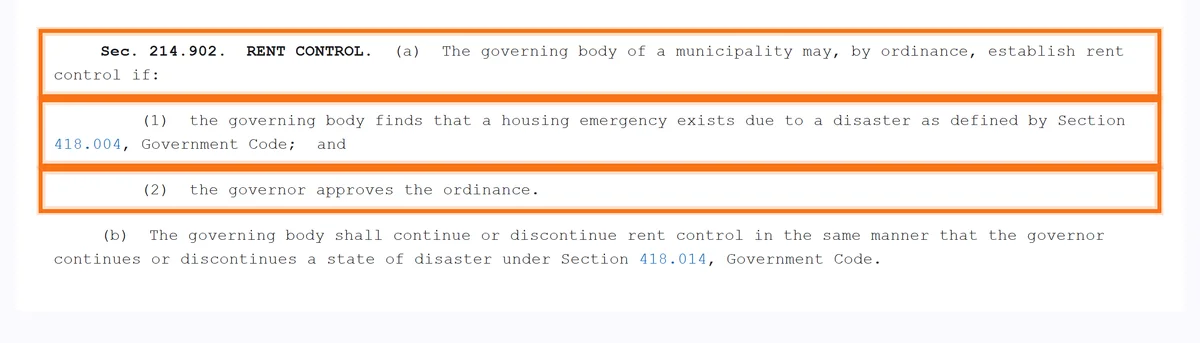
Texas also has no local rent caps in normal times. Under Local Government Code 214.902 a city may establish rent control only if it finds that a housing emergency exists because of a disaster and the governor approves the ordinance.
One limit does apply. Property Code 92.331 bars a landlord from raising the rent or ending the lease in retaliation within six months after a tenant in good faith asks for a repair or uses a legal right. An increase based on leased comparables, and documented that way, is the protection. How much to raise the rent and how to notify the tenant covers the letter itself. This is general information, not legal advice.
When month-to-month is the smart choice for the owner
Month-to-month earns its place when your plans are uncertain. The common cases:
- You expect to sell within the year and want the house deliverable vacant on a short notice, or you are still deciding between selling and holding.
- You plan a major renovation and need the tenant out on your schedule, not at the end of a lease a year away.
- You may move back in, for example after a job assignment or a family change.
- The tenant is leaving on a known date a few months out, and a short bridge is simpler than a short fixed term.
In those cases a good tenant on month-to-month is the ideal outcome: rent keeps coming, the house is occupied and looked after, and you can act when ready. If selling is the plan, selling a rental with a tenant in place covers how that works with the tenant still there.
When month-to-month quietly costs you money
Month-to-month hurts when you want the opposite of flexibility. The tenant can give notice in any month, including one you would never have chosen for a vacancy, and you then have about four weeks to prepare, list and show the house. A tenant on a twelve-month lease hands the house back in the month you picked when you set the term.
The cost is easy to estimate. Illustrative only, not a quote: at $2,000 a month in rent, one empty week costs about $460 ($2,000 x 12 months / 52 weeks), before make-ready and leasing costs. Our renewals page puts a typical turnover at one to two months of rent once vacancy, make-ready and leasing are counted. A fixed term does not prevent a turnover, but it lets you plan for one.
Rent also tends to lag. Owners rarely raise the rent on an arrangement nobody is reviewing, so the gap to market widens each year. Flexibility you are not using is just risk you are carrying.
Middle options, and the preferred lease duration for most owners
If you ask what the preferred lease duration is, the answer for most owners of a single house is a twelve-month fixed term, because it gives a full year of rent and an end date you control. But you do not have to choose between drifting and locking in for a year. Consider:
- A six-month lease, which moves the end date to a month you prefer or lines it up with a planned sale.
- A twelve-month lease with a sale clause that lets you end the tenancy early with a defined notice period, where the lease allows it and the tenant agrees.
- Month-to-month at a modest premium over the fixed-term rent, which compensates you for the uncertainty and nudges the tenant toward committing.
- A two-year lease for a tenant you would be glad to keep, with the rent stepped once in the middle.
Whichever you choose, the tenant has to agree, and the new term should be signed before the old one ends. Seasonality in the DFW rental market explains why the end date matters as much as the term length, and the renewal timeline shows when to start the conversation.
An example: the owner who might sell next spring
Illustrative scenario, not a real case. You own a house in Keller with a tenant who has paid on time for two years. The lease ends on October 31. You think you might sell next spring, but you are not sure.
A twelve-month renewal takes the house to the following October, past the window you want. Pure month-to-month from November means the tenant can give notice on December 5, and under Property Code 91.001 the tenancy then ends on January 5 at the earliest. You could be carrying an empty house through the winter while still undecided about selling.
The better fit is usually a six-month renewal to April 30, or a lease to June with a sale clause, at the same rent or slightly more. The tenant has a defined term, you have the house available in spring, and if you decide to keep it, you renew again on a date you chose. The term should serve the plan, not the calendar.
If you do go month-to-month, set it up properly
Put it in writing. Either sign a short month-to-month agreement or confirm in writing, signed by both sides, that the existing lease continues month-to-month on the same terms, including the deposit, the pet rules and the maintenance responsibilities. State the notice period both sides must give. Property Code 91.001(e) lets a signed agreement set a period different from the default one month, so a longer notice, such as 60 days, is possible only if both of you sign it.
Decide the rent deliberately instead of leaving it where it was. Keep inspections on the normal schedule; a tenant on month-to-month is still a tenant in your house. Count the notice correctly: a notice given on the 10th cannot end the tenancy before the 10th of the next month, and the tenant owes rent only up to that date.
Set a reminder to revisit the arrangement every few months, because the most common month-to-month mistake is forgetting it exists until the tenant gives notice. The renewal process should include month-to-month tenants, not skip them. For the notice itself, see lease termination notices in Texas.
How Perpetual handles this
Perpetual Property Management is broker-owned, with our office at 5755 Rufe Snow Dr in North Richland Hills, and we manage homes in Keller, North Richland Hills, Fort Worth and nearby. We do not let a lease drift into month-to-month by accident. Renewal work starts 120 days before the lease ends, with a rent check against leased comparables, and the conversation with the tenant typically happens 60 to 90 days out.
You receive a recommendation with reasoning: keep at market, adjust moderately, or let the tenant go, with the turnover math shown. If your plans call for month-to-month or a shorter term, tell us at that point. The decision is always yours.
The lease renewal fee is $150 on our Full Service plan, $200 on Standard and $149 on Investor Special, as listed on the price sheet. The lease form we use, what it says happens after the end date and whether a move to month-to-month is billed as a renewal are confirmed in writing before you sign.
If the reason for month-to-month is a sale, the same ownership runs our affiliated brokerage, so one team can advise on timing and sell the investment property. To talk through a lease that ends in the next four months, call 682-593-7033.
The takeaway: Month-to-month is for owners who need the exit, not for owners who forgot the renewal, so choose it on purpose, put it in writing and know that either side can end it on one month's notice.
Questions owners ask
Can I raise the rent on a month-to-month tenant in Texas?
Yes. We found no section in Property Code chapters 91 or 92 that sets a notice period for a rent increase on a house, so your written agreement controls; where it is silent, give written notice at least one month ahead, the same period 91.001 sets for ending the tenancy. Texas cities cannot cap rent outside a declared disaster (Local Government Code 214.902). The increase must not be retaliation under Property Code 92.331. This is general information, not legal advice.
How much notice does a month-to-month tenant have to give in Texas?
Under Property Code 91.001, where rent is paid monthly the tenancy ends on the later of the date in the notice or one month after the notice is given. A signed agreement can set a different period, so check the lease first. If the tenancy ends in the middle of a rent period, the tenant owes rent only up to the termination date.
Does a month-to-month tenant still pay a security deposit?
Yes. The deposit carries over from the original lease. When the tenant eventually moves out, Property Code 92.103 requires the refund within 30 days after the tenant surrenders the home, and 92.104 requires an itemized list of any deductions. Make sure the written month-to-month confirmation says the deposit continues under the original terms.
Can a month-to-month tenant be asked to leave for no reason?
Property Code 91.001 lets a landlord end a month-to-month tenancy by notice without stating a cause. The reason cannot be discriminatory or retaliation under Property Code 92.331. If the tenant stays after the notice period, you must give the written notice to vacate required by Property Code 24.005 and file an eviction suit in justice court; you cannot remove the tenant yourself. This is general information, not legal advice.
Is it better to keep the lease on a fixed term or go month-to-month?
Keep the lease on a fixed term unless you have a specific reason to want a fast exit, such as a planned sale, a renovation or moving back in. A fixed term gives you an end date you chose and rent you can count on until then. Month-to-month gives both sides the right to leave on one month's notice, which helps only the side that plans to use it.
What is the preferred lease duration for a rental house in Texas?
Texas law does not set one; the term is whatever you and the tenant sign. Most owners of a single house prefer twelve months, and a six-month or eighteen-month term is a reasonable way to move the end date to a month you would rather have a vacancy in. Pick the end date first, then count back to the term.
Does a lease automatically become month-to-month in Texas when it ends?
Only if the lease says so. We found no section in Property Code chapters 91 or 92 that renews a fixed-term house lease by itself. Read the holdover or renewal clause before the end date, and if you want month-to-month, confirm it in writing. This is general information, not legal advice.
Related services
Property management in Keller, North Richland Hills and Fort Worth. How full-service management works in Tarrant County →