Key takeaways
- One wall color, one sheen per surface and one hardware finish, written on a single page, turn most turnovers from a repaint into a touch-up.
- A warm off-white or soft greige in eggshell on walls, flat white on ceilings and semi-gloss white on trim is a standard that suits most rentals.
- At move-out, Texas Property Code 92.104 bars keeping any part of a deposit for normal wear and tear. A few nail holes and light scuffs are wear.
- For a house built before 1978, federal rules (40 CFR Part 745) require a lead disclosure with the lease and a certified firm for paint work that disturbs old paint.
- Repainting between tenants is a rental expense in IRS Publication 527's own example. A kitchen modernization is listed as an improvement.
How do you finish a house for renters? Use one wall color, one sheen per surface and one hardware finish, write them down, and reuse them at every turnover. On a rental in Fort Worth, Keller or North Richland Hills, paint is one of the largest lines in a make-ready, and the main reason it grows is that nobody wrote down what was on the walls last time. The painter cannot match an unknown color, so the whole room gets repainted. A written finish spec fixes that for as long as you own the house.
This guide lays out a standard that works, surface by surface, then covers what Texas law says about charging a tenant for paint, the federal lead-based paint rules for homes built before 1978, and how the IRS treats a repaint.
How to finish a rental house for renters: the spec by surface
Here is a finish standard for a single-family rental, with the reason behind each choice:
| Surface | Finish to standardize | Why it works in a rental |
|---|---|---|
| Walls, every room | One warm off-white or soft greige, eggshell | Cleans reasonably well and still touches up without an obvious patch |
| Ceilings | Flat ceiling white | Hides roller marks and drywall seams |
| Trim, doors and door frames | One bright white, semi-gloss | Takes the most contact and has to be wiped |
| Small or steamy bathrooms | Same wall color, satin | Handles moisture where the exhaust fan is weak |
| Painted cabinets | Cabinet-grade enamel over a bonding primer | A rolled wall paint on unprepped cabinets chips quickly |
| Door, cabinet and bath hardware | One finish, one model per item | A failed part is swapped for an identical one |
| Light bulbs | One color temperature | Rooms match in listing photos and replacements match |
How to read this table: the middle column is what goes on your one-page spec sheet, with the brand, color name and color code added for your house. The specific color matters less than using the same one every time.
Why one standard beats a nicer paint job
A rental is painted many times over an ownership. Every time the color, sheen or brand changes, the next painter loses the ability to blend, and the only clean result is a full repaint of every affected wall. Standardization turns a repaint into a touch-up, and a touch-up takes less labor and less material.
The savings show up in two places. The first is the invoice. The second is vacancy, because a house that needs a light touch-up can be photographed and shown sooner than one waiting on a full repaint, and vacant days are what a rental turnover really costs you.
Choosing the one wall color
Pick a warm, light neutral: a soft greige or a warm off-white. Avoid stark pure white, which shows every scuff and reads cold in photos, and think twice about a cool gray, which can date a listing. The right neutral looks clean under daylight and under the warm LED bulbs most tenants use at night.
Test it before you commit. Paint a sample on a north-facing wall and a south-facing wall in the same house, and look at both in the morning and the evening. A color that goes pink or green in one of those checks is the wrong one. Once it passes, that color goes on every wall in every rental you own, so your spare gallon works in all of them.
Ceilings stay flat ceiling white. Trim, doors and cabinets that are painted get one bright white. That is the whole palette: one wall neutral, one ceiling white, one trim white.
Sheen: which finish survives tenants on which surface
Sheen matters more than color for how a rental ages. Flat paint hides wall imperfections and touches up invisibly, but it scrubs poorly and holds fingerprints. Satin and semi-gloss wipe clean but flash where a touch-up meets the old coat, so a repaired spot shows under raking light.
- Walls: eggshell. It is the compromise that cleans reasonably well and still touches up without an obvious patch. Some owners prefer a washable flat from a quality line, which also works if you use the same product each time.
- Ceilings: flat. Nothing else hides roller marks and drywall seams.
- Trim, doors and door frames: semi-gloss. These take the most contact and need to be wiped.
- Kitchens and bathrooms: eggshell on walls is still fine if the exhaust fans work. Satin is a fair choice in a small bath that gets steamy.
Write the sheen next to the color on the spec sheet. A painter who uses the right color in the wrong sheen has still created a room that cannot be touched up next time.
The written spec sheet and where it lives
The spec is a single page. It lists the paint brand and line, the color name and code for walls, ceilings and trim, the sheen for each surface, the caulk and primer to use, and the hardware finish and fixture models covered below. Add the bulb color temperature so replacements match.
Keep three copies. One sits in the property file. One goes to every painter and handyman with the work order, so the spec travels with the job instead of living in someone's memory. One goes to the tenant at move-in, so a tenant who wants to patch a nail hole before leaving can do it correctly instead of making it worse with a near-miss color. What a tenant may and may not change is covered in when a tenant wants to paint.
If the house arrives with mixed colors, bring it to the standard at the first full turnover and not before. Repainting a sound wall for consistency alone does not pay.
Touch-up or full repaint: the decision at each turnover
With a standard in place, the make-ready walk becomes a room-by-room call. A room gets a touch-up when the damage is nail holes, a few scuffs and small marks that sand and spot-paint will cover, and the existing coat is the standard color in the standard sheen. A room gets a full coat when there are large patches, color bleed from furniture or smoke, heavy scuffing along a hallway, or any wall the tenant painted a different color.
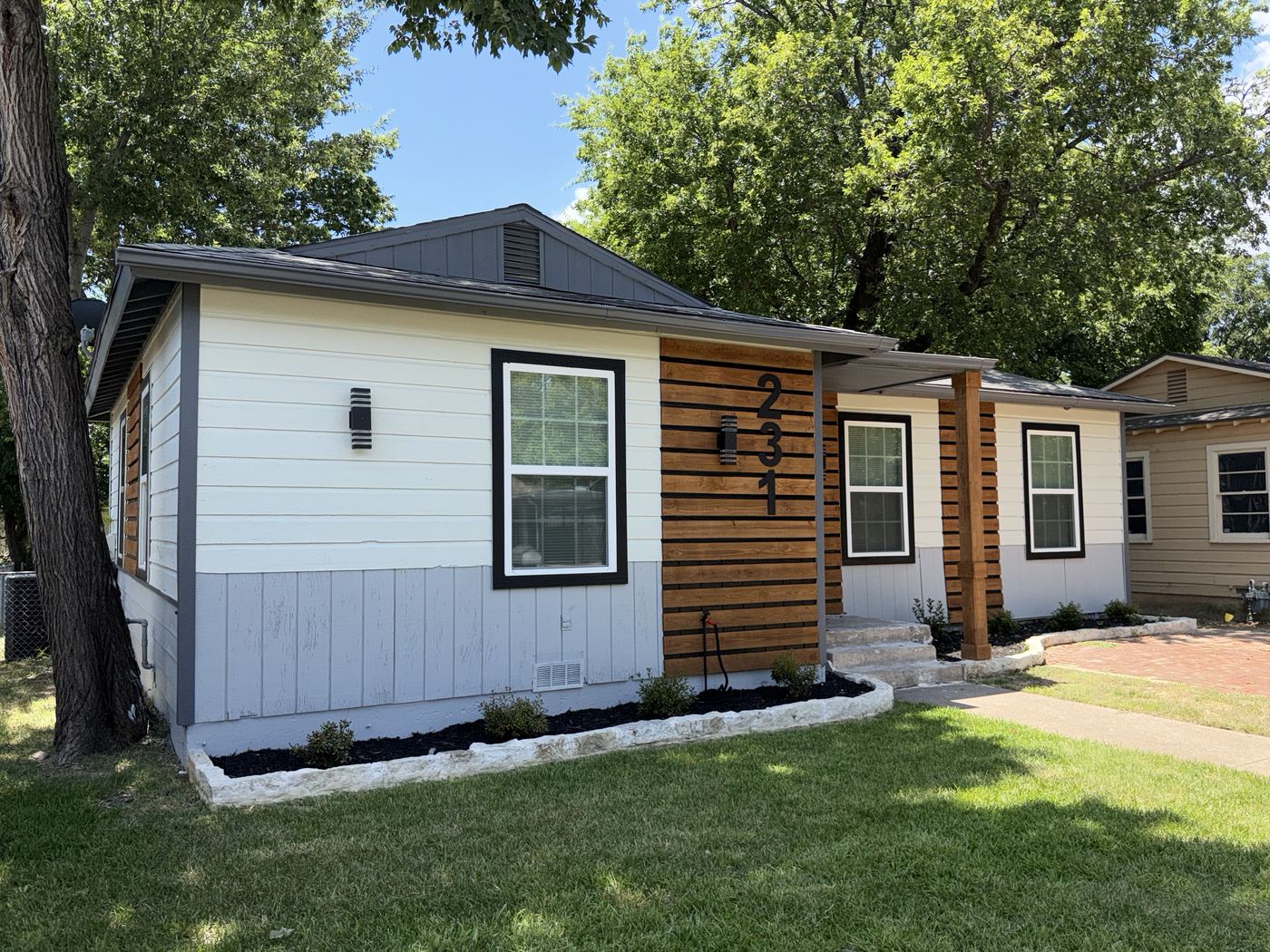
Doors and trim rarely need a full coat at every turnover. Semi-gloss trim usually cleans, and a quick touch-up at the strike plate and the kick area handles most of what tenants leave. The rest of the turnover list is in the make-ready guide.
Hardware and fixtures: pick one finish and one model
The same logic that applies to paint applies to everything metal in the house. Choose one finish, brushed nickel or matte black are both durable and widely stocked, and use it for door handles, cabinet pulls, faucets, towel bars, light fixtures and the door stops. A house with brass in one bath, chrome in the other and bronze in the kitchen looks older than it is and forces a mismatched replacement every time one part fails.
Go one step further and standardize the models. One kitchen faucet model, one bathroom faucet model, one toilet model, one ceiling fan, one door lever. Then every repair becomes a swap: the handyman already knows the part, the replacement matches, and you can keep a spare on the shelf. A faucet cartridge that is identical across all of your rentals is a quick fix instead of a parts hunt.
Cabinets, counters and the finishes that outlast paint
Painting dated oak cabinets white or a soft neutral changes a kitchen in listing photos, but it only lasts if the prep is done properly: degreased, scuff sanded, primed with a bonding primer and finished with a cabinet-grade enamel. A rolled wall paint on unprepped cabinets chips, and fixing it costs more than doing it right the first time.
Counters follow the same durability rule as flooring. Laminate is inexpensive, but it burns and chips and is hard to repair. A simple quartz in a light neutral costs more up front and stands up to tenants with little maintenance. Tile counters with grout lines are the one finish to avoid, since grout is hard to keep clean in a rental. For the floor underneath, see flooring for rentals.
Houses built before 1978: the federal lead-based paint rules
Plenty of rentals in Fort Worth, North Richland Hills and the older parts of Keller were built before 1978. Federal rules treat that housing differently in two places: the lease and the paint work.
The lease. Under 40 CFR 745.107, before a tenant is obligated under a lease of pre-1978 housing, the lessor must give the tenant the EPA pamphlet Protect Your Family From Lead in Your Home, disclose any known lead-based paint or hazards, and hand over any available records or reports. Section 745.113 requires a Lead Warning Statement and the tenant's signed acknowledgment in or attached to the lease, kept for at least 3 years from the start of the lease. The rule does not require you to test. Leases of 100 days or less with no renewal are exempt (745.101).
The paint work. The EPA Renovation, Repair and Painting rule (40 CFR 745.82) applies to renovations performed for compensation in pre-1978 housing. Its definition of renovation includes surface preparation such as sanding and scraping. It excludes minor repair and maintenance that disturbs 6 square feet or less of painted surface per room inside, or 20 square feet or less outside, with no window replacement or demolition (745.83). It also does not apply where a certified inspector has determined in writing that the affected components are free of lead-based paint.
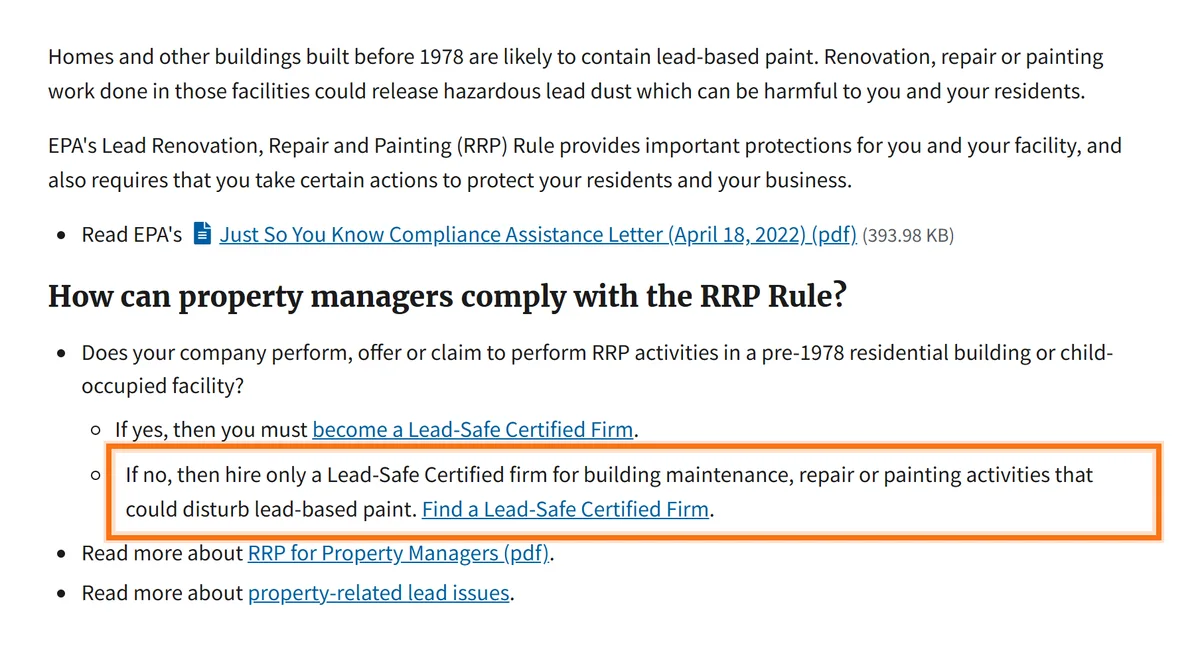
In practice, ask the painter for the firm's EPA certificate before a full repaint or any scraping on an older house, and expect the firm to hand you and the tenant the Renovate Right pamphlet before work starts (745.84). Certified firms keep their records for 3 years (745.86). This is general information, not legal advice.
Paint at move-out in Texas: normal wear or a deposit charge?
A finish standard only helps with deposit decisions if the move-in condition is documented. The condition report should photograph every wall, note existing nail holes and scuffs, and record the color and sheen the house was delivered in. Those photos are what separate normal wear from damage when the tenant leaves.
Texas Property Code 92.104 lets a landlord deduct damages and charges the tenant is legally liable for under the lease, and says the landlord may not retain any portion of a security deposit to cover normal wear and tear. Section 92.001 defines normal wear and tear as deterioration from the intended use of the dwelling, not deterioration from negligence, carelessness, accident or abuse by the tenant, a household member or a guest. Any deduction goes on a written, itemized list.
Applied to paint: a few nail holes and light scuffs after a normal tenancy read as wear. A bedroom the tenant painted navy without permission, large holes or crayon on every wall read as damage, and the cost to return that room to the written spec is a specific, documented number. The normal wear and tear guide and the move-out inspection guide go deeper. This is general information, not legal advice.
Is a repaint a repair or an improvement for taxes?
IRS Publication 527 says an expense for repairing or maintaining a rental may generally be deducted if you are not required to capitalize it, and that you must capitalize an expense that improves the property: a betterment, a restoration, or an adaptation to a new use. Its own example treats painting a rental as a rental expense, while its table of improvements lists kitchen modernization, flooring and wall-to-wall carpeting.
So a turnover repaint and a cabinet replacement are usually not the same kind of cost. The publication tells owners to separate the costs of repairs and improvements and keep accurate records, which a line-by-line make-ready invoice does for you. Whether a large project crosses into an improvement depends on the facts. This is general information, not tax advice; ask your CPA.
How Perpetual handles this
Perpetual Property Management is broker-owned, with our office at 5755 Rufe Snow Dr in North Richland Hills, and we manage homes in Keller, North Richland Hills, Fort Worth and nearby. Here is what our site states about the work around paint.
- Condition is documented both ways. Every move-in and move-out gets a 360-degree condition inspection, one of the five written guarantees. Those photos are what a paint charge is measured against.
- Make-ready is coordinated. Paint, clean, repair and refresh are sequenced so the home is photo-ready fast, as described on the renewals and turnovers page.
- You see the invoice. Coordination is a percentage of the vendor's invoice (5% of cost on Full Service, 4.9% on Standard, make-ready 3% to 5% on Investor Special, per the price sheet), and the original invoice is always in your owner portal. Every completed repair over $500 gets photo or video proof.
- You decide what is worth doing. The free rental analysis includes make-ready guidance: which improvements raise rent and which just cost money.
Our site does not publish a paint brand, color or vendor list, so the finish spec for your house and the coordination rate that applies to make-ready on your plan are confirmed in writing before you sign. To talk through a turnover or a house you are getting ready to rent, call 682-593-7033.
The takeaway: Write down one color, one sheen per surface and one hardware finish, hand that sheet to every vendor and every tenant, and most turnovers become a touch-up instead of a repaint. On a pre-1978 house, add the lead disclosure and a certified firm.
Questions owners ask
What is the best paint color for a rental property?
A warm light neutral, such as a soft greige or warm off-white, on every wall, with flat white ceilings and bright white semi-gloss trim. It photographs well, hides minor marks, suits most furniture and can be touched up at each turnover instead of repainted. Avoid stark white and cool gray.
Should I use flat or satin paint in a rental?
Eggshell on walls is the usual compromise. Flat hides imperfections and touches up invisibly but scrubs poorly. Satin and semi-gloss clean well but show touch-up patches. Use semi-gloss on trim and doors, flat on ceilings and eggshell or a quality washable flat on walls.
How often does a rental need to be repainted?
There is no fixed schedule. With a standard color and sheen, most rooms need only a touch-up between tenants, and a full coat when the walk finds heavy scuffing, large patches or a color the tenant changed. Without a standard, a turnover tends to become a full repaint because the painter cannot match what is there.
Can I charge a tenant for painting when they move out?
Only for damage beyond normal wear and tear, and only with documentation. Texas Property Code 92.104 bars keeping any part of a deposit for normal wear and tear and requires a written, itemized list of deductions. A few nail holes and light scuffs are wear. Walls painted a different color without permission, large holes or heavy staining are damage. This is general information, not legal advice.
Should I paint the cabinets in my rental?
If the cabinets are sound but dated, a properly prepped cabinet enamel in white or a soft neutral is a high-impact update for listing photos. Skip it if the prep will be rushed, because a chipping finish looks worse than dated wood.
How do I finish a house for renters?
Pick durable, repeatable finishes and write them down: one warm off-white or soft greige on every wall in eggshell, flat white ceilings, semi-gloss white trim and doors, one hardware finish, and one model each for faucets, fans and door levers. Reuse the spec at every turnover.
Do I need a lead-based paint disclosure to rent a house built before 1978?
Yes, for most leases. Under 40 CFR 745.107 and 745.113, before the tenant is obligated under the lease you give the EPA pamphlet Protect Your Family From Lead in Your Home, disclose any known lead-based paint or hazards, provide available records, and include the Lead Warning Statement with signed acknowledgments. Keep the signed copy at least 3 years. Leases of 100 days or less with no renewal are exempt.
Property management in Keller, North Richland Hills and Fort Worth. How full-service management works in Tarrant County →