
Key takeaways
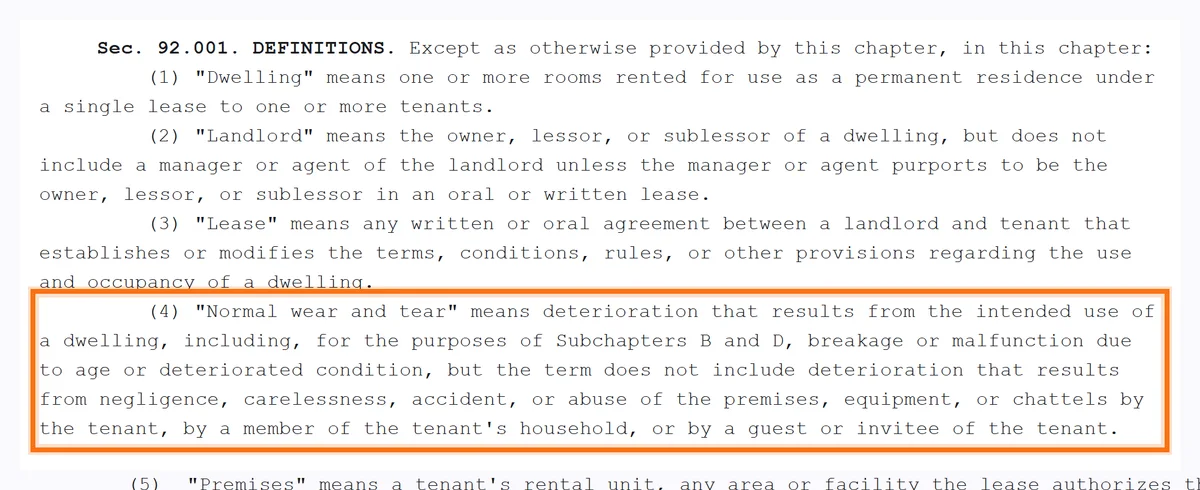
- Texas defines it: normal wear and tear is deterioration from the intended use of the home, including breakage or malfunction from age, but not damage from negligence, carelessness, accident or abuse (Property Code §92.001(4)).
- No part of the deposit may be kept for normal wear and tear (§92.104(b)); damage and charges the lease makes the tenant liable for can be deducted.
- A few small nail holes from pictures, faded paint and flattened carpet lanes are wear; large holes, unapproved paint colors, burns and pet urine are damage.
- Charges for items with a limited life, such as carpet and paint, are prorated for age, and each one needs photos and an invoice.
- If a tenant sues, the landlord must prove each deduction was reasonable, and bad faith costs $100 plus three times the amount withheld plus attorney's fees (§92.109).
Normal wear and tear in a rental is the deterioration that comes from living in the home as intended, including things that break or fail simply because they are old. Texas law does not let a landlord keep any of the deposit for it. Damage caused by negligence, carelessness, accident or abuse can be charged, along with cleaning beyond normal. That is the line we apply on every move-out in Fort Worth, Keller and North Richland Hills.
Paint dulls, carpet traffic lanes flatten, a faucet washer wears out: that is wear. Holes in doors, pet urine in the carpet, a cracked countertop from a dropped pot: that is damage. The line between the two decides most deposit arguments. Here is how to draw it, room by room, and how to price a charge so it holds up.
The standard Texas uses
Texas Property Code §92.001(4) defines normal wear and tear as deterioration that results from the intended use of a dwelling, including breakage or malfunction due to age or deteriorated condition, but not deterioration from negligence, carelessness, accident or abuse by the tenant, a member of the household or a guest. Under §92.104(b) the landlord may not keep any part of the deposit to cover it. The landlord may deduct for damage beyond that standard, for cleaning needed to return the house to its move-in condition, and for charges the lease makes the tenant's responsibility.
Three ideas carry the test: intended use, time, and cause. Did the item wear out from being used as intended? Has enough time passed that it would need attention anyway? Did a specific act or neglect cause it? Texas security deposit rules covers the deadlines and penalties that sit around this standard.
Normal wear and tear vs. tenant damage: room by room
The most common move-out items, sorted the way we sort them at a Texas move-out inspection:
| Item | Normal wear and tear (not chargeable) | Tenant damage (chargeable) |
|---|---|---|
| Walls | A few small nail holes from pictures, light scuffs along halls | Large holes or gouges, many anchor holes, crayon or marker, holes from a door handle |
| Paint | Faded or dull paint after years of normal living | Unapproved colors, heavy scuffing, smoke staining, patches that do not match |
| Carpet | Flattened traffic lanes, fading from sun, worn from age | Pet urine stains and odor, burns, rips, large stains that do not clean out |
| Wood and tile floors | Light surface scratches from furniture | Deep gouges, water damage from leaks the tenant did not report, tile cracked by impact |
| Kitchen | Aged appliance seals, dulled countertop finish | Chipped or burned countertop, broken drawer, oven caked with grease |
| Bathrooms | Worn faucet cartridge, grout that lost its brightness | Mildew from never running the fan, missing fixtures, cracked sink |
| Appliances and systems | Breakage or malfunction due to age or deteriorated condition | A disposal jammed with objects, a dryer vent never cleaned as the lease required |
| Yard | Dormant or brown grass in drought or under watering limits | Dead lawn from months without water while irrigation worked, dug-up beds, holes from a dog |
How to read this table: the left column is the owner's cost of doing business, because §92.104(b) bars keeping any of the deposit for it, and the right column is what the tenant can be charged if it was not there at move-in. When an item sits between the two, look at the cause and the time: something that wore out from normal use over years is wear, and something a specific act or neglect caused is damage. Charges in the right column are still prorated for the age of the item.
Are nail holes normal wear and tear?
A few small nail holes from hanging pictures are treated as normal wear and tear by most landlords and managers, including us. Tenants are expected to live in the home, and hanging pictures is part of living there. A filled pinhole costs almost nothing at the next paint touch-up.
What changes the answer is size and number. Dozens of holes, drywall anchors and toggle bolts from shelving or a TV mount, holes in doors or trim, and anything that needs a drywall patch rather than a dab of filler are damage, unless the lease or a written approval allowed the mount. If you want a firm rule, put it in the lease: for example, small nails allowed, anchors and mounts only with written permission. Our paint and finishes guide covers the standard colors that make touch-ups cheap.
Walls, paint and floors
Wear: small nail holes from hanging pictures, minor scuffs along hallways, faded or slightly dulled paint, carpet that is flattened in traffic lanes, light scratches on wood floors from furniture.
Chargeable: large holes or gouges, crayon or marker on walls, unapproved paint colors, heavy scuffing from furniture dragged across the floor, burns, pet urine stains and odor in carpet or pad, deep gouges in wood, and tile cracked by impact. Painting a wall because the tenant painted it purple is chargeable; repainting because the paint is four years old is not.
Standardizing paint and flooring choices makes these calls easier at every turnover, which paint and finishes for rentals explains.
Kitchen, bathrooms, appliances and fixtures
Wear: a worn faucet cartridge, a slow drain from ordinary use, minor countertop dulling, appliance seals that have aged, grout that has lost its brightness, a toilet seat that is loose.
Chargeable: a chipped or cracked countertop from impact, a broken drawer or cabinet door, an oven caked with grease, a refrigerator with spoiled food and stained drawers, a garbage disposal jammed with something it was never meant to take, missing shower heads or fixtures, mildew that was allowed to grow because the tenant never ran the exhaust fan or reported a leak. Reporting failures matter: a leak the tenant hid for months turns an owner repair into a tenant charge for the resulting damage.
Cleaning, yard, pets and the exterior
Cleaning is chargeable when the house is returned dirtier than it was received, allowing for the normal light cleaning any turnover needs. A reasonable standard is the move-in condition shown in the photos. If the house was professionally cleaned before the tenant moved in and comes back with a greasy stovetop and hair in every drain, the cleaning cost can be deducted.
Outside, if the lease made the tenant responsible for the lawn, dead grass from months of neglect is chargeable; summer dormancy during a drought generally is not. Pet damage is chargeable whether or not a pet was approved, and an unapproved pet may also trigger lease charges. Missing keys and remotes, unreturned garage openers and holes in the fence from a dog are all chargeable items.
Two things are never deductible as damage: the owner's own deferred maintenance, and improvements you simply wanted to make between tenants. A tenant who leaves a clean house with a fifteen-year-old roof has not caused a roof problem, and new countertops you chose to install are not a deduction even if the old ones had a chip.
How a fair charge is calculated
A charge is for the cost of repair or replacement, prorated for the age of the item when it has a limited useful life. Paint and carpet are the usual examples. If carpet has a reasonable life of several years and is halfway through it when the tenant ruins it, the tenant is charged roughly half the replacement cost, not the full amount. The same logic applies to appliances and blinds.
Each charge needs the before and after photos, a vendor invoice or written estimate, and a description a stranger could follow. Owners should not profit from a deposit; the deduction is to make the house whole, and a charge that exceeds what the repair actually cost is the kind of thing a justice court judge notices. The move-out inspection guide shows how the itemization is written.
What protects you when the tenant pushes back
Your protection is the record: a signed move-in condition report with dated photos, documented inspections during the lease that show when a problem appeared, a lease that clearly assigns responsibilities such as lawn care and filter changes, and a move-out report that compares against all of it. Without that record, a charge for a stained carpet is your word against the tenant's, and Texas Property Code §92.109(c) puts the burden on the landlord to prove that keeping any part of the deposit was reasonable.
The lease matters as much as the photos. If it does not say the tenant maintains the lawn, replaces filters, and returns the house professionally cleaned, those items are hard to charge no matter how clear the pictures are. Review the lease before move-out so you know what it supports.
Where a dispute does arise, the owner who kept the deposit in bad faith is liable under §92.109 for $100, three times the amount wrongfully withheld and the tenant's attorney's fees, and a landlord who misses the 30-day deadline is presumed to have acted in bad faith, so when an item is genuinely borderline, the conservative call is to treat it as wear.
This is general information, not legal advice. Confirm the specifics with your lease or an attorney.
How Perpetual handles this
Perpetual Property Management applies one written standard for wear versus damage on every home we manage in Keller, North Richland Hills and Fort Worth, so a tenant is not judged differently from one house to the next and an owner's deductions do not depend on who did the walk-through. Each home has a dated, tenant-signed move-in report, documented inspections during the lease, and a move-out comparison with photos and vendor invoices behind every proposed charge, prorated where the item has a limited life.
The owner reviews and approves the itemization before it goes to the tenant within the Texas deadline, and the whole file stays in the owner portal. We are broker-owned and local, our leasing uses a Texas-compliant lease that assigns responsibilities clearly, and every fee is listed in writing before you sign. If a move-out is coming up and you are unsure what you can charge, ask us before the tenant hands back the keys.
The takeaway: If an item wore out from ordinary use and time, it is yours; if a specific act or neglect caused it, it is the tenant's, and the photos decide which.
Questions owners ask
Can I charge a tenant for repainting in Texas?
Only for paint damage beyond normal wear, such as unapproved colors, large patches, crayon or heavy scuffing, and only prorated for the age of the existing paint. Repainting because the paint has simply aged or faded is the owner's cost. Document the condition at move-in so the comparison is clear.
Can I charge a tenant for carpet cleaning?
If the lease requires professional carpet cleaning at move-out and the tenant did not do it, or if the carpet is stained or smells of pets beyond normal use, the cleaning cost can generally be deducted. Routine freshening between tenants with no stains or odor is usually an owner cost. Replacement is prorated by the carpet's age.
Can I keep the whole deposit if the tenant leaves the house dirty?
Only the actual cost of the cleaning and any other legitimate charges, itemized in writing. Keeping the entire deposit without an itemization, or charging more than the work cost, exposes the owner to penalties under Texas law. Get a cleaning invoice and deduct that amount.
What counts as normal wear and tear for a long-term tenant?
More than for a short one. A tenant who has lived in the house for five years will leave more wear than one who stayed a year, and Texas expects that. Paint, carpet, blinds and appliance finishes all age, so charges for those items after a long tenancy are rare and heavily prorated.
Are nail holes normal wear and tear?
A few small nail holes from hanging pictures are generally treated as normal wear and tear. Many holes, drywall anchors, TV mount holes and anything that needs a drywall patch are damage unless the lease or a written approval allowed them. A lease that states the rule, such as small nails allowed and anchors only with permission, prevents the argument.
What is considered normal wear and tear in a rental in Texas?
Texas Property Code 92.001(4) defines it as deterioration that results from the intended use of the home, including breakage or malfunction due to age or deteriorated condition. It excludes deterioration from negligence, carelessness, accident or abuse by the tenant, a household member or a guest. Faded paint, worn carpet lanes and an appliance that fails from age are typical examples.
Property management in Keller, North Richland Hills and Fort Worth. How full-service management works in Tarrant County →