Key takeaways
- Inspect a rental at five points: enrollment, move-in, at least once a year inside, drive-bys between visits, and move-out.
- Every Perpetual plan includes an annual property inspection; the enrollment inspection is $125, $49 or included, depending on the plan.
- Every move-in and move-out gets a 360 degree condition inspection, written into our guarantees.
- Texas sets no inspection frequency and no statutory entry notice, so the lease and the management agreement control both.
- After every visit you should get a dated photo report with the action taken on each finding.
How often should you inspect a rental property? For a house in Fort Worth, Keller or North Richland Hills, the answer we work to is: a full photographed inspection at move-in, at least one periodic interior inspection a year during the lease, exterior drive-bys in between, and a move-out inspection compared line by line with the move-in report. Homes with a history of problems, or tenants in their first year, get seen more often. Nearly every expensive surprise in a rental starts small: a slow drip under a kitchen sink, a clogged AC drain line, a bathroom fan that quit so the ceiling grew mildew. Each costs little when caught in month three and a great deal at move-out.
This guide covers the inspections a managed rental gets, how often each happens, what each one checks, how the tenant is notified, and exactly what you should receive afterward.
The four inspections a managed rental gets
Each inspection answers a different question, so they do not replace each other.
- Move-in inspection: done after make-ready and before keys are handed over. It records the condition of every room so the security deposit can be handled fairly later.
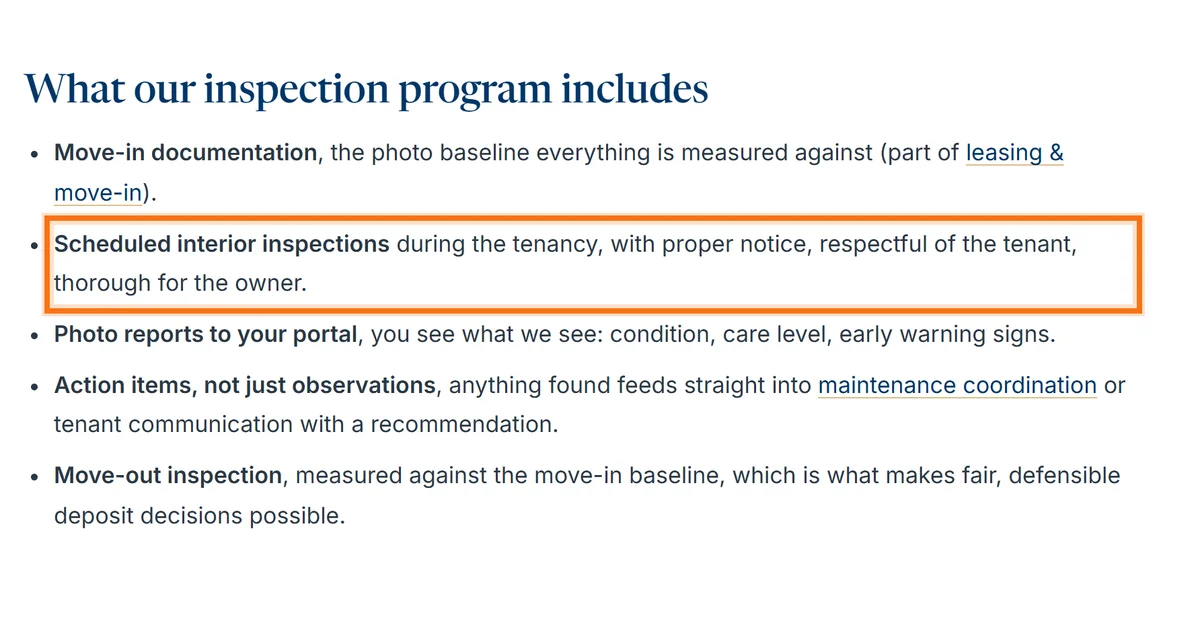
- Periodic inspection: a scheduled walk through the interior during the lease. It catches maintenance problems early and confirms the tenant is keeping the lease.
- Drive-by inspection: an exterior look from the street, no notice needed, used between interior visits to spot lawn neglect, unauthorized vehicles, trash, or exterior damage.
- Move-out inspection: done after the tenant surrenders the property. It is compared line by line against the move-in report to itemize any deductions.
On a typical twelve-month lease we expect the interior to be seen at move-in, at least once mid-lease, and at move-out, with exterior drive-bys in between. Properties with a history of issues, or tenants in their first lease term, get seen more often. Our inspection service is built around that cadence rather than a once-a-year glance.
How often each rental inspection happens
Here is the full schedule for a home we manage, with what each visit is for and what it costs under our published price sheet:
| Inspection | How often | What it checks | Cost on our plans |
|---|---|---|---|
| Enrollment inspection | Once, when management starts | Condition, systems and safety items before we take responsibility for the home | $125 Investor Special, $49 Standard, included in Full Service |
| Move-in inspection | Before every new tenant gets keys | A 360 degree condition record of every room, appliance and the yard, signed by the tenant | Part of leasing; a written guarantee on every plan |
| Periodic interior inspection | At least once a year during the lease; more when something warrants a look | Leaks, HVAC filter and drain line, smoke alarms, caulk, pests, occupants and pets against the lease | Annual property inspection included on every plan |
| Drive-by | Between interior visits | Lawn, trash, vehicles, fence, gutters and visible damage from the street | No tenant notice needed |
| Move-out inspection | After every tenant returns keys | The same 360 degree record, compared with the move-in photos for the deposit itemization | Part of every turnover; a written guarantee on every plan |
How to read this table: the middle column is the frequency, and the two rows that never move are move-in and move-out, because the security deposit depends on them. The periodic interior visit is the one owners most often go without; once a year is the floor, not the target, when a tenant is new or a home is older. The last column comes from our price sheet, so you can compare it with any other company's written quote.
What a move-in inspection documents
The move-in inspection is the single most valuable document in the whole tenancy, because every deposit dispute comes down to it. If the condition at move-in is not recorded in detail, the owner has very little to stand on at move-out.
A proper move-in report includes dated photos of every wall, floor, ceiling, cabinet interior, appliance and fixture, including the inside of the oven and the condition of the blinds. It records meter readings, the number of keys and remotes issued, the smoke detector test, and the filter size and condition. Any pre-existing flaw, down to a scuff, is listed so the tenant cannot be charged for it later and the owner cannot be accused of charging for it.
The tenant signs the report, usually with a short window to add anything they feel was missed. That signature is what turns a list of photos into evidence. The whole process is laid out in our guide to move-out inspections and deposit itemization, which only works if the move-in side was done right.
What a periodic interior inspection checks
A mid-lease inspection is not a white-glove test. It is a maintenance and lease-compliance visit, and the checklist reflects that.
- Under every sink and around every toilet for moisture, staining or soft cabinet floors.
- Water heater pan, supply lines, and any sign of rust or weeping at the connections.
- HVAC filter condition, condensate drain line, and whether the system is cooling and heating as expected.
- Smoke and carbon monoxide detectors tested, batteries replaced if needed.
- Caulk and grout in showers and tubs, since failed caulk is how water gets behind walls.
- Signs of pests, unreported leaks, or ceiling stains.
- Lease compliance: number of occupants, animals on the property, smoking, and any unauthorized alterations.
- Exterior: gutters, downspouts, fence condition, foundation soil contact, irrigation, and anything the tenant is responsible for under the lease.
When something is found, the inspector photographs it and opens a work order the same day. That is the link between inspections and maintenance coordination: an inspection that finds a problem and does nothing about it is just a photo album. The seasonal items on this list also appear in our preventive maintenance calendar.
Drive-bys and why the exterior matters more than owners expect
A drive-by takes a few minutes and requires no tenant coordination, which is why it fills the gaps between interior visits. From the curb you can see most of what the neighbors and the HOA see: dead lawn, overgrown beds, trash cans left out, a trailer or inoperable vehicle, broken fence pickets, torn screens, a sagging gutter.
Those things matter for two reasons. First, HOA fines and city code notices usually start with exterior conditions, and they arrive addressed to the owner. Second, exterior neglect is a reliable early signal that the interior needs a closer look. A tenant who has let the yard go for two months is rarely changing the AC filter.
Drive-bys also catch the things tenants do not think to report, like a downspout that has disconnected and is dumping water against the slab. In North Texas clay soil, that is a foundation problem in the making, and it is a five-minute fix when caught.
The move-out inspection and the deposit
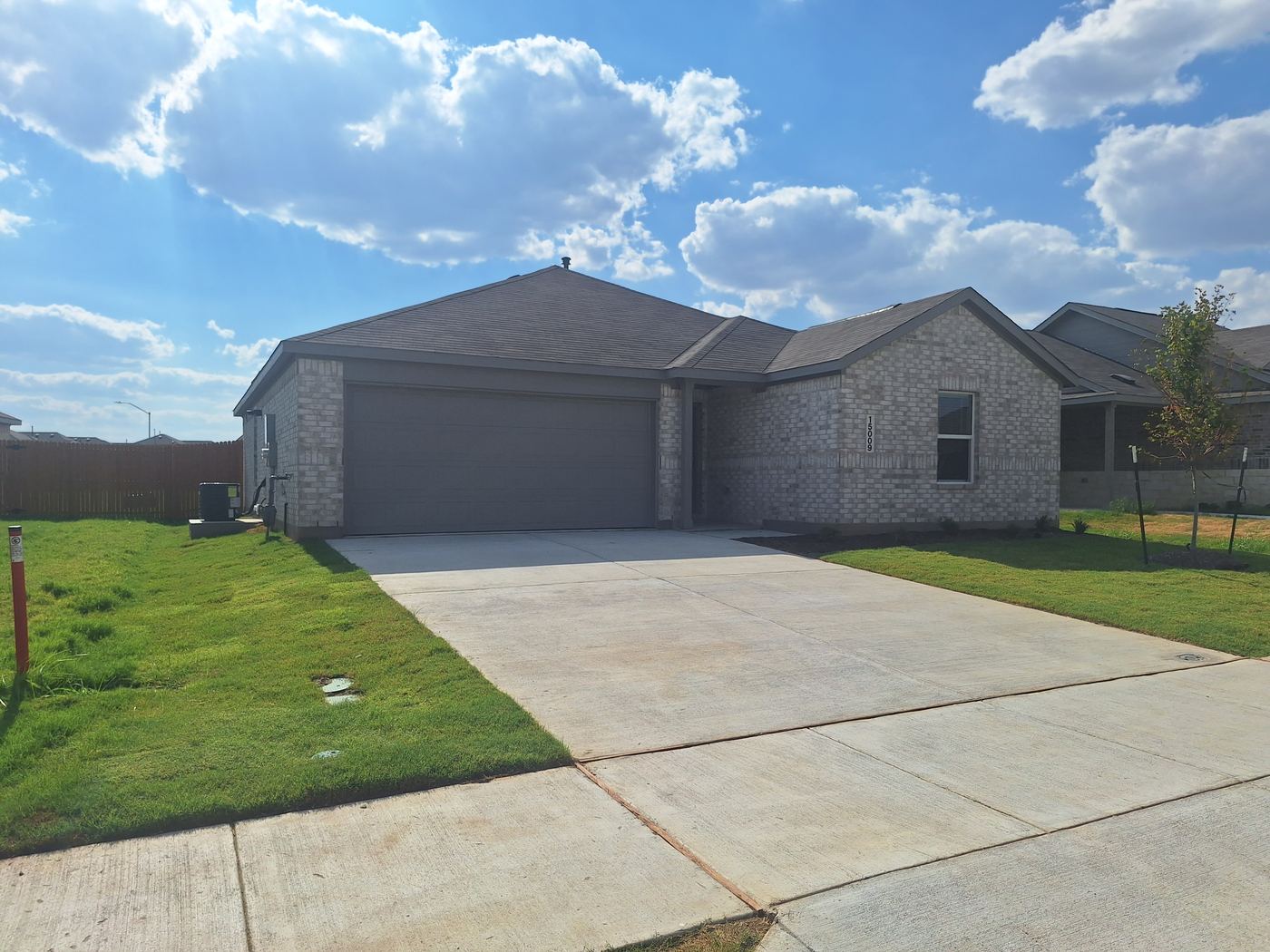
After the tenant returns keys, the move-out inspection repeats the move-in walkthrough with the original report in hand. Every item is compared against its move-in photo. Normal wear from ordinary living is the owner's cost. Damage, missing items, excessive cleaning and unreturned keys are the tenant's, documented with a photo and an invoice or estimate for each line.
Texas law sets a deadline for returning the deposit or sending an itemized list of deductions once the tenant has moved out and provided a forwarding address, and penalties for getting it wrong fall on the owner. A manager's job is to make sure the itemization is accurate, defensible and on time. Our guide to Texas security deposit rules covers the detail.
The move-out report also becomes the make-ready scope. Instead of guessing what the house needs, the owner gets a list of what the tenant pays for and what the owner pays for, with vendor estimates attached, before any work starts.
How tenants are notified, and why they rarely object
Texas does not set a statutory notice period for landlord entry, so the lease controls it. Our leases spell out that the property will be inspected during the tenancy and give the tenant advance written notice of interior visits. Inspectors arrive within the stated window, identify themselves, and leave the property exactly as they found it.
Tenants who are keeping the lease generally welcome inspections, because it is their chance to point out the small things they have been meaning to mention. Tenants who object strongly to a scheduled, noticed inspection are telling you something, and that is worth knowing in month four rather than month twelve.
The point is consistency. Every property gets inspected on the same schedule, with the same checklist, whether or not anyone suspects a problem. That is what makes the findings fair and the reports credible if they are ever needed in a dispute.
What you should receive after every inspection
An inspection you cannot see is not worth paying for. After each visit, the owner should receive a dated report with photos, a short written summary, a list of any issues found, and the action taken on each one. If a work order was opened, the report links to it. If a lease violation was noted, the report says what notice went to the tenant.
At Perpetual, those reports are posted to the owner portal alongside the monthly statement, so you can open any property and see its full inspection history in one place. You never have to ask whether the house was checked, or take anyone's word for its condition.
If you are comparing managers, ask to see a sample inspection report before signing. The difference between a two-line note that says "property looks fine" and a forty-photo report with a checklist tells you most of what you need to know about how the rest of the work will be done.
What skipping inspections actually costs
Owners who self-manage often go the entire lease without setting foot inside, usually because scheduling feels awkward. The bill for that arrives at move-out as a ruined subfloor under a toilet that leaked for eight months, an AC system that ran on a clogged filter until the coil froze, or a deposit dispute with no move-in photos to settle it.
Compared with those outcomes, a few scheduled visits a year are close to free. They also give you something harder to price: knowing the actual condition of an asset you own but do not live in. If you would like a straight assessment of how your property should be inspected and maintained, start with a free rental analysis and we will walk through it with you.
The takeaway: A rental that is inspected on a fixed schedule, with photos the owner can see, almost never produces the five-figure surprise at move-out that an uninspected one does.
Questions owners ask
How often will a property manager physically inspect my rental?
A managed rental should be inspected at move-in, at least once a year inside during the lease, and at move-out, with exterior drive-bys in between. Texas does not set a frequency, so the lease and the management agreement do. Every Perpetual plan includes an annual property inspection, every move-in and move-out gets a 360 degree condition inspection, and extra visits are arranged when something warrants a look. Each visit produces a dated photo report in the owner portal.
How much notice does a landlord have to give before an inspection in Texas?
Texas has no statute that sets a specific notice period for landlord entry, so the lease governs. A well-written lease states that inspections will occur and gives the tenant reasonable advance written notice, which is the standard we follow.
Can a tenant refuse a rental inspection?
If the lease provides for inspections with notice, the tenant has agreed to them and refusing is a lease violation. In practice a manager reschedules once to accommodate the tenant, then documents the refusal if it continues, because a pattern of refusal is itself a warning sign.
What is included in a rental inspection report?
A dated report should contain photos of every room and system, a checklist of what was tested, a list of issues found, and the action taken on each one, such as a work order or a lease notice. The owner should be able to view it online along with the property's full inspection history.
Are inspections inside the house or just drive-by checks?
Both, and they do different jobs. A drive-by is an exterior look from the street that needs no tenant notice and catches lawn neglect, trash, unauthorized vehicles and visible damage, which are the things that trigger HOA and city notices. An interior inspection is a scheduled, noticed walk through the home that checks under sinks and around toilets for moisture, the water heater, the HVAC filter and drain line, smoke alarms, caulk and grout, and lease compliance. Drive-bys fill the gaps between interior visits; they do not replace them. Perpetual does both, and the interior reports include dated photos of what was checked.
Will I receive inspection reports with photos?
You should, after every visit, and if a manager cannot show you a sample report before you sign, assume you will not. A proper report is dated, includes photos of each room and system, lists what was tested, notes any issues found and states the action taken on each one, such as a work order or a notice to the tenant. The move-in report in particular should photograph every wall, floor, cabinet interior and appliance, because every deposit dispute comes down to it. Perpetual posts each report to the owner portal beside the monthly statement, so you can open any property and see its full inspection history without asking.
How often should a vacant home be inspected?
Much more often than an occupied one, because nobody is there to notice a leak, a break-in or a failed AC. Check it at least every week or two and after every storm or hard freeze, and read your landlord policy's vacancy clause, since many policies limit coverage once a home has been empty for a set number of days. While a home we manage is vacant, you also get a written activity report every week.
What does a rental inspection cost with Perpetual?
The annual property inspection is included on every plan. The one-time enrollment inspection when management starts is $125 on the Investor Special plan, $49 on the Standard plan and included on Full Service. Move-in and move-out condition inspections are part of leasing and turnover. Every fee is listed in the management agreement, and a fee that is not there is not charged.
Related services
Property management in Keller, North Richland Hills and Fort Worth. How full-service management works in Tarrant County →