Key takeaways
- Four calls come before the listing: your insurer, your mortgage servicer, your HOA and the county appraisal district.
- A landlord (dwelling) policy usually does not include liability coverage, per the Texas Office of Public Insurance Counsel, so ask for it to be added.
- Texas requires specific locks on every rental (Property Code 92.153), a rekey within seven days after each tenant turnover (92.156) and a smoke alarm in each bedroom (92.255).
- In Fort Worth, registering a one- or two-family rental with no code violations is voluntary. Other cities differ, so confirm with the city the house is in.
- Write the screening criteria before the first application: Property Code 92.3515 requires them to be made available with the application.
Renting out a house for the first time in Fort Worth, Keller or North Richland Hills is a sequence of small administrative steps done in the right order. Skip one and it surfaces later at the worst moment: an insurance claim in dispute, an HOA fine with your name on it, or a tenant who should never have passed screening.
This is the order I walk owners through when they turn a home they live in, or one they just bought, into a rental. Work the checklist top to bottom and the leasing part becomes the easy part.
The first-time landlord checklist for a Fort Worth area house
Here is the whole checklist for renting out your house, in order, with the rule or reason behind each step:
| Step | What to do | Rule or reason |
|---|---|---|
| 1. Insurance | Replace the homeowners policy with a dwelling policy; add liability and loss of rent | A dwelling policy usually does not cover liability (Texas Office of Public Insurance Counsel) |
| 2. Mortgage | Read the occupancy clause; notify the servicer in writing | Your loan documents |
| 3. HOA | Get the current leasing rules in writing | Property Code 209.016 limits what an HOA may demand, but leasing rules can still apply |
| 4. Property tax | Tell the appraisal district the house is no longer your homestead | Tax Code 11.43(g): written notice before May 1 |
| 5. City | Check the rental rules of the city the house is in | Fort Worth: registration is voluntary for a house with no code violations |
| 6. Make-ready and safety | Clean, repair, rekey, check locks and smoke alarms | Property Code 92.153, 92.156 and 92.255 |
| 7. Price | Set the rent from leased comparables, not asking prices | Overpricing costs vacant weeks |
| 8. Screening | Write the criteria first and give them to every applicant | Property Code 92.3515 |
| 9. Lease and move-in | Texas lease, deposit, dated photos, signed condition form | Property Code 92.103: deposit refund due within 30 days after move-out |
| 10. Management | Decide who answers the phone before a tenant moves in | Your time and distance |
How to read this table: steps 1 to 5 cost almost nothing and protect you from the expensive surprises, so do them before you spend a dollar on the house. Steps 6 to 9 are where a manager does most of the work. The sections below take each step in turn.
Before you list anything: insurance, mortgage and HOA
Four calls come before photos, pricing or a yard sign. Each one takes minutes and each one can cost you real money if it is skipped.
- Call your insurance agent. A standard homeowners policy is written for an owner who lives in the house. Once a tenant moves in, you need a landlord policy, often called a dwelling policy. The Texas Office of Public Insurance Counsel notes that a dwelling policy usually covers the house and other structures but not liability, so ask for liability coverage and loss of rent to be added. Ask about requiring renters insurance from the tenant too.
- Read your mortgage documents. Most owner-occupied loans require you to live in the home for a period after closing. If you are past that window, you can usually rent the house without refinancing, but tell the servicer in writing and keep the reply. If you are inside the window, talk to the lender before you sign a lease.
- Check the HOA. Some Tarrant County associations set a minimum lease term or other leasing rules. Property Code 209.016 bars an association from requiring that your tenant be approved by it or that you hand over the tenant's credit report or application. Get the current rules in writing from the management company, not from a neighbor's memory.
- Tell the appraisal district. The residence homestead exemption in Tax Code 11.13 applies only to your principal residence. Tax Code 11.43(g) requires written notice to the appraisal office before May 1 after your entitlement ends.
I cover the detail on each of these in the guide to converting a primary home into a rental, and the insurance question in landlord insurance vs. homeowners insurance.
Renting out your home in Fort Worth: the city step
If the house is inside Fort Worth city limits, the city step is short. The City of Fort Worth's rental registration page says registration is voluntary for one- and two-family rentals with no violations, and mandatory, at $200 for each unit a year, for those with fire safety or public health and sanitation code violations. The page does not describe a city inspection before a tenant moves into a house.
Two cautions. First, a Fort Worth mailing address does not always mean Fort Worth city limits, and some of the smaller cities nearby run their own registration or inspection programs for single-family rentals. Check which city the property is in, then read that city's page or call its code compliance office. Second, rules change, so note the date you checked.
The details are in the guide to Fort Worth rental registration and inspections.
Get the house rent-ready, not sale-ready
A rental does not need the staging and upgrades a listing for sale would get. It needs to be clean, safe, working and neutral. Renters in this market walk through a lot of houses and they notice the same things every time: smell, flooring, the kitchen and whether the air conditioning is cold.
The standard make-ready list is short. Professional cleaning including the inside of appliances, carpet cleaning or replacement if it is worn, fresh neutral paint where needed, every bulb and smoke detector working, HVAC serviced with a new filter, and a lock change so you know who has keys. Fix drips, loose handles and sticking doors now, because they become maintenance requests the week after move-in.
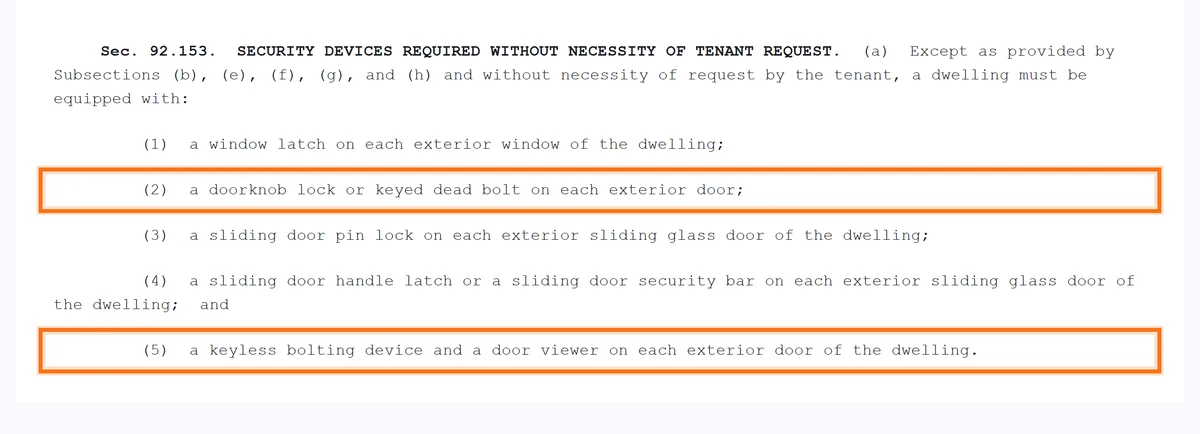
Three safety items are Texas law, not preference. Property Code 92.153 requires, with limited exceptions and without the tenant asking, a window latch on each exterior window, a doorknob lock or keyed deadbolt on each exterior door, a keyless bolting device and a door viewer on each exterior door, and a pin lock plus a latch or security bar on each sliding glass door. Section 92.156 requires the locks to be rekeyed at your expense within seven days after each tenant turnover. Section 92.255 requires at least one smoke alarm in each bedroom.
Resist the urge to do a big renovation before the first tenant. Spend on what shortens the vacancy and protects the house, and leave the cosmetic upgrades for a renter who will pay for them, which in most of this market is nobody.
Price from leased comps, not from what you need
The most common first-time mistake is pricing from the mortgage payment. The market does not know what you owe. It knows what comparable houses in your school zone leased for in the last few months, and renters compare against that list every evening.
A real rental analysis looks at leased comps, not active listings, then adjusts for condition, garage, yard, updates and pet policy. The right number is a range, and where you land in it should depend on the season and how fast you need a tenant. Overpricing by a small amount often costs a month of vacancy, which is more than the extra rent would have earned over the whole lease.
If you want the comps pulled for you, Perpetual offers a free rental analysis with a rent range and a written management quote before you commit to anything. For the method itself, read how to price a rental in DFW.
Marketing and showings
Photos sell the showing and the showing sells the lease. Shoot after the make-ready is finished, in daylight, with every light on and the blinds open. Twenty good photos beat sixty average ones. The description should lead with the facts renters filter on: bedrooms, bathrooms, garage, yard, pets, school district and the move-in date.
Syndicate the listing to the major rental sites and the MLS, then be ready to respond quickly. Inquiries that sit for a day go to the next house. Showings need a safe process: verify identity before anyone gets access, use a lockbox with a code that changes, and collect feedback so you can adjust price or presentation within the first week if showings are not turning into applications.
This is the part of the process that eats an owner's evenings and weekends. Plan for it honestly before you list. For comparison, our own listings go to Zillow, Trulia, HotPads and the Apartments.com network, with self-guided and scheduled showings after a pre-showing qualification check.
Write your screening criteria before the first application
Decide the standard before you have a face attached to it. Written criteria protect you under fair housing law because every applicant is measured the same way, and they protect your cash flow because the standard does not soften when someone is friendly and in a hurry.
A sound standard covers verified income at a multiple of rent, credit history with an eye on housing-related debt and collections, rental history with prior landlords actually contacted, eviction records, and a criminal background check applied the same way to every applicant. Apply it to every adult who will live in the house, in the order applications are received.
Texas makes the written part a rule. Under Property Code 92.3515, when you hand an applicant a rental application you must make available printed notice of your selection criteria and the grounds for denial, such as criminal history, rental history, income and credit. Our own published rental criteria show what that looks like in practice, including an income requirement of at least three times the rent.
Screening is the single step most first-time landlords regret shortcutting. The guide to how tenant screening works walks through each check and what a disqualifier looks like, and the tenant screening page shows the standard Perpetual applies to every application.
The lease, the deposit and move-in day
Use a current lease written for Texas, not a generic form from the internet. Texas has specific requirements around security deposits, repair requests, late fees and notices, and a lease that gets those wrong weakens your position when you need it most. A broker or a Texas landlord attorney can supply one with the addenda your house needs, such as HOA rules, a pool or pets.
Collect the deposit and first month's rent in certified funds before keys change hands. Then document the condition of the house thoroughly: dated photos of every room, every wall, every appliance and the yard, plus a signed move-in condition form. That record is what makes a deposit deduction hold up later. Property Code 92.103 requires the deposit to be refunded on or before the 30th day after the tenant surrenders the house, and 92.104 requires an itemized list of any deductions.
Set up rent collection online from day one. Cash and paper checks create disputes about when rent was received, and online payment gives you a clean record for both sides.
Decide who manages it, and decide it honestly
Everything above is doable yourself if you have the time, live nearby and are comfortable enforcing a lease with someone you will meet in person. Plenty of owners do it. The ones who struggle are usually the ones who never made a decision; they drifted into self-managing because the tenant was already in and it seemed fine.
Ask yourself three questions. Will you answer a maintenance call at 10 p.m. on a Sunday? Will you serve a notice to a tenant who is two weeks late and has a good story? Will you keep up with changes to Texas landlord-tenant law? If any answer is no, hiring a manager is a business decision, not a luxury. The comparison in self-managing vs. hiring a property manager lays out the real trade-offs.
Perpetual is broker-owned, with our office at 5755 Rufe Snow Dr in North Richland Hills, and we manage homes in Fort Worth, Keller, North Richland Hills and nearby. We price from leased comparables, screen every adult against written criteria, use Texas-compliant leases and document every move-in with a 360-degree condition inspection. Every fee is listed in writing before you sign, and full-service management runs from pricing through move-out. To talk it through first, call 682-593-7033 or reach out, and we will tell you plainly whether managing it yourself makes sense.
The takeaway: Do the insurance, mortgage and HOA steps first, price from leased comps, screen to a written standard, and decide who manages the house before the first tenant moves in rather than after.
Questions owners ask
Do I need to tell my mortgage company before renting out my house?
Usually yes, at least in writing. Most owner-occupied loans require you to live in the home for a set period after closing, and after that period you can generally rent it without refinancing. Read your note and deed of trust, then notify the servicer and keep the response. If you are still inside the occupancy period, speak with the lender first.
Can I keep my homeowners insurance when I rent out my house?
Not safely. A homeowners policy is written for an owner who lives in the house, so tell your agent before a tenant moves in and ask for a landlord (dwelling) policy. The Texas Office of Public Insurance Counsel notes that a dwelling policy usually does not cover liability, so have liability coverage and loss of rent added, and consider requiring the tenant to carry renters insurance.
How much should I spend getting the house ready to rent?
Spend on what shortens vacancy and protects the house: cleaning, paint, flooring if worn, HVAC service, locks and safety items. Skip cosmetic upgrades that a renter will not pay more for. A rental analysis will tell you which items in your specific house change the rent range.
What is the biggest mistake first-time landlords make?
Softening the screening standard for the first applicant who shows up. A vacant month feels expensive, but an eviction and a damaged house cost far more. Write the criteria first, apply it to every adult applicant the same way, and wait for someone who meets it.
Do I need to register my rental house with the City of Fort Worth?
Not for a one- or two-family rental with no code violations: the City of Fort Worth's rental registration page says registration is voluntary in that case, and mandatory at $200 a unit a year once the property has fire safety or public health and sanitation code violations. Rules differ in the smaller cities around Fort Worth, so confirm with the city the property is actually in.
What does Texas require a landlord to install before a tenant moves in?
Property Code 92.153 requires window latches, a doorknob lock or keyed deadbolt and a keyless bolting device with a door viewer on each exterior door, and a pin lock plus a latch or security bar on sliding glass doors. Section 92.156 requires a rekey within seven days after each tenant turnover, and 92.255 requires a smoke alarm in each bedroom.
Property management in Keller, North Richland Hills and Fort Worth. How full-service management works in Tarrant County →