Key takeaways
- Texas law does not require landlord insurance, but a mortgage lender requires coverage and a homeowners policy assumes you live there.
- A basic dwelling policy usually covers the house and other structures only, not liability, per the Texas Office of Public Insurance Counsel.
- Add liability, medical payments and loss of rent, and ask for replacement cost on the dwelling and the roof.
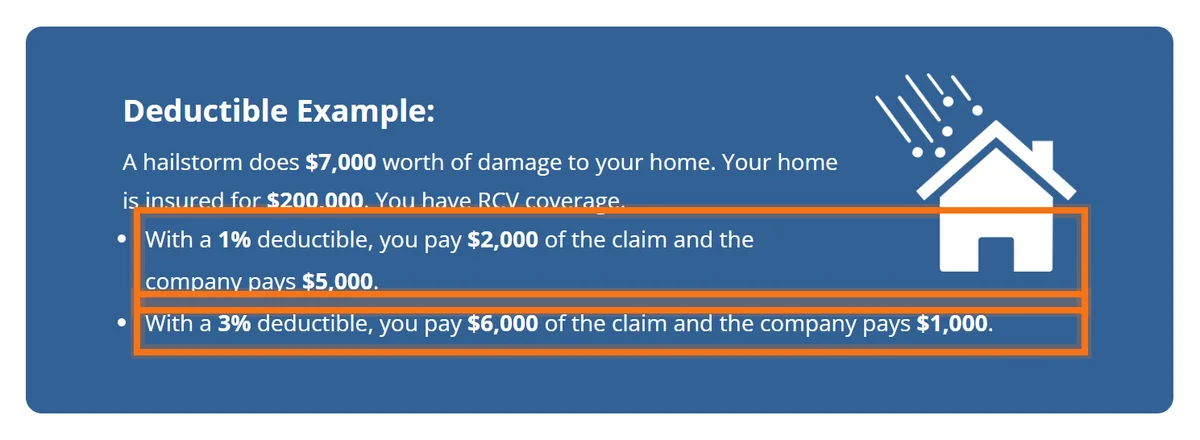
- A percentage deductible is a share of the dwelling limit: 3% on a $200,000 home is $6,000 before the policy pays.
- Require renters insurance in the lease; the tenant's policy covers the tenant's belongings, yours never does.
You need a landlord policy, in force before the tenant's first night, replacing the homeowners policy that assumes you live there. For a house in Fort Worth, Keller or North Richland Hills, that means dwelling coverage at replacement cost and other structures, plus the parts a basic dwelling policy usually leaves out: liability, medical payments and loss of rent. Two terms then decide what a hail claim pays: how the roof is settled and how large the wind and hail deductible is.
Beyond the policy itself, require renters insurance in the lease, consider an umbrella policy, and tell your lender and your HOA that the house is now a rental. This is general information, not insurance advice; an agent who writes rental property policies in Tarrant County should confirm the details for your house.
The policy itself: landlord, not homeowners
A homeowners policy is priced and written for an owner-occupant. Once a tenant moves in, the insurer may treat the house as a different risk and limit or deny a claim. The replacement is a dwelling policy written for a non-owner-occupied house, which carriers sell under names like landlord, rental dwelling or dwelling fire. Ask for the broader form that covers all perils except those excluded, rather than the narrow form that lists the only perils covered.
Timing matters. Bind the landlord policy to start on or before the tenant's move-in date and let the homeowners policy end the same day, so there is no gap and no overlap the insurer can argue about. The landlord versus homeowners insurance guide covers what changes between the two forms in more depth.
The coverages to ask for by name
The Texas Office of Public Insurance Counsel describes a dwelling policy as one that usually covers the house and other structures, but not personal items, additional living expenses, medical bills for someone hurt at the house, or liability claims. That is why a landlord has to ask for the rest by name:
| Coverage | In a basic dwelling policy? | Why a landlord needs it |
|---|---|---|
| Dwelling, at replacement cost | Yes, the core of the policy | Rebuilds the house at today's prices; insure for rebuild cost, not sale price |
| Other structures | Yes, usually | Fence, detached garage, shed, pool equipment |
| Premises liability | No, per OPIC; add it | Injuries to a tenant, guest or neighbor blamed on the property |
| Medical payments | No; add it | Small injury bills paid without a lawsuit |
| Loss of rent (fair rental value) | Ask; often an option | Rent lost while the house is unlivable after a covered loss |
| Personal property you leave | No; add it | Appliances, window coverings, a mower in the garage |
| Water backup | Often excluded | Sewer or drain backup into the house |
| Flood | Never | A separate policy, usually through the National Flood Insurance Program |
How to read this table: the first two rows are what every dwelling quote includes, and the rest are where two quotes really differ. Ask the agent which rows are in the base form and which are endorsements; a cheaper quote often left two of them off. The landlord versus homeowners insurance guide covers the two forms in more depth.
North Texas specifics: roofs, hail and the deductible
Hail is the claim a Keller, North Richland Hills or Fort Worth owner is most likely to file, so the roof terms deserve the most attention. Wind and hail deductibles are often a percentage of the dwelling limit rather than a flat amount, and the roof may be settled at replacement cost or at actual cash value, which subtracts depreciation. The Office of Public Insurance Counsel's own examples show what that does to a claim:
| Example from OPIC | You pay | The insurer pays |
|---|---|---|
| $7,000 of hail damage, home insured for $200,000, 1% deductible | $2,000 | $5,000 |
| Same claim, 3% deductible | $6,000 | $1,000 |
| $10,000 roof, $2,000 deductible, replacement cost coverage | $2,000 | $8,000 |
| Same roof, ten years old, 50% depreciated, actual cash value coverage | $7,000 | $3,000 |
How to read this table: the deductible percentage and the settlement basis together can move most of a roof claim onto you. A low premium with a high percentage deductible or an actual cash value roof is a different product, not a bargain, so know which you have and how old the roof is.
Also check for a cosmetic damage exclusion on metal roofs and gutters, the limits on foundation and slab leak coverage, and whether burst pipes in a freeze are covered when the tenant kept the heat on. Flood is never in the dwelling policy; if the house sits near a creek or in a mapped flood zone, that is a separate policy. The hail and roof damage playbook covers the claim process when the storm comes.
Liability: where a rental differs from your own home
In your own house, the people who get hurt are mostly family. In a rental, they are a tenant, the tenant's guests and the tenant's dog's victims, and every one of them may look to the owner. The liability limit on the dwelling policy is the first layer. An umbrella policy, which sits above the dwelling policy and often above your auto policy as well, is the second, and for an owner with equity in the house and other assets it is usually inexpensive relative to what it covers. The umbrella insurance guide explains when that second layer earns its premium.
Requiring renters insurance in the lease, with a liability limit, puts the tenant's own policy first in line when the tenant's negligence causes the loss, such as a cooking fire or an overflowing tub. Your policy still responds, but the tenant's carrier is the one paying first and the one being subrogated against, not you.
Gaps owners discover at claim time
Most policies carry a vacancy clause that reduces or removes coverage after the house has been empty for a set number of days, which is exactly the situation between tenants or during a long make-ready. Ask for a vacancy permission endorsement when a gap is coming.
Loss of rent only pays after a covered physical loss; it does not pay when a tenant stops paying or is evicted. The tenant's belongings are never covered by your policy. Mold coverage is usually capped at a small amount. Short-term rental use is often excluded entirely. And if the house is titled in an LLC but the policy names you personally, the insurer has a reason to question the claim; the named insured should match the deed.
A checklist to finish before the lease starts
- Get quotes from at least two carriers on the broad dwelling form, with the coverages above listed line by line.
- Bind the landlord policy to start on or before move-in and cancel the homeowners policy the same day.
- Notify the lender that the house is a rental; the mortgage terms may require it.
- Put a renters insurance requirement in the lease, with the limit and a proof-of-coverage deadline.
- Send the declarations page to your property manager and give the insurer the manager's contact.
- Calendar the renewal and review the roof terms every year, and update the dwelling limit after a roof replacement or a major remodel.
Our leasing process uses a Texas lease with the addenda your property needs and a photo-documented move-in report, so a renters insurance requirement and the condition record are both in the file from the first day.
How Perpetual handles this
We do not sell insurance and will not pretend to, but we manage houses in Keller, North Richland Hills and Fort Worth as a broker-owned company. Before a house is listed, we ask for the declarations page, check that the policy is a landlord form that starts before move-in, and flag anything that looks like a gap for you to raise with your agent. Our Texas lease uses current forms with the addenda your property actually needs.
During a claim, the 360-degree condition inspection we do at every move-in and move-out gives the adjuster the before pictures, completed repairs over $500 get photo or video proof in your portal, and the whole history sits there with the monthly statements. Every fee is in the written agreement before you sign. If you are converting your home to a rental, our full-service management page explains where to start.
The takeaway: Bind a landlord policy before move-in, read the roof and hail terms, require renters insurance, and add an umbrella if you have assets to protect.
Questions owners ask
Can I keep my homeowners insurance if I rent out my house?
You can keep paying for it, but you may find at claim time that the insurer treats the house as misrepresented and limits or denies the payment. Homeowners forms assume the named insured lives there. Tell your carrier the house is becoming a rental and ask them to rewrite it on a dwelling form; if they will not, another carrier will. The premium difference is small next to a denied roof claim.
Does landlord insurance cover the tenant's belongings?
No. Your policy covers the building, the structures you own and the personal property you leave in the house. The tenant's furniture, electronics and clothing are covered only by the tenant's own renters policy, which is one of the reasons to require it in the lease. A tenant who loses everything in a fire and has no renters policy will look to the owner, and a renters requirement with proof of coverage closes that door.
Does loss of rent coverage pay if my tenant stops paying?
No. Loss of rent, or fair rental value, pays the rent you lose while the house cannot be lived in because of a covered physical loss, such as a fire or a burst pipe. It does not respond to non-payment, eviction or a vacancy between tenants. Some carriers sell separate rent default products; they are a different coverage with their own conditions, and most owners rely on screening and a reserve instead.
Do I need to tell my mortgage lender that I'm renting the house out?
Usually yes. Most owner-occupant mortgages require you to live in the house for a period after closing and to notify the lender if that changes, and the lender will want to see a landlord policy with the lender named as mortgagee. Check the note and deed of trust, or ask the servicer. Converting without notice can put you in technical default even when every payment is on time.
What are the landlord insurance requirements in Texas?
Texas law does not require a landlord to carry insurance, as the Texas Department of Insurance notes for home insurance generally, but a mortgage lender will require coverage, and a homeowners policy usually stops fitting a house once a tenant moves in. The practical requirement is a landlord (dwelling) policy with liability coverage added, plus a renters insurance requirement in the lease.
Does a dwelling policy include liability coverage?
Often not. The Texas Office of Public Insurance Counsel describes a dwelling policy as usually covering the house and other structures, but not liability claims or medical bills for someone hurt at the house. Ask the agent to add premises liability and medical payments, or confirm in writing that the form you are buying already includes them.
Property management in Keller, North Richland Hills and Fort Worth. How full-service management works in Tarrant County →