Key takeaways
- Texas law does not say who mows: the lease does, so the yard clause has to be specific.
- Typical split: the tenant mows, edges, weeds, waters and picks up debris; the owner handles trees, irrigation repairs, drainage, fences and foundation watering setup.
- Fort Worth requires grass and weeds at 12 inches or less; after one certified notice a year and 10 days to mow, the city mows at the owner's expense, about $250 on average, and can place a lien.
- HOA letters and city notices go to the owner, not the tenant, so prevention beats collecting a fine back from a tenant.
- A lawn service built into the rent is often the cheaper choice for strict HOAs, big lots and homes where foundation watering matters.
In a Texas rental, the tenant is usually responsible for lawn maintenance (mowing, edging, weeding and watering) while the owner keeps the trees, the sprinkler system, drainage and fences, but only because the lease says so: Texas law does not assign yard work to either side. In Fort Worth, Keller and North Richland Hills the stakes are real, because the city or the HOA bills the owner when the grass grows.
The yard is the first thing an HOA, a neighbor and a drive-by inspection sees, and it is the maintenance item most likely to be nobody's job if the lease is vague. This guide covers the lease language that prevents arguments, how city and HOA standards change what you ask of a tenant, who runs and who repairs the sprinkler system, why foundation watering is the one yard duty an owner should never delegate blindly, and when paying for a lawn service out of the rent is the better business decision.
The default split: tenant maintains, owner owns the systems
Routine yard care is the tenant's. That means mowing, edging, weeding beds, raking leaves, trimming shrubs that can be reached from the ground, picking up debris after storms and watering enough to keep the grass alive. The tenant lives there, controls the water bill and sees the yard every day, so they are the right party for weekly work.
Everything that is a system or a long-lived asset is the owner's. That includes the irrigation system and its controller, trees and their trimming, drainage and grading, fences, retaining walls, and the sod itself if it dies from causes outside the tenant's control. The tenant cares for the yard; the owner owns it, and the lease should reflect that in plain words.
The gray areas, which the rest of this guide covers, are irrigation heads broken by a mower, grass that dies in a drought, HOA fines and the specialized watering a North Texas foundation needs.
Lawn and yard duties in a rental: tenant or owner?
The split we write into leases for single-family homes in Tarrant County, task by task:
| Yard task | Usually | What the lease should say |
|---|---|---|
| Mowing and edging | Tenant | Weekly in the growing season, never above the city or HOA height limit |
| Watering lawn and shrubs | Tenant | Enough to keep them alive, within city watering rules; report dying areas |
| Weeding beds, leaves, storm debris | Tenant | Beds kept weeded; debris cleared; no planting or removal without permission |
| Sprinkler system repairs, controller, backflow | Owner | Tenant reports problems in writing and does not change the controller program |
| Broken sprinkler head | Owner the first time | Repeat damage with an obvious tenant cause can be billed back |
| Trees, large shrubs, anything needing a ladder | Owner | Tenant may not cut, remove or climb; reports fallen limbs |
| Foundation watering | Owner sets it up | Soaker hose or drip zone on a timer; tenant reports a hose that stops working |
| Fences, drainage, grading | Owner | Tenant reports damage and standing water |
How to read this table: the tenant gets the weekly work they control and see every day, and the owner keeps the systems and long-lived assets that cost real money to replace. The right column is the part that prevents arguments; a lease that only says "tenant maintains yard" leaves every one of these rows open to dispute. If a lawn service is included in the rent, the first row moves to the owner and the rest stay the same.
What the lease should say, line by line
Many standard Texas lease forms include a yard maintenance paragraph with choices to mark, and the choices made there decide most disputes. Beyond ticking the box, we attach a short yard addendum that states:
- Mowing and edging at least every week in the growing season and as needed in winter, and never letting the grass exceed the city or HOA height limit (12 inches in Fort Worth).
- Beds kept weeded and mulched, with no new planting or removal of existing plants without written permission.
- Watering sufficient to keep the lawn and shrubs alive, subject to local watering restrictions, and a duty to report a dead or dying area promptly.
- Irrigation problems reported in writing within a few days of noticing them, and no changes to the controller program without permission.
- Trees, large shrubs, drainage and fences are the owner's responsibility and are not to be cut, removed or altered by the tenant.
- The yard is to be returned at move-out in the condition documented at move-in, allowing for the season.
Attach the HOA's landscaping rules if there is an HOA. The lease addenda guide lists the other addenda that belong in the same packet. Confirm the final wording with your lease form or an attorney; this is general information, not legal advice.
HOA standards change the math
In an HOA neighborhood the owner, not the tenant, receives the violation letter, and the fine attaches to the owner's account. A tenant who lets the grass get tall for two weeks costs you a letter; a tenant who ignores three letters costs you fines and a lien risk. The tenant's lease obligation is real, but collecting a fine from a tenant after the fact is slower and messier than preventing it.
In a strict HOA, the practical answer is often to include a lawn service in the rent. The yard gets mowed on schedule whether or not the tenant's weekend went as planned, the HOA never has a reason to write, and the cost is priced into the rent rather than absorbed as a surprise. Price a basic mow-and-edge service into the rent and list it as a feature, and the most common HOA complaint simply stops arriving.
Either way, read the HOA's rules before listing. Some associations limit what can be planted, require specific edging, or regulate when trash cans may sit on the curb. The HOA rules guide covers how a manager keeps the owner out of violation.
What happens when the grass grows: the Fort Worth rule
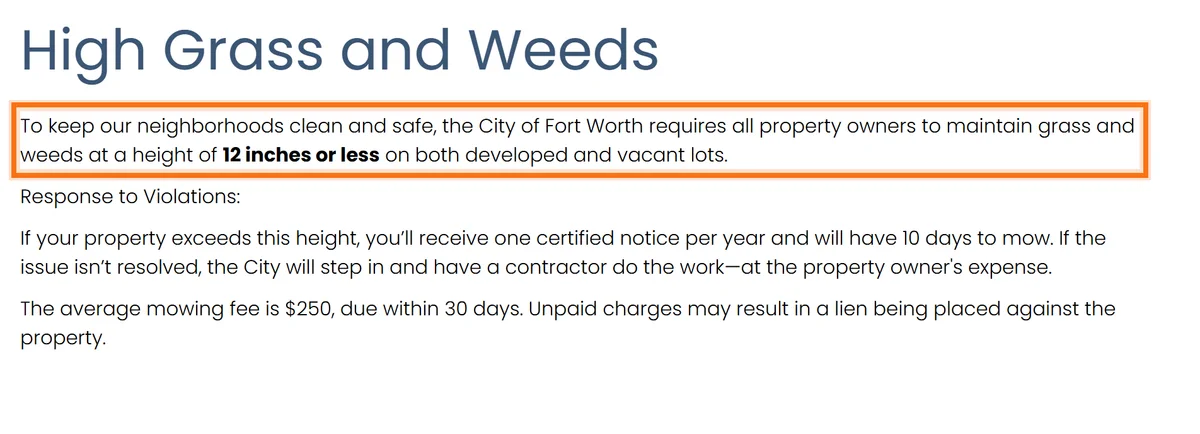
City code is the floor under every yard clause. The City of Fort Worth requires property owners to keep grass and weeds at 12 inches or less on both developed and vacant lots. If a property exceeds that, the owner receives one certified notice per year and has 10 days to mow; after that the city sends a contractor and bills the owner. The city puts the average mowing fee at $250, due within 30 days, and unpaid charges can become a lien on the property.
Two details matter for landlords. The notice and the bill go to the property owner, not the tenant, so a tenant who ignores the yard creates a cost the owner pays first and then has to recover under the lease. And because the city sends one certified notice per year, a second overgrowth in the same year may not get a fresh warning before the contractor shows up. Keller, North Richland Hills and other Tarrant County cities have their own height limits and procedures, and HOAs often set a stricter standard than the city.
Irrigation: who runs it and who fixes it
The sprinkler system is owner-maintained equipment that the tenant operates. The owner is responsible for repairs to valves, wiring, the controller, the backflow preventer and the main lines. The tenant is responsible for running it sensibly, following watering restrictions and reporting problems.
The arguable item is a broken spray head. Heads get clipped by mowers and crushed by car tires in the driveway strip, and they also fail on their own. Our approach is that the owner fixes heads, no questions asked, the first time, and the lease allows billing the tenant for repeat damage with an obvious cause. The cost of a head is small; the cost of an argument is a tenant who stops reporting problems and lets a broken head run for a month, flooding one corner and leaving the rest of the lawn to die.
At move-in, show the tenant the controller, the rain sensor if there is one, and the manual shut-off. Set the schedule yourself, write it down in the move-in packet, and ask the tenant not to change it. At periodic inspections, run each zone for a minute and look for geysers and dry spots. Put the seasonal irrigation items, including the fall shutdown, on the home's preventive maintenance calendar.
Foundation watering: the duty you cannot delegate blindly
North Texas sits on clay soil that shrinks when it dries and swells when it is wet. In a hot dry summer the soil pulls away from the slab, the slab settles unevenly and doors start sticking, cracks open and eventually plumbing under the slab is stressed. Keeping the soil around the foundation evenly moist through summer is the cheapest foundation insurance an owner has, and it is the one yard task most tenants have never heard of.
Do not rely on a lease line that says the tenant will water the foundation. Instead, make it easy and specific. Install soaker hoses around the perimeter on a simple timer, or add a drip zone to the irrigation system, and set the schedule yourself. The tenant's job becomes reporting a hose that stopped working, not remembering to water. Tell them in the move-in packet why it matters and what to watch for: gaps between the soil and the slab, doors that start to stick, new cracks in brick.
Where the house has a history of movement, we treat foundation watering as an owner expense the way we treat the sprinkler system, and it goes on the inspection checklist. The foundation and plumbing guide explains what the warning signs mean and who should look at them.
Trees, shrubs and the big-ticket yard items
Trees are always the owner's. A tenant should not be trimming anything that needs a ladder, and the lease should say so for liability reasons as much as for the tree's sake. The owner's tree duties are limbs kept clear of the roof, gutters and power service line, dead or diseased trees removed before a storm removes them, and roots watched near the foundation and sewer line.
Build a trim into the schedule every couple of years, more often for fast-growing species that lean on the roof. Branches rubbing shingles are the most common cause of roof wear that an owner could have prevented for a modest trimming bill, and a limb through a roof is an insurance claim with a tenant displaced. After a storm, limbs down in the yard are the tenant's to report and the owner's to remove if they need a chainsaw.
Large shrubs that have outgrown a bed, a hedge along the fence line, and anything decorative that needs shaping belong to the owner too. If you want the shrubs kept a particular way, hire it done rather than hoping a tenant shares your standards.
When including a lawn service is the better deal
Owners sometimes resist paying for lawn care because the tenant is supposed to do it. The better question is which arrangement protects the asset and the rent. A lawn service included in the rent makes sense when:
- The HOA is active and fines quickly.
- The lot is large, heavily treed or has extensive beds, and a tenant with a push mower will not keep up.
- The home is a premium rental where the tenant profile expects a managed yard and the rent supports it.
- Foundation watering is critical and you want a professional eye on the hoses and the soil every week.
- You have been burned before by a yard that went to seed and cost a re-sod at turnover.
Price it into the rent and describe it as a feature in the listing. Lawn care included is a line renters notice, and it turns a cost into a marketing point. If you include it, the lease still assigns watering and debris pickup to the tenant, and still prohibits planting and tree work, so the responsibilities stay clear.
Yard condition at move-in and move-out
Photograph the yard at move-in the same way you photograph the kitchen: front, back, sides, beds, trees, fence, irrigation controller and the condition of the grass. Note the season. A lawn documented in a green April looks different in a brown August through no fault of anyone, and the move-out comparison needs to allow for that.
At move-out, a yard returned mowed, weeded and free of debris meets the standard. A yard with dead patches from months without water, beds grown over, or a tenant-dug garden where the lawn used to be is damage, and the cost to restore it can be itemized against the deposit under Texas law in general terms, with photos and invoices to support it. Dead grass from a summer watering restriction or a hard freeze is not tenant damage, and a reasonable manager does not charge for it.
The move-out inspection guide covers how the itemization is documented so it holds up. Our inspection reports include the yard at every stage.
What a property manager does about the yard
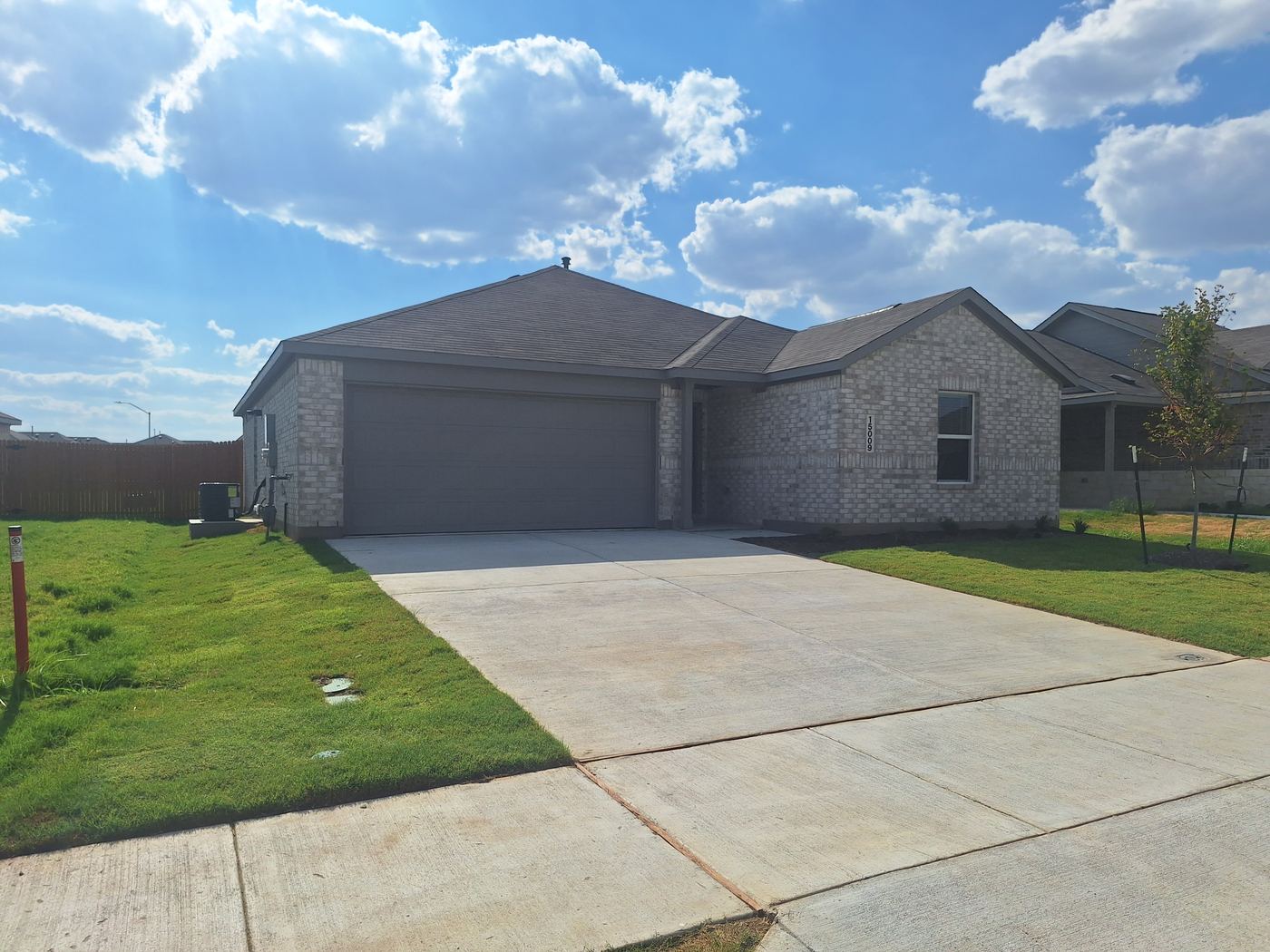
Yard problems are the easiest to catch early because they are visible from the street. A periodic drive-by shows tall grass, a brown lawn or a sprinkler geyser weeks before the HOA writes or the tenant mentions it, and a short message to the tenant usually fixes it the same week. When it does not, the lease gives us the standing to send a service and bill it, which is a conversation owners rarely enjoy having themselves.
Through our maintenance coordination we line up the vendors: a lawn crew that can be added for a season, an irrigation technician for a broken valve, an insured tree service, and a foundation watering setup installed at make-ready, with each invoice in the owner portal. HOA letters come to us, get answered and get resolved before they become fines, and the owner sees the whole history in the portal.
If you own a home with a demanding yard and are weighing whether to include a service, our maintenance team can price the options, and a free rental analysis shows what the rent will carry.
The takeaway: Give the tenant the weekly yard work in writing, keep trees, irrigation and foundation watering on the owner's side with a schedule you control, and include a lawn service wherever an HOA or a large lot makes relying on a tenant a bad bet.
Questions owners ask
Is the landlord or tenant responsible for lawn care in Texas?
Whatever the lease says. Texas law in general terms does not assign yard work to either party, so the lease controls. In most single-family leases the tenant mows, edges, weeds and waters, and the owner handles trees, the irrigation system, drainage and fences. Confirm your own lease wording.
Who pays for sprinkler repairs in a rental?
The owner, as a rule, because the irrigation system is part of the house. The exception is repeat damage with an obvious tenant cause, which the lease can allow you to bill back. Fix the first broken head without argument so the tenant keeps reporting problems promptly.
Can I require my tenant to water the foundation?
You can write it into the lease, but it is safer to install soaker hoses or a drip zone on a timer and set the schedule yourself. Most tenants have never heard of foundation watering. Make their duty reporting a hose that stopped working rather than remembering to water.
Should I include lawn service in the rent?
Include it when the HOA is strict, the lot is large or heavily landscaped, the home is a premium rental, or foundation watering matters. Price it into the rent and list it as a feature. Otherwise, a clear lease assignment and periodic drive-by inspections usually keep a tenant-maintained yard in order.
Can I deduct for a dead lawn from the security deposit?
Only if the tenant caused it, for example by not watering for months while the irrigation was working, and only with move-in photos and a restoration invoice. Grass that dies under watering restrictions, drought or a freeze is not tenant damage. Texas deposit rules in general terms require itemized, documented deductions.
Who handles lawn care and pool maintenance at a rental house?
The lease decides, and the workable split is tenant for routine work, owner for systems. In most Texas single-family leases the tenant mows, edges, weeds and waters, while the owner handles trees, the irrigation system, drainage and fences. Where the HOA is strict or the lot is large, including a lawn service in the rent is often the better deal. A pool is different: a weekly professional pool service priced into the rent is the safer choice, with the tenant handling only daily items like skimming and keeping the gate closed. Perpetual coordinates lawn, irrigation and pool vendors through maintenance coordination, with the invoices in the owner portal.
Do renters have to mow the lawn in Texas?
Only if the lease says so, and most Texas single-family leases do. Texas law does not assign yard work to the tenant or the landlord, so the lease controls. A clear clause names mowing, edging, weeding and watering as the tenant's, keeps trees, irrigation repairs and fences with the owner, and sets the grass height limit the tenant must stay under.
What happens if my tenant lets the grass grow too tall in Fort Worth?
The City of Fort Worth requires grass and weeds at 12 inches or less. The property owner gets one certified notice per year and 10 days to mow; after that the city has a contractor mow and bills the owner, an average of $250 due within 30 days, and unpaid charges can become a lien. The owner can then recover the cost from the tenant if the lease made the yard the tenant's job.
Property management in Keller, North Richland Hills and Fort Worth. How full-service management works in Tarrant County →