
Key takeaways
- Addenda are how you customize a standard Texas lease for one home: the pool, the HOA, the dog, the yard. They must be signed with the lease, not handed over later.
- Most single-family rentals need a pet, HOA, yard maintenance and smoking addendum plus an inventory and condition form; add a pool addendum and the lead paint disclosure where they apply.
- Homes built before 1978 need the federal lead-based paint disclosure, the EPA pamphlet and a Lead Warning Statement before the tenant signs.
- A clause that makes the tenant pay for repairs must be underlined or in bold and specific (Property Code §92.006(e) and (f)).
- No addendum can waive what Texas law protects, such as the military and family violence rights to end a lease early (§92.016, §92.017).
Lease addenda are short signed pages that turn a standard Texas lease into the lease for your home. Most single-family rentals in Fort Worth, Keller and North Richland Hills need a pet addendum, an HOA addendum with the rules attached, a yard maintenance addendum, a smoking policy and an inventory and condition form, plus a pool addendum and the lead paint disclosure where they apply.
A residential lease is written for every home in Texas. An addendum is how it covers the pool, the HOA that fines for trash cans left out, the tenant with two dogs and the lawn that needs watering in August so the foundation does not move. This guide covers what each addendum needs to say and where owners get them wrong. The base lease itself is covered in what a Texas residential lease must cover. This is general information, not legal advice; have your addenda reviewed with the lease.
Which lease addenda a Texas rental needs: the checklist
Use this table to decide the package for a specific home before it is marketed:
| Addendum | Needed when | What it must cover | Rule behind it |
|---|---|---|---|
| Pet agreement | Any pet is allowed | Each approved animal, deposit or fee, pet rent, damage, waste, no other animals | The lease; assistance animals handled separately under fair housing law |
| HOA addendum | The home is in an association | Current rules attached, tenant follows them, tenant pays fines they cause | The HOA's rules; the owner is the member billed |
| Yard maintenance | Every house with a yard | Who mows, edges, waters, runs irrigation; height limit; foundation watering | The lease; city codes such as Fort Worth's 12-inch grass limit |
| Pool and spa | The home has a pool or spa | Who services it, gates and latches closed, no changes to safety equipment, report problems | The lease; the owner keeps barriers and equipment safe |
| Lead-based paint disclosure | Home built before 1978 | EPA pamphlet, known hazards and records, Lead Warning Statement, signatures | Federal Lead-Based Paint Disclosure Rule |
| Early termination | Nearly every lease | Notice, fee or months of rent, condition, rent until a new tenant starts | Property Code §91.006 (mitigation); §92.016 and §92.017 rights cannot be waived |
| Tenant repair agreement | Tenant will pay for listed repairs | Specific items, such as drain stoppages from foreign objects or broken screens | Property Code §92.006(e), (f): underlined or bold, specific and clear |
| Inventory and condition form | Every move-in | Room-by-room condition, existing damage, returned within the lease's deadline | The baseline for every deposit deduction |
How to read this table: the second column decides whether a home needs the addendum at all, and the last column tells you what the addendum cannot change. An addendum can assign duties within the law, but a pool addendum cannot shift the owner's safety duties and an early termination addendum cannot take away a servicemember's right to leave. If a row applies to your home and the addendum is missing, that is the gap to fix before the next lease is signed.
How an addendum works, and the rule that makes it enforceable
An addendum is a separate page or set of pages, referenced in the lease, signed by every tenant and by the owner or manager, and attached to the lease at signing. It adds terms to a subject the base lease covers only generally, or covers a subject the base lease does not address. When the two conflict, the lease usually says which controls, and most well-drafted leases say the addendum does for its subject.
The rule that matters: an addendum has to be signed with the lease, not slipped in later. A document a tenant is handed after move-in, never signs, or never sees is not part of the agreement, and a manager cannot enforce it. The second rule is that an addendum cannot override the law; a pool addendum that purports to waive the owner's responsibility for a dangerous condition does not make the condition the tenant's problem. Addenda allocate responsibility within what the law allows, and nothing more.
Pet addendum
Allowing pets widens the applicant pool; the pet addendum is what keeps that from costing the owner. It names each approved animal by type, breed, weight and name, states that no other animal may be kept without written approval, and sets the pet deposit or pet fee and any monthly pet rent in terms consistent with the lease. It allocates responsibility for damage, waste, odor and flea treatment at move-out, requires the animal to be licensed and vaccinated where the city requires it, and gives the owner a remedy if an unapproved animal appears.
The common mistake is treating an assistance animal as a pet. An assistance animal approved as a reasonable accommodation is not subject to pet fees or breed limits and does not belong on the pet addendum in the same way. The lease should handle the two separately. Pets in rental property in Texas covers the screening and the fair housing boundary.
HOA addendum, with the rules attached
In much of Keller, Colleyville and north Fort Worth, the home sits inside an association with rules on parking, trash cans, exterior changes, lawn condition, noise and sometimes leasing itself. Fines for violations go to the owner, not the tenant, because the owner is the association's member. The HOA addendum closes that gap: it attaches the current rules, binds the tenant to follow them, makes the tenant responsible for fines caused by their conduct, and requires the tenant to complete any registration the association demands.
Two things make the addendum work. The rules actually have to be attached, current, and initialed, so the tenant cannot later say they never saw them. And the manager has to be the point of contact with the association, so that a violation notice reaches the tenant quickly enough to be cured before it becomes a fine. HOA rules and your rental property in Texas explains how that communication runs.
Pool and spa addendum
A pool is the feature most likely to produce a serious injury on a rental property, and the pool addendum is where the owner and tenant agree on how it is kept safe and maintained. It states who provides pool service and how often, that the tenant must keep gates, latches and any safety covers closed and functional, that the tenant will not alter safety equipment, that children and guests are the tenant's responsibility around the water, and that the tenant will report any equipment problem right away.
It should also address the renters insurance requirement with liability coverage, the tenant's duty not to drain or overfill the pool, and winter freeze precautions. What it cannot do is shift the owner's duty to maintain barriers and equipment the law requires; those remain the owner's, and the manager inspects them. Pool rentals: liability and maintenance covers fencing and insurance in general terms.
Lead-based paint disclosure, where it applies
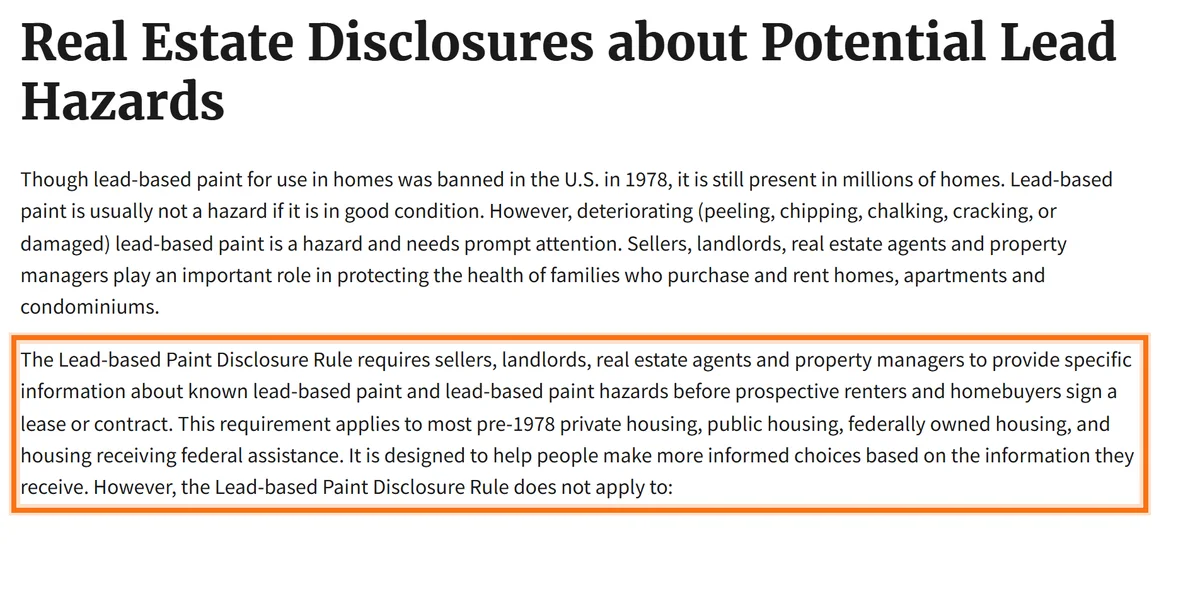
For a home built before 1978, the federal Lead-Based Paint Disclosure Rule applies before the tenant signs. The landlord or the property manager must give the tenant the EPA pamphlet Protect Your Family From Lead in Your Home, disclose any known lead-based paint or hazards in the home, provide any records or reports the owner has, and include a Lead Warning Statement in the lease or as an attachment, signed by both sides. Keep the signed disclosure with the lease for at least three years.
Owners of older homes in established neighborhoods, which describes much of North Richland Hills and central Fort Worth, often do not realize the requirement applies to them because the home was repainted long ago. The disclosure is about the year the home was built, not the condition of the paint. The rule does not apply to housing built after 1977, leases of 100 days or less, and a few other cases the EPA lists. A manager checks the year built at onboarding and includes the disclosure automatically when it applies.
Early termination addendum
A tenant who needs to leave before the lease ends will leave either way; the early termination addendum decides whether that is an orderly exit or a dispute. It typically allows the tenant to end the lease early by giving a stated written notice, paying a stated fee or a set number of months' rent, leaving the home in the condition the lease requires, and remaining responsible for rent until the earlier of the termination date or a new tenant's move-in.
The owner's benefit is predictability: a known cost, a known notice period and a tenant who cooperates with showings because they have a clean path out. The alternative, with no addendum, is that the tenant stops paying and the owner is left to pursue the balance under the owner's duty to make reasonable efforts to re-let.
Texas law also gives tenants rights the addendum cannot remove: a servicemember who enters service or receives qualifying orders can end the lease under Property Code §92.017, and victims of family violence have a similar right under §92.016. If the lease does not contain language substantially equivalent to "Tenants may have special statutory rights to terminate the lease early in certain situations involving family violence or a military deployment or transfer," a servicemember who ends the lease is also released from delinquent rent (§92.017(g)). Put that sentence in the lease.
Lawn, landscaping and irrigation addendum
North Texas yards fail fast when nobody owns them, and yard maintenance is the addendum owners search for most. The lawn addendum states who mows, edges and trims, how often, who waters and on what schedule, who maintains the irrigation system and who pays when a sprinkler head is broken by a mower, who handles leaves and beds, and what the tenant must do for tree and shrub care. It should also require foundation watering during dry periods, because the clay soil across this area moves when it dries and the repair bill lands on the owner.
For many owners the better answer is to include a lawn service in the rent and say so in the addendum, so the yard is maintained to the HOA standard regardless of the tenant's habits. The addendum then covers what the tenant still must do, such as keeping the yard clear for the crew and reporting irrigation problems. Our inspection service checks yard and irrigation condition on periodic visits, which is how a lawn problem is caught before the HOA or the city catches it. The split of duties line by line is in lawn care and landscaping in rentals.
Repair agreements: the addendum that must be in bold
Texas law puts the duty to repair conditions that affect health or safety on the landlord, and a lease generally cannot waive it. Property Code §92.006 allows two narrow exceptions, and both have formatting rules that owners miss:
- Specific tenant-caused items (§92.006(f)): the owner and tenant may agree that the tenant pays to repair damage from wastewater stoppages caused by foreign or improper objects in lines serving only that home, damage to doors, windows or screens, and damage from windows or doors left open, except where the landlord was negligent.
- Single-home landlords (§92.006(e)): an owner who owns only one rental dwelling at the start of the lease may agree for the tenant to handle health and safety repairs at the tenant's expense, but only if the home is free of such conditions at the start and several other conditions are met.
In both cases the agreement must be in a written lease, underlined or printed in bold in the lease or in a separate written addendum, specific and clear, and made knowingly, voluntarily and for consideration. A repair clause buried in ordinary type is not enforceable. Separately, §92.056(g) requires the lease to tell the tenant about the repair remedies in underlined or bold print. The full repair picture is in Texas landlord repair obligations.
Smoking and other conduct addenda
A smoking addendum is short and valuable: no smoking or vaping of any substance inside the home, the garage or within a stated distance of doors and windows, with the tenant responsible for the cost of remediation if the policy is broken. Smoke odor is among the most expensive conditions to remove at turnover, and without the addendum it is argued as ordinary wear.
Other conduct addenda worth considering depending on the home:
- A no-short-term-rental and no-subletting addendum if the base lease's language is general.
- A trampoline, play equipment and vehicle addendum for homes where those are likely.
- A satellite dish and exterior alteration addendum where the HOA restricts them.
- A utilities addendum listing which accounts the tenant must open by move-in.
- A bed bug or mold information addendum where the manager's standard package includes one.
Not every home needs every one. The test is whether the subject is likely to come up at this home and whether the base lease already handles it specifically.
The inventory and condition form
The inventory and condition form is not strictly an addendum, but it travels with the lease and it is the document that decides every deposit dispute. At move-in the tenant records the condition of every room, surface, fixture and appliance, notes any existing damage, and returns the form within the period the lease sets, usually a few days. The manager's own move-in inspection with dated photos sits alongside it.
At move-out the same form is the baseline: anything damaged beyond normal wear that was not noted at move-in is the tenant's responsibility. Without a completed, signed form at move-in, the owner is arguing about condition from memory. Owners self-managing often skip this step or let the tenant skip it; a manager does not, because the form and the move-in photos are what make a deposit deduction hold up when the tenant disputes it.
Assembling the right package for your home
The package for a given home is decided before marketing, because applicants should see the terms before they apply. A practical sequence: confirm the year built for the lead disclosure, pull the HOA rules and confirm any leasing restrictions, decide the pet policy and the pet terms, decide whether lawn service is included, confirm whether there is a pool or spa, and choose an early termination structure. Then the base lease, the addenda and the inventory form are prepared together and signed together.
When we take over a home from self-management, the missing addendum is the most common gap we find, and it is usually the HOA or lawn one, discovered through a fine. Our leasing service builds the package for each home as part of onboarding. If you would like to compare your current lease against this list, send it over and we will tell you what is missing. This is general information, not legal advice.
The takeaway: Decide the addenda before marketing, sign every one with the lease, attach the HOA rules and complete the inventory form at move-in, and the base lease becomes a document that actually fits your home.
Questions owners ask
What lease addenda does a rental house in Texas need?
Most single-family rentals need a pet addendum, an HOA addendum with the rules attached, a lawn and landscaping addendum, a smoking policy and a completed inventory and condition form. Homes with a pool need a pool addendum, older homes need the federal lead-based paint disclosure, and an early termination addendum is worth including on nearly every lease.
Can I add an addendum after the tenant has moved in?
Only with the tenant's signed agreement. A document handed over after signing and never signed is not part of the lease and cannot be enforced. The practical time to add terms is at renewal, when a new lease or extension is signed.
Does an assistance animal go on the pet addendum?
No. An assistance animal approved as a reasonable accommodation is not a pet under fair housing law and is not subject to pet fees, deposits or breed limits. It should be documented separately from the pet addendum.
Who pays HOA fines caused by a tenant?
The association bills the owner, because the owner is the member. An HOA addendum that attaches the rules and makes the tenant responsible for fines caused by their conduct lets the owner recover them from the tenant. Without it, the fine is usually the owner's loss.
Is the lead-based paint disclosure required if the house was repainted?
Yes. The requirement depends on the year the home was built, not the condition of the paint. For a home built before 1978, the landlord must give the EPA pamphlet, disclose any known lead hazards and records, and include a Lead Warning Statement before the tenant signs, regardless of later repainting.
What should a yard maintenance lease addendum say?
Who mows, edges, weeds and waters and how often, the grass height the tenant must stay under, who runs and who repairs the irrigation system, who handles trees and large shrubs, and how foundation watering is done in dry months. Attach the HOA landscaping rules if there is an HOA. If a lawn service is included in the rent, the addendum says so and lists what the tenant still does.
Can I customize a lease for unique property rules?
Yes, through signed addenda, as long as they do not waive what Texas law protects. Security deposit rules, security devices, utility cutoffs and the tenant's military and family violence rights cannot be waived, and a clause that makes the tenant pay for repairs must be underlined or bold and specific under Property Code 92.006. Rules for a pool, an HOA, pets or the yard are exactly what addenda are for.
What goes in a pool lease addendum?
Who provides pool service and how often, that gates, latches and any safety cover stay closed and working, that the tenant will not change safety equipment, that children and guests are supervised, that equipment problems are reported right away, and freeze precautions in winter. It can require renters insurance with liability coverage, but it cannot shift the owner's duty to keep barriers and equipment safe.
Related services
Property management in Keller, North Richland Hills and Fort Worth. How full-service management works in Tarrant County →