Key takeaways
- Yes: each rental should have its own rent ledger, expense record, fees, reserve balance and statement.
- The IRS instructions for Schedule E say to use a separate column for each rental property, so combined numbers have to be split apart anyway.
- TREC rule 535.146 requires a broker to give each owner an accounting at least monthly when there has been activity in the trust account.
- The test before you sign: ask to see one property's statement on its own, and how a month with no rent on one house is shown.
- Our site states per-property reporting for portfolio owners, with statements, documents and disbursement history in the owner portal.
Can a property manager track income and expenses separately for each of your rentals? Yes, and you should not accept anything less. A manager with proper accounting keeps a separate record for each rental: its own rent, its own expenses, its own fees, its own reserve, its own monthly statement. Owners with several homes in Fort Worth, Keller or North Richland Hills then get a total that adds them up without blending them.
Here is what separate tracking looks like in practice, what the IRS and the Texas Real Estate Commission expect, the questions to ask before signing, and the places where the lines between properties get blurred without anyone intending it.
The records each rental should have, at a glance
Here are the six records to expect for each property, what each one shows and why it has to stay separate:
| Record, per property | What it shows | Why it must stay separate |
|---|---|---|
| Rent ledger | Every charge and payment for that tenant, by date | Shows which tenant is late; rent goes in that property's own Schedule E column |
| Expense record with invoices | Each repair, utility, HOA or other cost for that address | Expenses are entered per property on Schedule E, and repairs are kept apart from improvements |
| Fees | Management, leasing and renewal fees figured on that property's rent | Lets you check each fee against the written quote |
| Reserve balance | What is held back for that house and what was drawn | Shows which house keeps using the reserve |
| Monthly statement and year-to-date totals | Income, expenses and the amount paid to you | One page that can stand alone if you sell or refinance that house |
| Security deposit and inspection history | The deposit held for that lease, and the condition reports | The deposit belongs to one tenancy and is settled at that move-out |
How to read this table: if a manager can hand you all six for one address without building them by hand, the accounting is property-level. If the answer is one combined statement for everything you own, it is not, and your CPA will have to separate it later.
What property-level tracking actually includes
Separate tracking means each house has its own set of records that could stand alone if you sold it tomorrow: the rent ledger, the expenses with their invoices, the fees, the reserve, the statement and the deposit record in the table above. Add the inspection and maintenance history, because a repair makes more sense next to the last three repairs at the same address.
Can accounting tools track multiple properties separately? Yes. Property management software is built around a ledger for each property and each owner, so a manager using it properly has no technical reason to blend your houses. What varies is how the manager sets it up and what you are shown.
The test is simple: ask to see one property's statement on its own. If the manager can produce it right away, the accounting is property-level. If they have to build it, it is not. How to read one is in how to read your monthly owner statement.
The portfolio total on top
Separate does not mean fragmented. An owner with four rentals in Keller, North Richland Hills and Fort Worth should also be able to see the total: income, expenses, fees and the amount paid out, with a line per property so a weak one stands out. That view is where you notice that one house has had three plumbing calls this year while the others have had none, or that one tenant is consistently late.
That comparison is the main management benefit of owning more than one rental, and it only works if the underlying ledgers are clean. From one rental to a portfolio covers what else changes as the count grows, and the numbers that tell you if your rental is performing lists the figures worth comparing across properties.
What the IRS and TREC expect
Separate tracking is not only good practice. The tax return is built that way. The IRS instructions for Schedule E, the form most individual owners use for rental income, say to show the street address of each rental on line 1a, to report rent on line 3 using a separate column (A, B or C) for each rental property, and to enter expenses for each property in the appropriate column. With more than three rentals, you attach as many Schedules E as you need to list them all.
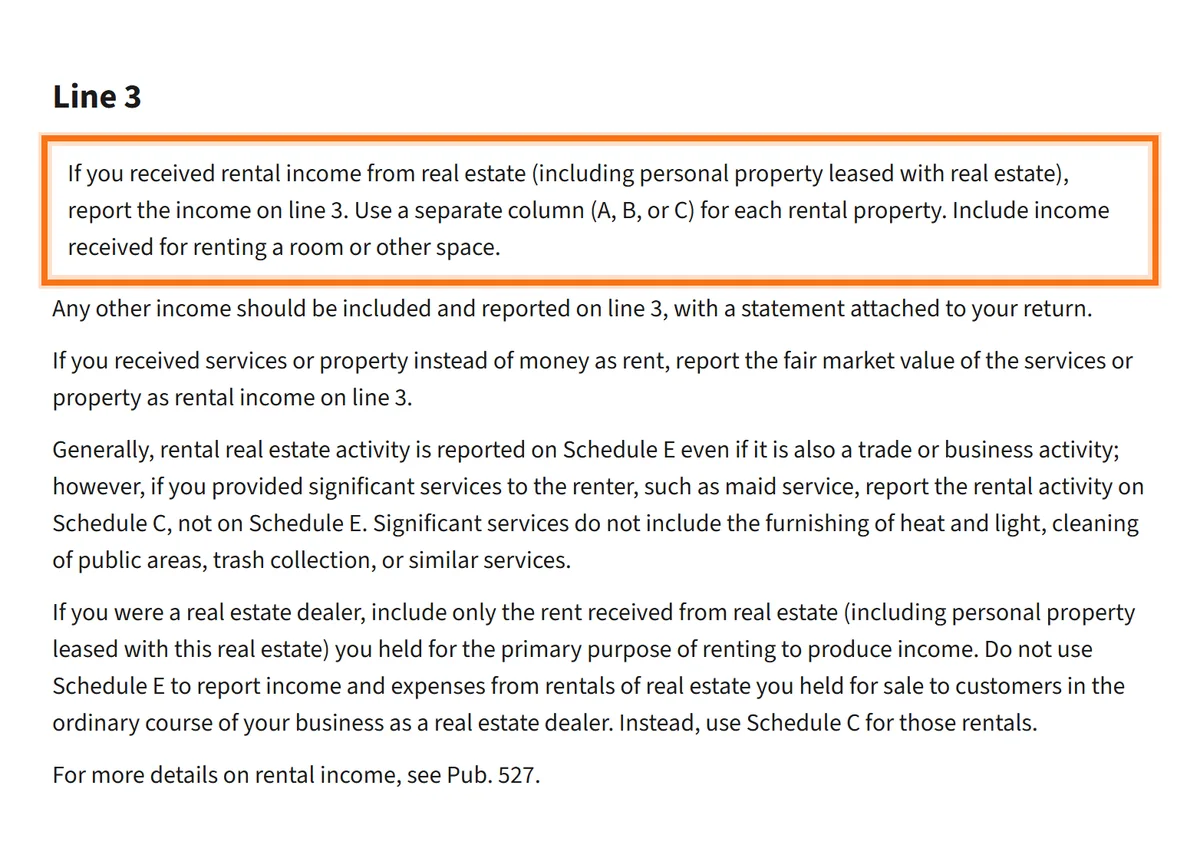
The same instructions say you must keep records to support what you report, and that without them you may have to pay additional tax and penalties. Publication 527 adds: separate the costs of repairs and improvements, and keep accurate records.
On the Texas side, a property manager who holds rent and deposits for others does it as a licensed broker. TREC rule 535.146 requires the broker to keep a documentary record of each deposit and withdrawal from the trust account and to provide an accounting to each beneficiary at least monthly if there has been activity. The rule allows, but does not require, a separate trust account for each client. So the separation between your houses is done in the ledgers, not by a bank account for each one. This is general information, not legal or tax advice.
Where the lines between properties get blurred
The common blurring is not fraud; it is convenience. A repair on house A is paid from the combined payout because house A had no rent that month, and the statement shows a single net figure for the owner instead of a negative on A and a positive on B. Over a year, the owner stops seeing that house A is losing money.
Reserve funds blur the same way. Tracking a maintenance reserve per property shows which house keeps drawing it down. A single reserve for the whole portfolio is simpler to run and hides exactly that. Shared vendors can blur it too, when one invoice covers work at two addresses and gets coded to one.
Ask the manager how a month with no rent on one property is handled, whether reserves are tracked per property, and how a split invoice is coded. The answers tell you whether the separation is real. What the reserve is and how it refills is in owner reserves and disbursements.
Different owners, different entities, and the 1099
Tracking by property matters even more when the properties are owned differently. One house held personally, one in an LLC, one co-owned with a sibling: each needs its own ledger, its payout to the right bank account, and year-end reporting under the right taxpayer identification number.
The year-end form is the 1099-MISC. The IRS instructions for that form say a real estate agent or property manager must use it to report the rent paid over to the property owner. It is issued to an owner, not to a house, so it will not break your income down by address. Your statements do that. Whether you receive one form or several when you hold homes under different names is something to ask the manager and your CPA before the first year ends.
Ask up front how the manager handles several owning entities and where each one's money is sent. Can a property manager handle a rental owned by my LLC covers the paperwork, and year-end reporting for rental owners covers what your CPA needs. This is general information, not legal or tax advice.
What to ask a manager before you sign
Five questions settle it:
- Can I see a sample statement for a single property?
- If I own several, what do I see for the portfolio as a whole?
- Is the reserve tracked per property or combined?
- If one property has no rent in a month, how are its expenses paid, and how does that show on the statements?
- Can each property or owning entity be paid to a different bank account?
Then look at what the owner portal actually holds. You should be able to find each property's statements and the vendor invoices behind its repairs without asking. Fees should be stated per property in the written quote, so the fee lines on each statement can be checked against it. How pricing changes with several homes is in portfolio pricing for multiple rentals.
An example: three houses, one uneven month
Say you own three rentals. In one month, house A is vacant and gets a $1,800 repaint, house B's tenant pays $2,000 with no expenses, and house C's tenant pays $2,200 and the water heater is replaced for $1,700. These are made-up round numbers, and management fees are left out to keep the example about tracking. Illustrative only, not a quote:
| House | Rent collected | Repair invoices | Net before fees |
|---|---|---|---|
| A (vacant, repainted) | $0 | $1,800 | -$1,800 |
| B | $2,000 | $0 | +$2,000 |
| C (water heater) | $2,200 | $1,700 | +$500 |
| All three | $4,200 | $3,500 | +$700 |
How to read this table: with property-level accounting you see all four rows. With blended accounting you see only the last one: $700 and a note that says "repairs and vacancy." The rent house A did not bring in that month is not on any row, because it is income that never arrived, not an expense. It shows up as the $0.
Six months later, the owner with four rows knows whether A is a problem property or just had a bad month. The owner with one row does not. The difference in bookkeeping effort is small; the difference in what you can decide is not.
How Perpetual handles this
Perpetual Property Management is broker-owned, with our office at 5755 Rufe Snow Dr in North Richland Hills, and we manage portfolios across Tarrant, Dallas, Collin and Denton counties. What our site states about tracking each rental:
- Per-property reporting. Our rent collection page says portfolio owners can see each door's performance separately, and our portfolio management page describes one management agreement, one owner portal and per-door reporting.
- Monthly statements in the owner portal, with income, expenses, invoices and documents in one place, plus disbursement history. The portal runs on AppFolio.
- The original vendor invoice is always in your portal, and every completed repair over $500 gets photo or video proof, so each expense can be traced to one address.
- A year-end package for your CPA, as our rent collection and accounting page puts it. Your CPA handles the tax treatment.
What the site does not state is confirmed in writing before you sign: whether the working reserve is held per property, whether each property or entity can be paid to a different bank account, and how year-end tax forms are issued when homes are held under different names. Rent we collect is disbursed by the 10th of each month or that month's management fee is waived, subject to the Guarantee Addendum. Fees are on the pricing page. To talk through your portfolio, call 682-593-7033.
The takeaway: Every rental should have its own ledger, reserve and statement, with the portfolio total on top, because you cannot fix a weak property you cannot see, and Schedule E wants each one in its own column.
Questions owners ask
Can a property manager send rent from different properties to different bank accounts?
A manager with property-level accounting usually can, and it matters most when properties are held in different names or entities. Ask before signing, and put the payout instructions for each property in the management agreement so there is no confusion about where each property's money goes.
Should each rental have its own maintenance reserve?
Tracked separately, yes. A reserve balance per property shows which house is using it and keeps one property's repairs from quietly draining another's income. A single combined reserve is simpler for the manager but hides exactly the information an owner of several rentals needs. The amount and how it is held are set in the management agreement.
Do I get one 1099 or one per property?
The IRS instructions for Form 1099-MISC say a property manager must use that form to report the rent paid over to the property owner. It goes to an owner, not to a house, so it does not split income by address; your statements do. If you hold homes under different names or entities, ask the manager how the forms are issued, and confirm with your CPA.
Does property-level accounting cost more?
It should not. Keeping a ledger per property is how property management software works, and a manager who treats it as an extra service is telling you something about their systems. Our price sheet lists no charge for per-property reporting, and the online owner portal is listed on every plan.
Can accounting tools track multiple properties separately?
Yes. Property management accounting software keeps a ledger for each property and each owner, so rent, expenses, fees and reserve funds can be reported per address and then totaled. Whether you actually see it that way depends on how the manager sets it up, so ask for a sample single-property statement before you sign.
Does the IRS want each rental reported separately?
Yes. The IRS instructions for Schedule E say to use a separate column (A, B or C) for each rental property for income and expenses, and to attach additional Schedules E if you have more than three. That is why per-property statements save your CPA from splitting a combined number. This is general information, not tax advice.
How are reserve funds and maintenance tracked for each property?
Each property's statement should show the reserve held for that house, every draw against it and the vendor invoice behind the draw. With that, you can see which home is using its reserve and why. On our plans the vendor's original invoice is always in the owner portal. Ask any manager whether the reserve is tracked per property or pooled.
Related services
Property management in Keller, North Richland Hills and Fort Worth. How full-service management works in Tarrant County →