Key takeaways
- Who mows and who pays is a lease term. Write the tasks and the frequency, not just "tenant maintains the yard".
- Fort Worth requires property owners to keep grass and weeds at 12 inches or less. The notice and the bill go to the owner, whatever the lease says.
- Keep pool chemistry and equipment with a professional service the owner pays for; the tenant's job is the gate, the water level and reporting.
- The Texas pool yard enclosure law, Health and Safety Code chapter 757, covers multiunit rental complexes and property owners associations, not a single-family rental. City rules cover the house.
- Verification is photos: move-in baseline, inspections during the lease, move-out comparison.
Who handles lawn care and pool maintenance at a rental house? In most leases the lawn is the tenant's job and the pool is the owner's. That is the split that works at nearly every single-family rental I manage in Keller, North Richland Hills and Fort Worth, and the reason is simple: a tenant can push a mower, but a tenant who misjudges pool chemistry for three weeks in July can hand you a green pool and a damaged pump in one go.
This guide covers who does what, what the city expects of the owner, which Texas pool law applies to a rented house, what the lease has to say and how a manager confirms that the yard is cut and the pool is serviced.
Lawn care and pool maintenance at a rental: who does what and who pays
Here is the usual split of yard and pool jobs at a single-family rental, and what the lease should say about each:
| Job | Who usually does it | Who usually pays | What the lease should say |
|---|---|---|---|
| Mowing, edging, weeding | Tenant | Tenant | The tasks and how often, in the growing season and out of it |
| Watering | Tenant | Tenant, with the water bill | To water within the city's schedule and report dry or soggy areas |
| Sprinkler system repairs | Owner, through the manager | Owner, unless the tenant broke it | To report leaks and broken heads promptly |
| Tree trimming and large limbs | Owner, through the manager | Owner | That the tenant does not remove or top trees |
| Pool cleaning and chemistry | A professional pool service | Owner, priced into the rent | That the tenant gives access and does not add chemicals or drain the pool |
| Pool equipment repairs | Owner, through the manager | Owner | To report noise, leaks or a pump that will not run the same day |
| Pool gate, fence and latch | Owner repairs; tenant keeps it closed | Owner | To keep the gate latched and report any damage at once |
How to read this table: the tenant takes the jobs that need time and a mower, and the owner keeps the jobs that need a trade or carry a safety risk. Any row can be moved by the lease, so the lease is what you check first.
Why the lawn goes to the tenant and the pool does not
Lawn care is low skill, low cost and low consequence. If a tenant skips a mowing, the grass is tall for a week and the HOA or the city sends a letter. Nothing structural happens. That is why most single-family leases put mowing, edging, weeding and watering on the tenant, and why most tenants expect it. No Texas statute assigns the yard to either side, so the lease is the whole answer.
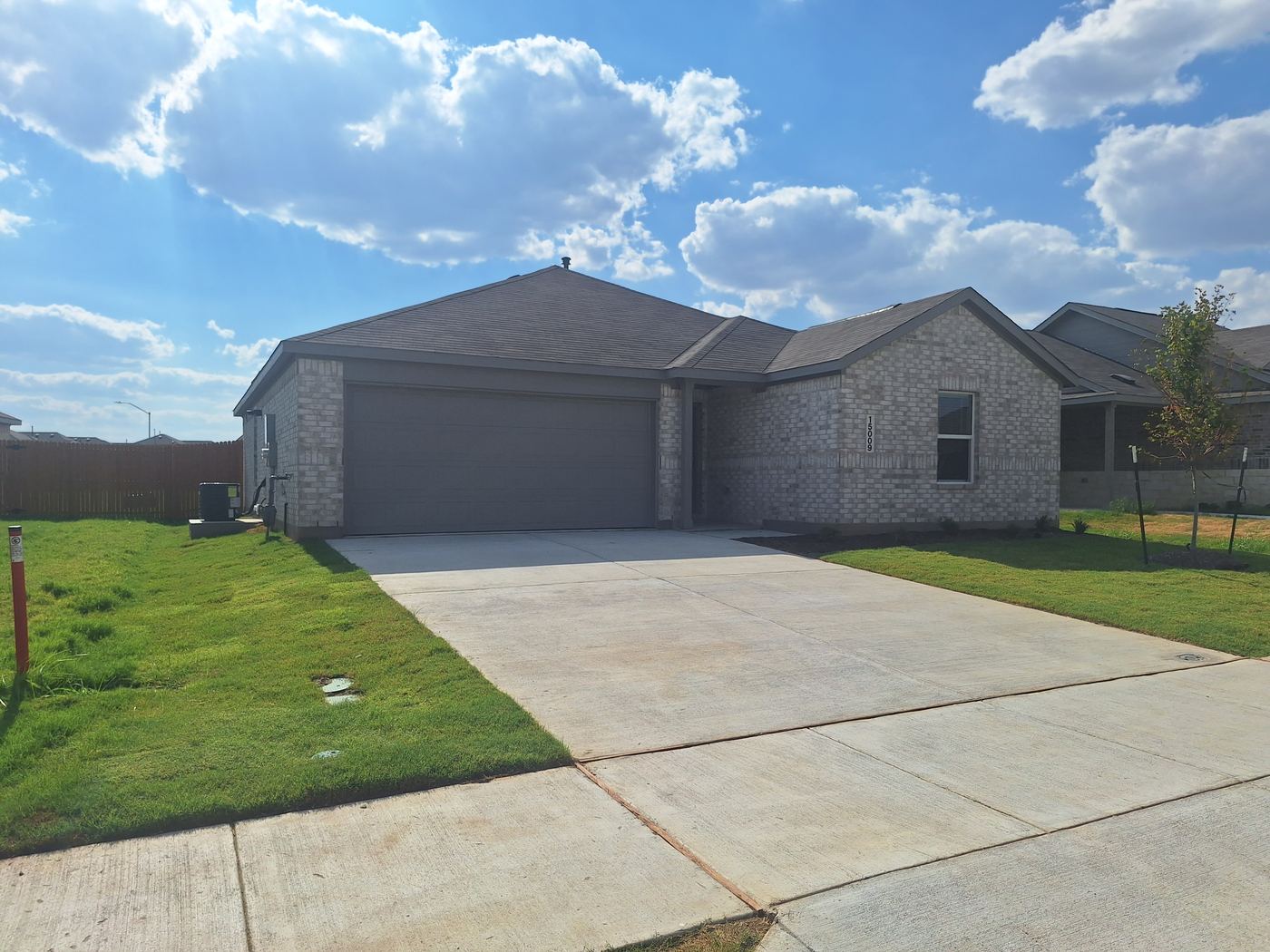
A pool is the opposite on every count. Chemistry, filtration, pump run times and equipment care take knowledge and consistency, and the cost of getting it wrong is high: an algae bloom, damaged equipment, or a child reaching the water through a gate that no longer latches. You cannot hand a tenant a risk that still comes back to the owner.
The three ways owners set up yard and pool care
Every arrangement I see falls into one of three patterns:
- Tenant does the yard, owner pays for pool service. The default for a house with a pool. The service is a fixed monthly cost you price into the rent.
- Owner pays for both yard and pool service. Right for large lots, strict HOAs or premium rentals where the tenant expects a maintained property.
- Tenant does both. Common, and the one that goes wrong. It usually comes from an owner trying to save the pool service fee and ends with a bigger bill.
Get a written quote from a pool company before you set the rent, so the service is in the number from the first month. The guide on lawn care and landscaping responsibility in rentals covers garden maintenance at a rental property in more detail: beds, trees, irrigation and when an included yard service beats relying on the tenant.
What the city expects: the grass rule lands on the owner
The lease can give the mowing to the tenant, but the city deals with the property owner. Fort Worth's Code Compliance page is plain about it:
- All property owners must keep grass and weeds at a height of 12 inches or less, on developed and vacant lots.
- A property over that height gets one certified notice per year and has 10 days to mow.
- If it is not mowed, the city has a contractor do the work at the property owner's expense. The page lists an average mowing fee of $250, due within 30 days.
- Unpaid charges may result in a lien against the property.
Note the phrase "one certified notice per year": the page promises one notice a year, not one for every time the grass gets tall. This is why the lease needs a charge-back clause and why a manager has to see the yard between inspections, not just at move-out. A vacant rental still has to be mowed, which is covered in managing a vacant house.
Keller and North Richland Hills have their own property maintenance rules and watering schedules. Confirm the current height limit and watering days with the city before you write them into a lease. HOA rules are often stricter than the city's; the HOA rules guide covers how those notices should be handled.
What a pool service should include and what the tenant still does
A regular service visit should cover water testing and chemical balancing, skimming, brushing, emptying baskets, checking the pump and filter, and noting equipment problems before they become failures. Ask the company for a written note after each visit, sent to the manager and not only left with the tenant.
The tenant still has duties, and the lease should state them: keep the gate closed and latched, keep the water level in range, do not add chemicals, do not drain the pool, give the service company access on its day and report anything unusual the same day. A tenant who adds their own chlorine to help can undo the service company's work, so the instruction to leave the chemistry alone belongs in writing.
Which Texas pool fence law applies to a rental house
Owners often hear that Texas requires a 48-inch pool fence. The number is real, but read who it applies to. Health and Safety Code 757.003 requires the owner of a multiunit rental complex with a pool, or a property owners association that owns, controls or maintains a pool, to completely enclose the pool yard with an enclosure at least 48 inches high. Section 757.004 requires gates with a self-closing and self-latching device, and 757.009 requires those owners to inspect the enclosure and gates at least once every 31 days.
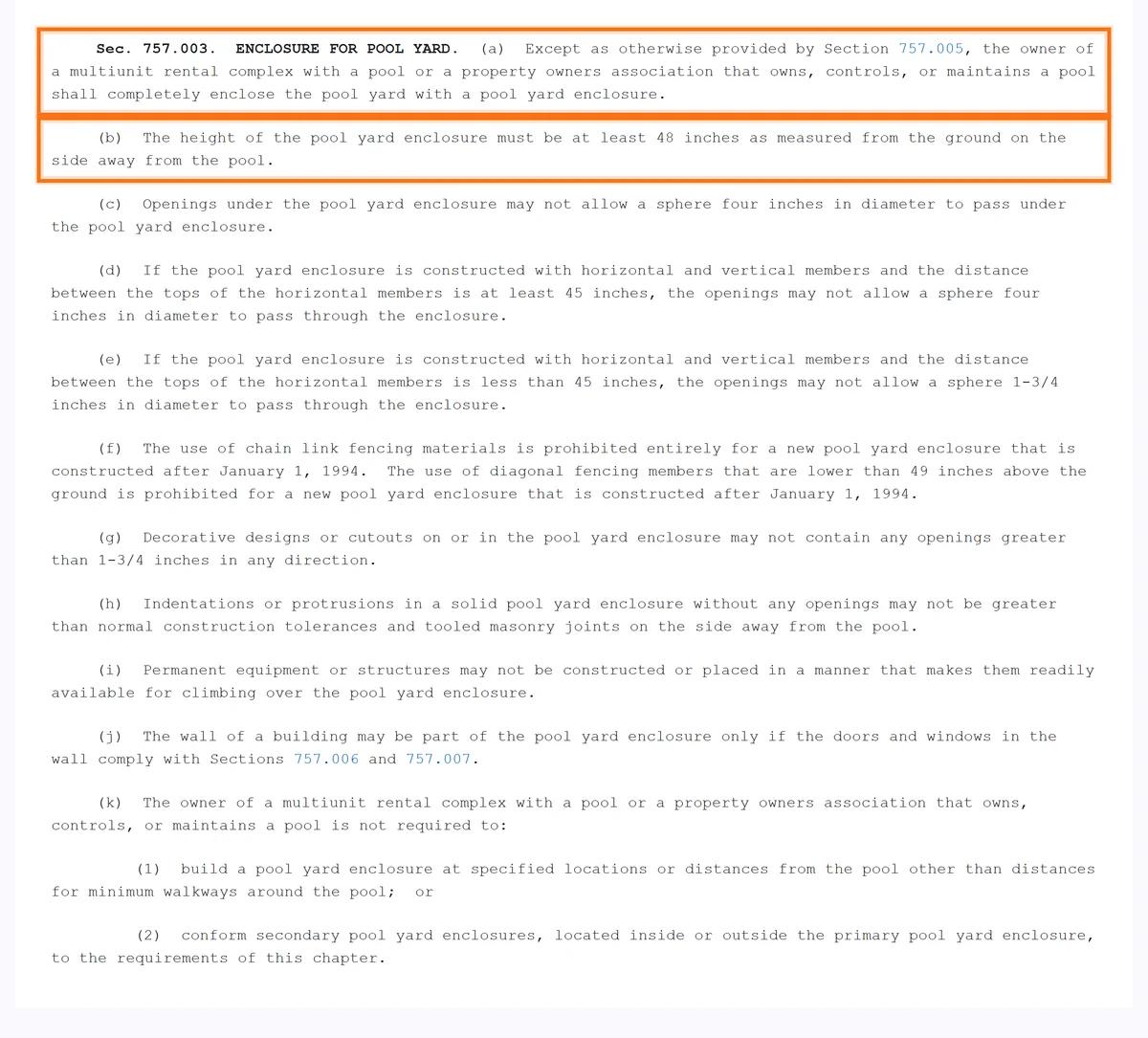
The definition in 757.001(7) says a multiunit rental complex does not include a single-family home, and 757.002 says the chapter applies only to those complexes and associations. So for a single-family rental with a backyard pool:
- The fence, gate and latch requirements come from the city's building and pool rules. Confirm them with Fort Worth, Keller or North Richland Hills before you rent the house.
- If the home is in an HOA with a community pool, chapter 757 applies to the association's pool, not yours.
- A duplex or fourplex is different: two or more units under common ownership on one lot fit the statute's definition of a multiunit rental complex, so a shared pool there can fall under chapter 757.
- Your insurer may set its own conditions. The Office of Public Insurance Counsel notes that dwelling insurance does not cover liability claims and that extra liability coverage can be added for a pool. Ask your agent what your policy requires.
A manager should check the gate and latch at every visit and treat a broken one as urgent, whatever the statute says. This is general information, not legal or insurance advice. The fuller picture is in renting out a house with a pool.
How the manager knows the lawn and pool are being looked after
A lease clause is a promise, not proof. Verification comes from four sources:
- The move-in record. The yard, the pool and the equipment pad are photographed before the tenant takes over, so there is a baseline.
- Inspections during the lease. A scheduled visit includes the yard, the gate and latch and the equipment, and the photos become the record if there is a dispute later.
- The pool company's notes. A company that reports the same low water level four visits in a row is telling you about a tenant problem before the tenant does.
- Letters. A city notice or an HOA violation letter about the yard means the tenant is already behind.
When something slips, the usual sequence is a written notice to the tenant with a date to fix it, then, if the lease allows, hiring the work out and charging the cost back. How often a manager is at the house is covered in how often a property manager inspects a rental.
What the lease has to say to prevent the argument
Most yard and pool disputes trace back to a lease that said "tenant maintains the yard" and nothing else. The clause that holds up names the tasks, the frequency and the standard:
- Mow and edge on a stated schedule in the growing season, and keep beds weeded.
- Water enough to keep the lawn alive, within the city's watering rules.
- Report irrigation leaks and broken sprinkler heads promptly.
- For a pool: the service company's access day, the gate rule and the rule against adding chemicals or draining.
- What happens if the tenant does not do it: the owner may hire a service and charge the cost back, including a city mowing charge or an HOA fine caused by neglect.
Two more items belong there. The move-in condition of the yard and pool is photographed, so the move-out comparison is fair. And a deduction from the deposit for a neglected yard has to be for damage beyond normal wear, itemized in writing, as the Texas security deposit rules require.
When paying for lawn service too is the smarter choice
There are houses where I recommend the owner pay for yard service even without a pool: a corner lot with extensive beds, an association that measures grass height, or a home likely to rent to a tenant who will not own a mower. Fort Worth's average mowing fee of $250 shows what one missed month can cost.
The test is simple: if a tenant doing the job badly would cost you more than the service, pay for the service and price the rent accordingly. A free rental analysis is where that number gets set.
How Perpetual handles this
Perpetual Property Management is broker-owned, with our office at 5755 Rufe Snow Dr in North Richland Hills, and we manage homes in Keller, North Richland Hills, Fort Worth and nearby. What our site states that applies to the yard and the pool:
- Our leases use current Texas forms with the addenda the property needs, including HOA rules and a pool addendum.
- Every move-in and move-out gets a 360-degree condition inspection, one of our written guarantees, subject to the Guarantee Addendum, and every plan includes an annual property inspection with a photo report in your owner portal.
- What an inspection finds goes to maintenance coordination or to the tenant with a recommendation.
- Owners can usually use their own vendor, such as a pool company they already trust, if it is insured and reliable.
- The original vendor invoice is always in your portal.
Our site does not publish a lawn or pool program. Which pool or yard service is used, how often we check the exterior between inspections and how a charge-back to the tenant is handled are confirmed in writing before you sign.
If you are renting out a house with a big yard or a pool and want the split written down properly, call 682-593-7033.
The takeaway: Give the lawn to the tenant with the tasks spelled out, keep the pool with a professional service you pay for, and let the manager verify both with photos rather than promises.
Questions owners ask
Can I require the tenant to keep the lawn to HOA standards?
Yes, if the lease says so and the standard is spelled out. State the mowing frequency, the edging and bed expectations, and that HOA fines caused by yard neglect are charged back to the tenant. Attach the association's landscaping rules to the lease so there is no argument about what the standard was.
Who pays if the sprinkler system breaks at a rental?
The owner, in almost every lease. The irrigation system is part of the property, like the water heater. The tenant's duty is to run it sensibly and report leaks or broken heads promptly. A tenant who causes damage, for example by running over a head with a mower, can be charged for that specific repair if the lease says so.
Should I drain the pool or close it instead of paying for service?
Not without advice from a pool professional and a call to the city. A pool that is not being serviced is still your pool, your fence and gate to maintain and your liability, and an empty or closed pool brings its own risks and rules. In most cases the choice is to pay for the service and price it into the rent, or to sell the house to someone who wants the pool.
Does the tenant pay for the water used on the lawn and pool?
Usually yes, because tenants typically pay utilities at a single-family rental. That creates a quiet incentive to under-water in a dry summer. Put a watering instruction in the lease, check the city's watering schedule, and where the lawn or the foundation matters to you, consider a yard service that manages the irrigation.
What happens if my tenant does not mow the lawn in Fort Worth?
The city deals with you, not the tenant. Fort Worth requires property owners to keep grass and weeds at 12 inches or less. A property over that gets one certified notice per year and 10 days to mow; after that the city sends a contractor at the owner's expense, with an average fee of $250 due within 30 days, and unpaid charges may become a lien. A charge-back clause in the lease lets you recover it from the tenant.
Does a landlord have to provide a lawn mower or landscaping equipment at a rental?
No Texas statute requires it, so the lease decides. Most single-family leases in Keller, North Richland Hills and Fort Worth leave the mower and tools to the tenant. If you would rather not depend on a tenant owning equipment, include a yard service in the rent instead of supplying tools you would then have to maintain.
Does the Texas pool fence law apply to a single-family rental house?
The state pool yard enclosure law does not. Health and Safety Code chapter 757 applies only to pools of multiunit rental complexes and property owners associations, and its definition of a multiunit rental complex excludes a single-family home. The fence and gate rules for a backyard pool come from the city, so confirm them with Fort Worth, Keller or North Richland Hills. This is general information, not legal advice.
Property management in Keller, North Richland Hills and Fort Worth. How full-service management works in Tarrant County →